

The Fragrant Shrub Gardeners Rarely Grow Anymore (For Good Reason)
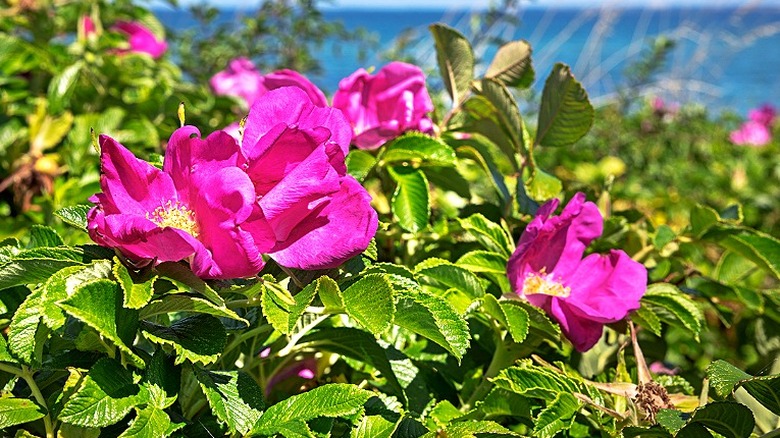
Lovely smells and beautiful blooms typically make for a perfect flower in many gardener's eyes. However, gardeners today may cringe away from this fresh-smelling rose, once used for difficult sites. The rugosa rose (Rosa rugosa), known for its delightful fragrance and tolerance for salty conditions, doesn't have a good name in certain areas of the U.S. Unfortunately, this shrub, which also attracts birds and pollinators, and is definitely an example of pink rose varieties to make a blushing garden, has a tendency toward weediness and invasiveness in certain landscapes.
A native to Asia, including China, Korea, and Japan, the rugosa rose grows about 4 to 6 feet and typically forms a very dense hedge complete with sharp thorns. Gardeners in the U.S. chose to bring this non-native rose to their yards to take advantage of both its winter hardiness and salt tolerance. Despite its popularity in some areas where it can be hard to grow beautiful flowers, this shrub has escaped cultivation and has wreaked havoc on native plants. It can grow well in sandy conditions, which means it poses a threat to areas like New England and the Great Lakes region.
However, the rugosa rose, also known as the seaside rose, isn't considered an invasive shrub you should never plant in your yard in every part of the U.S. States that have identified this unique rose bush as invasive include Maine and Rhode Island, and on the west coast, Alaska; in Alaska, the rose shrub is officially listed as "highly invasive," while in Connecticut, it's classified as "potentially invasive." It mainly spreads via a suckering habit, but rugosa rose can also escape cultivation through birds or seawater carrying away seeds.
How to handle invasive rugosa rose
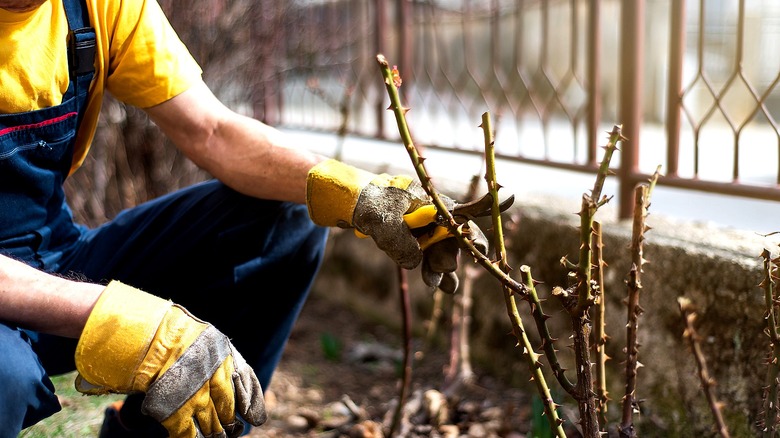
Sometimes you don't get to choose what's growing in your yard. As a gardener, you might need to figure out what to do with a weedy shrub like rugosa rose. Even if you don't live in a state where rugosa rose is considered invasive or a potential threat (like near the seaside), it's still possible for this rose to form dense, impenetrable thickets that may spread beyond the bounds of your yard. For a large growth, strong herbicides may be necessary. You could try pulling it by hand, but due to its woody rhizomes, which are thick, spreading roots, you need to be careful to remove every bit to avoid continued growth.
But if you're just starting out and want a nice shrub for your landscape, there are plenty of other resilient options beyond rugosa rose. For example, if one of the attractive qualities of the rugosa is its salt tolerance, silver buffaloberry (Shepherdia argentea) offers a native alternative, and is hardy to zone 2. This woody shrub grows well near salt spray and in poor soil, just like rugosa rose, showcasing golden-yellow flowers in springtime and red berries (which may also appear as orange or yellow) in fall.
Meanwhile, if you want a lovely rose to sweeten your garden with its fragrance, there's naturally a wide selection, but some of them also don't have thorns. The swamp rose (Rosa palustris), for example, another native alternative, has prickles instead. It's also pink like rugosa rose, hardy to zones 4 to 9, grows well in wet soil, and is known to attract native pollinators. (It's also on our list of stunning roses you should grow in your garden.)