

The Garden Seeds You Can Save In Fall To Regrow Your Vegetable Patch
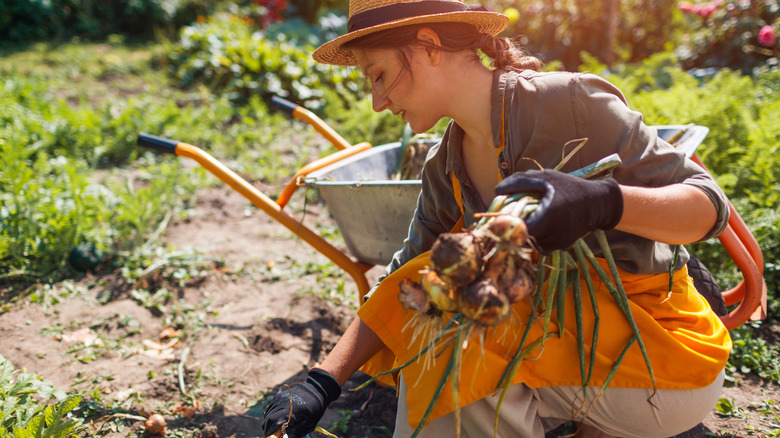
By the time fall arrives, an avid gardener can expect baskets full of freshly harvested squash, tomatoes, herbs, and more — all grown right in their backyard. There are also some less obvious benefits of a fall garden: seeds you can harvest to save you from buying new plants. Just as you can gather seeds from your late summer annuals to plant next year, you can harvest them from your edible crops — and fall is the perfect time to do it. Nearly every common vegetable you pluck from a vine or pull out of the ground at the end of the growing season will produce viable seeds, particularly if the plants are open-pollinated varieties.
Tomatoes and peppers are typically ready to harvest in fall. You can also save fall-harvest bean seeds, but you need to let the pods mature on the plant. If you planted peas in fall, let the pods ripen on the vines before saving the seeds. You'll want to hold on to the overripe cucumbers in your garden. They may not be nice to eat, but you can still harvest them for their seeds. If you care about preserving certain traits in your vegetables, keep different varieties of cucumbers separate from one another in the garden to limit cross-pollination. Or just enjoy the wacky hybrid vegetables you end up with next season. You can collect seeds from squash and pumpkins, but, as with cucumbers, they may not grow true to seed. Lettuce and arugula are two of the best self-seeding vegetables you can grow, but you can also harvest their seeds to plant elsewhere.
Harvest seeds from ripe fall vegetables, then clean and dry them carefully
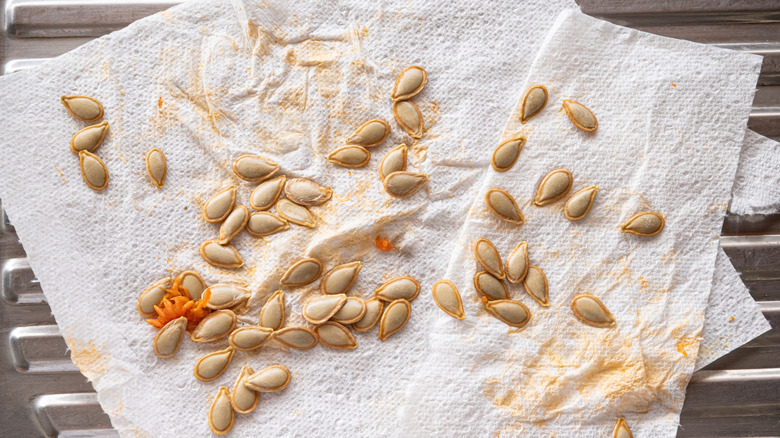
In all cases, you need to wait until your fall vegetables have fully ripened — or bolted, in the case of many leafy greens — before you can collect seeds from them. That's not hard to do with tomatoes and peppers, but summer squash requires some patience. We normally eat the immature squash before the seeds have fully developed. Leave summer squash on the vine until it develops a hard rind, then harvest the mature seeds. Avoid saving seeds from rotten vegetables and prioritize saving seeds from open-pollinated plants over hybrids. You'll get more consistent results.
Some seeds need to be wet-processed before they can be dried, usually by rinsing, fermenting, or mashing them to remove the surrounding material. The seeds can then be cleaned and dried. For example, tomato seeds are covered in a clear gel. Pop them in a glass of water and leave them on a sunny windowsill for two to three days. The gel should come right off. For dry seeds, you often just have to pick out any chaff.
Lay your cleaned seeds on a sheet of newspaper or wire mesh to dry. If you live in a humid climate, run a dehumidifier in the room where they're drying. Now you have a stash of vegetable seeds saved from your fall garden! To ensure they're ready for planting next season, you'll need to keep them viable for as long as possible. Place the seeds in labeled paper envelopes and, optionally, add a desiccant packet before putting them in an airtight container. Store the container in a cool, dark, moisture-free location. This should prevent pests like mice and rice weevils from ruining all your hard work.