

The Best Angle For Sharpening Your Drill Bits
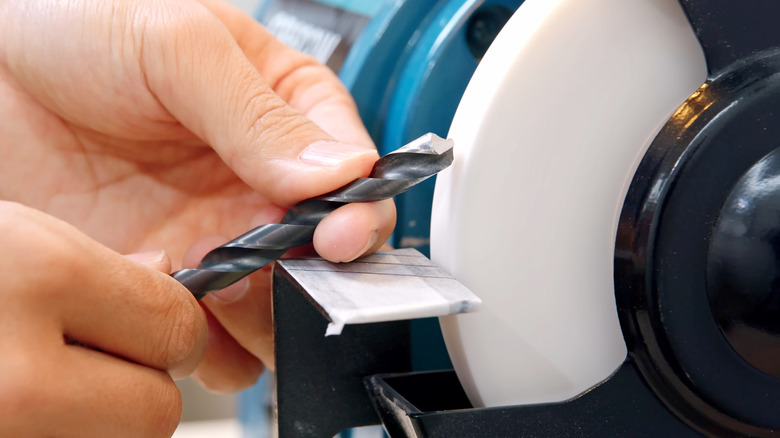
A powered hand drill is an essential tool for every homeowner. But, like any tool, your drill requires maintenance. The bits, in particular, endure significant wear, as repeatedly drilling through hard materials will dull the tip. Signs of dull drill bits can include messy holes, and they can skip across and scratch the surface you're drilling into or fail to penetrate harder material at all. This means you need to keep your bits sharp, and you will inevitably need to hone worn-out bits with a grinder. However, you need to know the correct sharpening angle before you begin, especially if you've never honed your own drill bits before.
The best angle for sharpening your drill bits depends on their intended use. The standard bit point angle is 118 degrees, or 59 degrees per side. This is ideal for general use and for the typical surfaces you're likely to drill through inside your home (think drywall, wood, tile, and maybe stone). Other materials require different bit angles, though. If you're drilling through hard metals, you should sharpen your drill bits to 135 degrees.
Knowing how to sharpen drill bits at the best angle can keep them in tip-top shape and make your home improvement projects go much more smoothly. That said, sharpening your drill bits yourself requires a little know-how. Your technique –- namely, dialing in the precise angle when sharpening –- can also take some practice to master. But considering how common and versatile a tool your drill is, sharpening your own bits at the right angle is an essential skill for any dedicated DIYer.
Choose the right sharpening angle for the job
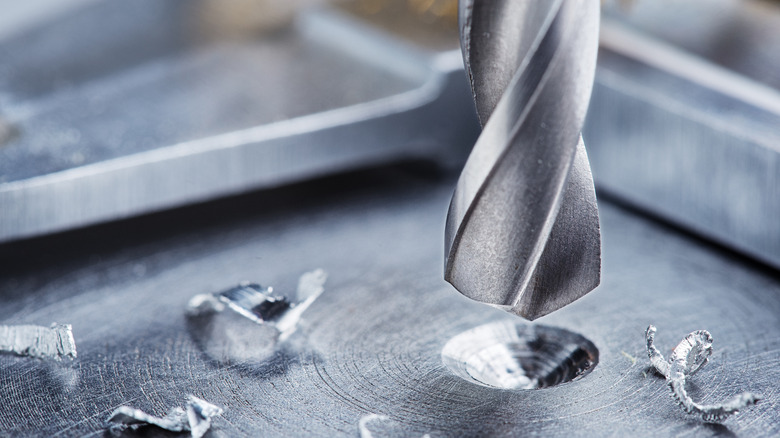
Although drill bit geometry varies, traditional bits have two flat, angled edges that meet in a point. These edges cut away the material you're drilling through, while the grooves (or flutes) of the bit remove the debris. Those edges are the surfaces you need to keep sharp for your drill to work efficiently. For most drilling tasks, you should sharpen your bit at a 59-degree angle on each side for a combined angle of 118 degrees.
Although 118 degrees is the standard for everyday drilling tasks, the best angle for sharpening your drill bits depends on what you're using your drill for. Drilling through harder materials, like iron and steel, requires a bit sharpened to a shallower 135-degree angle (67.5 degrees on each side). This gives the drill bit a flatter end, spreading the drilling force more evenly across the tip's cutting surface. Thin and soft materials, such as aluminum, call for a steeper 90-degree drill-bit angle (45 degrees on each edge). This helps the drill pierce the softer surface more easily for a clean, even hole.
Proper sharpening requires you to hold the end of the bit steadily at the correct angle against your grinding surface. For example, if aiming for a 59-degree edge angle, you would hold the tip at a 31-degree angle against the grinding wheel. A bench grinder is a common tool used to sharpen drill bits, but any flat, stable grinding surface can work (you can even sharpen drill bits with a belt sander). You can do this by hand if you can maintain the correct angle, although freehand sharpening requires some experience. An easier way is to use a jig that secures the drill bit against the grinding surface at the desired angle.