

When Your Neighbor's Tree Drops Fruit In Your Yard Does It Belong To You? Here's What To Know
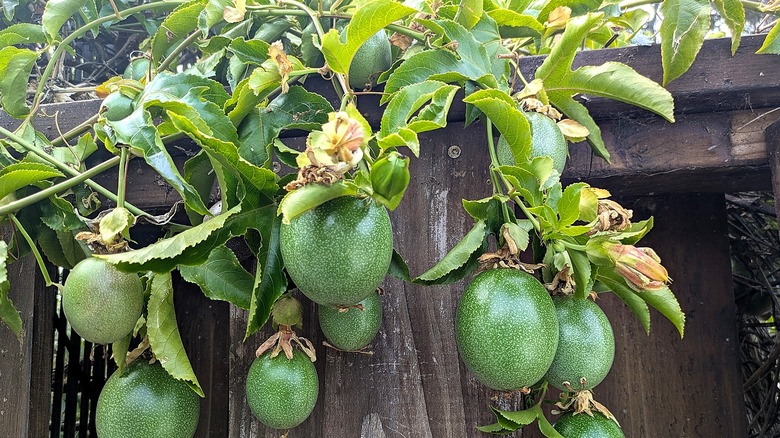
In life, meeting your problems head on is a strategy that can serve you well. However, sometimes, sidestepping a problem altogether is a better choice. That's usually the case regarding squabbles with neighbors, especially when it involves trees, branches, and fruit on either side of the fence. Since the laws can get a bit tangled in this particular legal area, you'll be doing yourself a huge favor if you can resolve matters without the courts. As for when it comes to your neighbor's tree dropping fruit in your yard, it's likely you can keep it. That said, in some states, be aware that the fruit doesn't legally belong to you, though you're still responsible for the mess.
There's a lot to know about trees and property lines in a neighborhood. Legal gray areas like the ones created by fruit falling from your neighbor's tree into your yard are ripe with potential for disputes. Ownership of a tree depends on where the tree is planted; if the trunk is on the neighboring property but the branches hang over your fence, it still all belongs to your neighbor. That includes all of the fruit on it, since the law says the tree owner owns all the branches and the fruit they bear.
Yet, the only way the tree owner can pick the fruit on your side of the fence is to trespass, which isn't allowed, no more than it would be for you to cross the line into the neighbor's yard to pick fruit there. But what if you're not picking the fruit off the branches; what if the fruit drops on its own?
How to tell if you own the fruit that fell in your yard
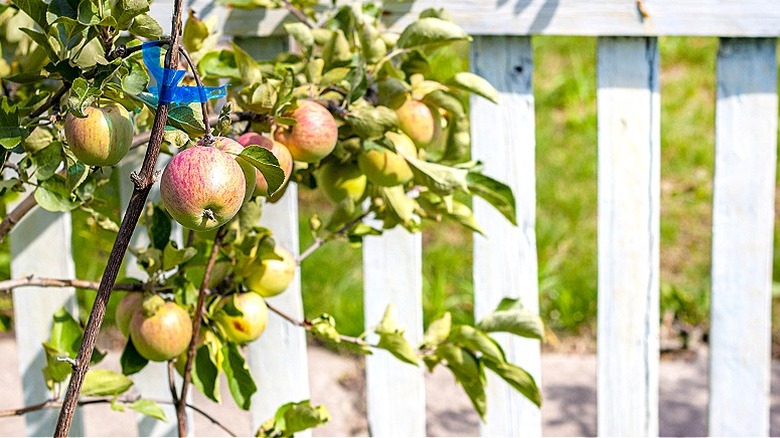
Where the law gets a little fuzzy is when the fruit drops from a branch into your yard, because it's often not spelled out clearly who owns the fruit. If you're still feeling confused, that's because there may not be a single black-and-white answer. Even though the law is clear about the fruit belonging to the person who owns the tree, once the fruit falls on the ground, laws vary by state. This is especially true in states like California and Massachusetts, where courts have ruled in favor of commercial orchards that have fruit hanging over onto other people's property, which is why it's best to check your local laws before grabbing fruit that isn't on your property.
Prevention is the best solution in many cases, whether that's through coming to an agreement with your neighbor or trimming back the branches that have grown over the fence and into your yard — which is something you're legally allowed to do when a neighbor's tree is overhanging your garden or yard. As long as you don't harm the tree, you can legally trim up to your property line. Since liability can run three times the value of the tree, however, it's often better to discuss the situation with your neighbor. Also, for tree owners, avoiding plantings that can fall on the other side of the fence sidesteps the issue neatly.