

Is It Okay To Hose Down A Generator?
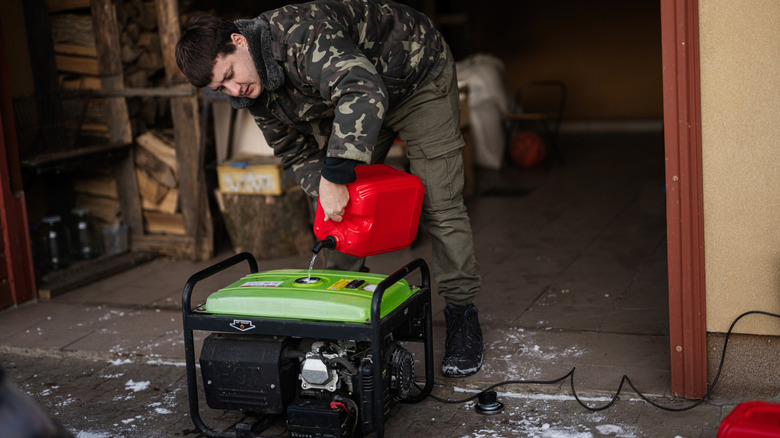
There are many reasons to have a home generator, whether it's for running outdoor equipment, camping, or as a backup electricity source when the power goes out. Over time, however, your generator will accumulate dirt and grime, especially if you run it outside or in a dusty garage. Keeping your generator clean can help it run more efficiently. Regular cleanings can also extend your generator's average lifespan by protecting it from mechanical damage due to rust and corrosion. But how do you actually clean one?
You might think to take it out into the yard and spray it down with a hose — avoid this temptation. A gas-powered generator is a complex piece of machinery that generates electricity, so you should never use a hose or pressure washer to clean it. Ditch the bucket of soapy water, too. In fact, your generator shouldn't come in contact with water at all (that means you shouldn't leave it outside in the rain, either). Instead, you'll need to roll up your sleeves and use a little elbow grease to scrub down the generator by hand. Here's how to do it safely.
Clean your generator the right way
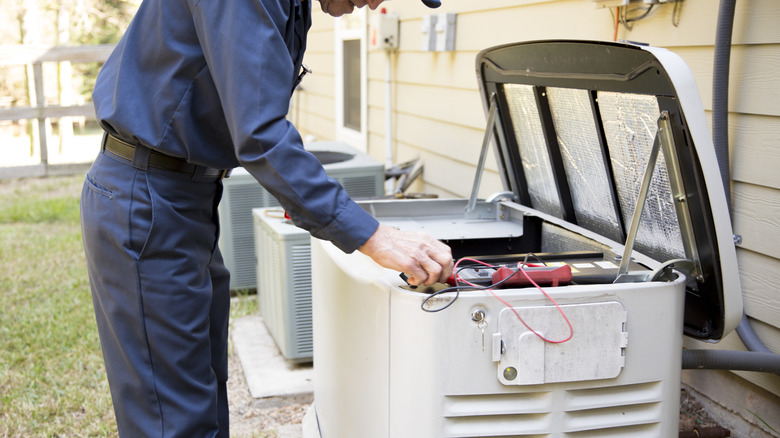
Blasting your dirty generator with a hose or pressure washer may seem like an easy shortcut, but it can seriously damage the machine's inner workings. Gas-powered generators aren't designed to get wet. Water is highly conductive of electricity, something that generators produce a lot of. Water exposure to the motor, power outlets, or internal components can cause short circuits and damage to the electrical systems. Furthermore, sparks can ignite the flammable fuel that gas-powered generators require, posing a major safety hazard.
To clean your generator safely, you'll want to grab a soft cloth and a soft-bristled brush. Something with nylon bristles works well here. Your cleaning tools should be non-abrasive, so avoid using scratchy wire-bristled brushes. Then, use a non-flammable degreasing agent to loosen up the caked-on grime before wiping or scrubbing it off. You can also use a soft-bristled toothbrush to get into any hard-to-reach crevices that might be too tight for a larger brush or your cleaning rag.
A thorough cleaning can be time-consuming depending on the size of your generator. However, it's important to keep your machine free of excess dirt and debris and to understand why you can't just hose it off like you can with other tools. Dirt buildup can gum up the works, hamper your generator's efficiency, and lead to rust, but using water to clean it off can cause more serious damage and is potentially dangerous. Keep your generator clean, but do it the right way to keep it running efficiently and safely for years.