

Mulch Vs Wood Chips: What's The Difference And Why Does It Matter?
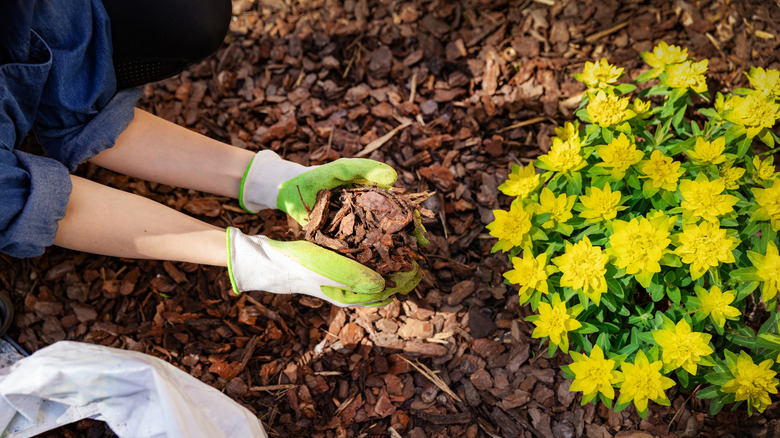
When spring and fall roll around, gardeners know that it's time for a fresh application of mulch. The task seems simple enough, but the options can be a bit overwhelming. Many garden centers typically carry wood chips, but don't be misled: Mulch and wood chips are not synonymous. Gardening mulch, defined as a protective layer on top of soil around plants, serves a number of purposes, namely controlling weeds, keeping the soil moist, and moderating soil temperatures. Mulch is the overarching category, while wood chips are a type of mulch made from trees. And because varieties of mulch can serve different purposes, it's important to consider why and where you're using it before purchasing.
The two primary categories of mulch are organic and inorganic. Organic mulches, which often are eco-friendly mulch options, include wood chips and bark, compost, leaves, grass clippings, straw, and even cardboard and newspaper. We also have inorganic mulches, such as gravel, plastic, and landscape fabric. While both types serve the same basic functions, organic options add nutrients to the soil and eventually break down, while inorganic mulches don't.
Regardless of the type of mulch used, gardeners typically lay it down in the spring, fall, or both. Applying it in the spring, on the cusp of the growing season, helps to keep weeds from sprouting and protects the soil from harsh summer sun. In the fall, mulch serves as a blanket, keeping roots protected from cold temperatures.
What to consider and methods for using mulch
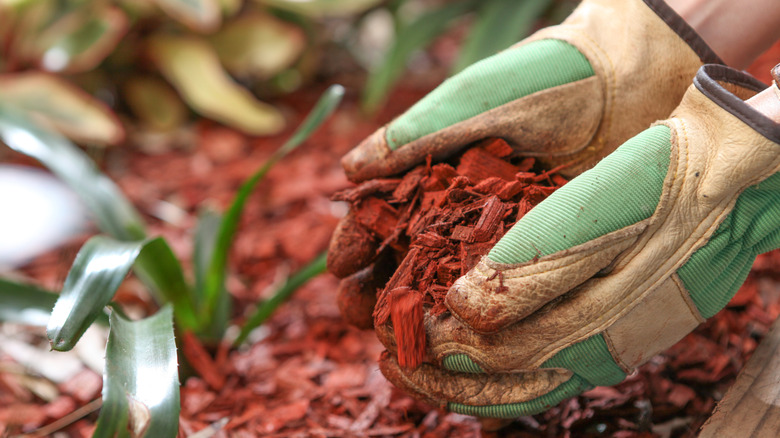
Consider your garden's needs and aesthetics when choosing between wood chips and other mulch, as there are many ways to use mulch in your yard. While straw or leaf mulch can protect plants and work well with vegetables, neither look as finished as fine wood chips. Hulls or nut shells have an intriguing texture, but some can be toxic to pets and can break down quickly. Gravel is durable and decorative, but doesn't add any nutrients.
Even among wood chips, not all are equal. Garden centers sell shredded wood chips and nuggets in various wood types and colors. Gardeners can also purchase arborist wood chips, composed of leaves and branches cut by a tree service. Both options can serve the same purpose, with main differences being that the latter has a rougher appearance and are ideal for heavily trafficked garden paths, while the bagged product looks more refined in a formal yard.
Regardless of mulch type, follow some general rules of thumb for application. Spread a layer about 1 to 2 inches deep around small plants, 2 to 4 inches for general weed control, and 3 to 6 inches on a path. When applying mulch to plants and trees, don't push the mulch right up to the base. Keep it about an inch or two away from the plant stem, and about 3 to 6 feet away from a tree trunk. Too much moisture from the mulch could invite pests or lead to rotting.