

Reuse Old Pallets For An Incredibly Easy-To-Build Pergola
We may receive a commission on purchases made from links.
It's interesting how the conversation around wooden pallets has changed over the past few decades. They used to be nothing more than utilitarian structures that helped us move products between businesses and worksites. Now, there's a plethora of affordable backyard DIYs to reuse those old wooden pallets for everything from raised beds and wall-mounted herb gardens to stylish patio furniture and pretty, vine-covered pergolas — as demonstrated in a video on the YouTube channel Vegging Out.
It turns out you can use discarded softwood pallets to create a decent-sized garden pergola. After breaking down the pallets, planing the boards, and cutting them to size, you cut each end at an angle and add them to the top of four corner posts as evenly spaced roof slats. Add a layer of shade cloth or garden netting to let rain and dappled sunlight through while protecting any plants growing below from the elements. Attach remesh or trellis to the four posts to give vines something to climb.
If you happen to have stacks of unused pallets in your garage, this is arguably the best garden DIY to enjoy the summer on a budget. To get started on this project, you'll need four pressure-treated 2-by-4-by-8 wooden planks, cut to 7 to 8 feet in length to allow for 1½ to 2 feet buried in the ground. You'll also need to break down about four to six regular-sized pallets to get enough usable wood for the roof slats. Get a few tools together, too, including an electric saw, a tape measure, a shovel, and a planer or sander.
Building a pergola from upcycled pallet wood
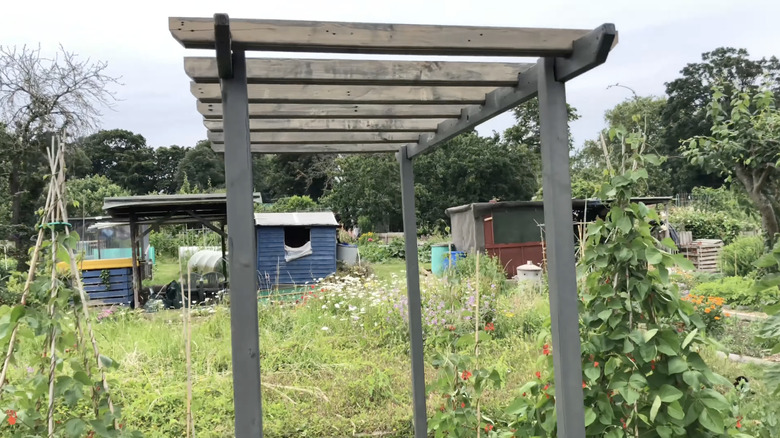
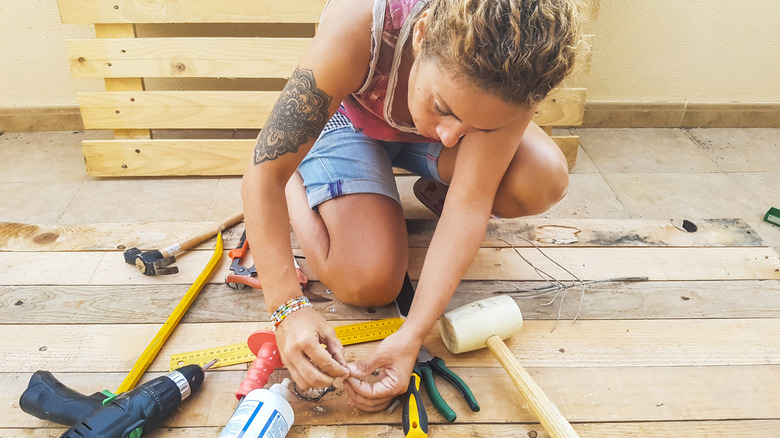
The first step in building your pallet pergola is preparing the four corner posts. Once the planks are cut to size, install them in the ground, ensuring that you bury them at least 1½ to 2 feet deep. Next, carefully disassemble your pallets using a reciprocating saw or a pry bar. Be sure to wear thick gloves while doing this to protect your hands from nails and splinters. Note that not every plank will be usable — some may warp, crack, or split as you break the pallets down.
Individual pallet slats are usually about ⅝ to ¾ inch thick, so if needed, secure multiple slats together with screws. You'll end up with thicker slats that should be strong enough for a pergola roof. Use a planer to smooth the slats and remove any rough edges and splinters. Now you can cut the slats to length. Note that you'll need enough slats to lay two pieces between each pair of corner posts, creating a bridge on each side. If the distance between your corner posts is wider than a standard pallet slat, you can join two slats end to end with a piece of scrap wood screwed underneath.
You'll also need about seven to 10 more slats to lay across the two sets of slats between the corner posts, creating a ladder-like structure. Space the slats evenly between the corner posts and at right angles to the supporting slats, then secure them with screws. Once everything is secure and the pergola feels sturdy when you push on it, finish it with a couple of coats of paint or your favorite wood stain.
Make it yours: design ideas for your pallet pergola
If you want to put your own spin on this pallet pergola, there are a few ways to switch up the build. If you don't mind a little extra legwork, consider adding angled rafters to the pergola instead of the ladder-style roof. This adds a subtle pitch to the roof that looks more professional. You shouldn't need any extra pallet wood to create the slight slope. Space the roof slats closer together (you might need more pallet wood) or farther apart to create more or less shade in your garden.
Of course, you could always add a cover to your pergola if you want to block out the sunlight at some point in the future. This Abosun 90% Outdoor Sun Shade Cloth with eyelets would be easy to attach to the top of a wooden pergola. This particular product is reasonably affordable at around $50. To give your pergola a contemporary finish, paint the corner posts off-white and the roof charcoal. Another nice color combo would be chocolate brown posts and a terracotta roof.
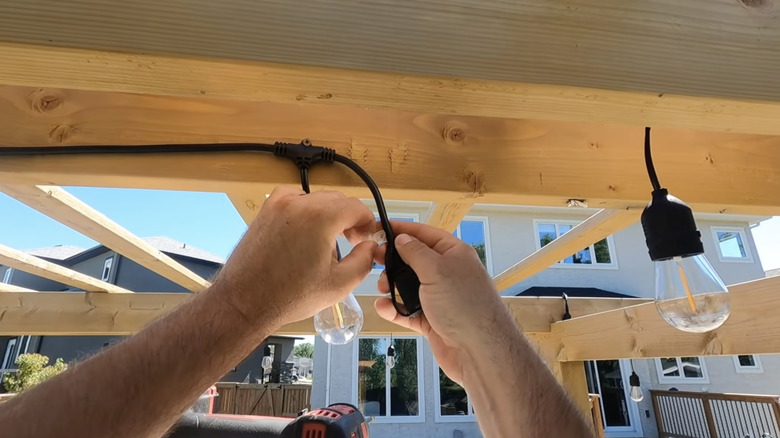
Wondering what to do if your climbing plant grows past its trellis? If it can be moved, dig it up and plant it next to one of the corner posts of your pergola. Train it to clamber over the roof as it grows larger. You could add hanging baskets filled with morning glory or spider plants — any species that will cascade down the sides of the baskets would look great. Finally, add some lighting so you can enjoy your pergola well into the evening — these Brightever Waterproof Patio Lights, which cost about $40, have trendy Edison bulbs and are easy to install.