

Don't Toss Plastic Bottles: Use Them To DIY A Habitat For Bees
We may receive a commission on purchases made from links.
You might have heard that pollinators like bees are crucial for maintaining a healthy ecosystem. But they don't just add beauty by pollinating flowering plants. These tiny superheroes are also partly responsible for many of the fruits and seeds that sustain life on this planet. In fact, the USDA mentions that such pollinators have a hand (read: leg) in the reproduction of 35% of the world's food crops. So, to help their declining populations, you may plant fast-growing trees that will turn your yard into a pollinator haven. And while they mature, you may entice pollinators to visit your yard with DIY clay bee cups. But what if we told you that you could do one better and instead of providing bees with a temporary spot to rest or pollinate, you can use a plastic bottle to build a habitat for them instead?
This way, you can reduce the amount of plastic waste your household generates and let busy bees rest or nest when they feel like it. Win-win! Worried you'll see a big swarm of honeybees in your yard? Don't. As it so happens, these species don't really like human-built "hotels" and prefer building a hive for their colony. Solitary bees, however, are a fan of such accommodations and may pay your house a visit if it matches their expectations. Now, the vast majority of bees in the U.S. are solitary, and they're known to take their pollination responsibilities more seriously than honeybees. As such, you may make things slightly easier for them by making them a bee hotel that won't take more than a few minutes to build.
How to DIY a bee hotel using a plastic bottle
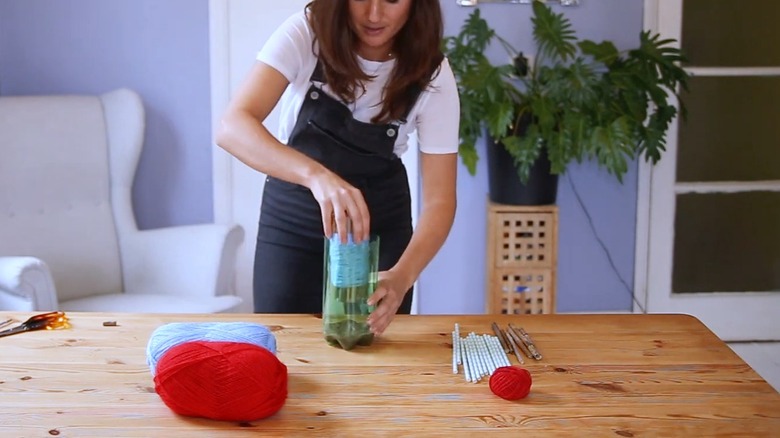
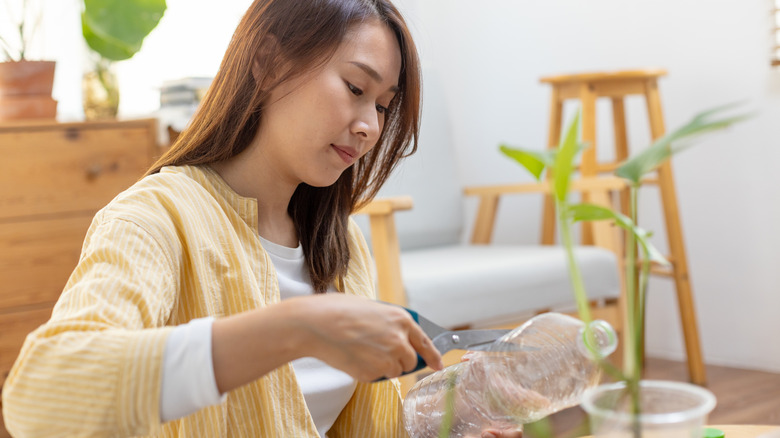
For this DIY, you'll need a plastic bottle (any size will work as long as it's 6 to 7 inches long), a sharp pair of scissors or utility knife, a roll of twine, and some hollow tubes. When you have everything, pluck the label off the bottle. In case there's some residue left behind, use an adhesive remover spray to start with a clean slate. Next, give your bottle a soapy water bath and rinse it out well. Then, set it aside to air dry. This should also remove any lingering smells.
Once it's dry, cut off the mouth and smooth the uneven or sharp edge with sandpaper. Or, wrap some duct tape around the top. Now, start packing in your hollow tubes. You can use bamboo canes, plant stems, or paper straws. In case you're actively looking for ways to reduce your carbon footprint, cut long strips for an old grocery bag and roll them up horizontally (feel free to use a pen, pencil, or paintbrush to speed things up) before sticking tape over the center. Any organic material is fine; it just needs to be hollow. Otherwise, the habitat will be of no use to solitary bees since they prefer tube-like structures to lay their eggs. Keep going till the bottle is tightly packed (20 to 30 tubes should do). If there's some space left, you can fill the gaps with broken twigs. Finally, tie a piece of twine around it, and your DIY bee hotel will be ready to welcome its first guests.
Some do's and don'ts for your DIY bee hotel
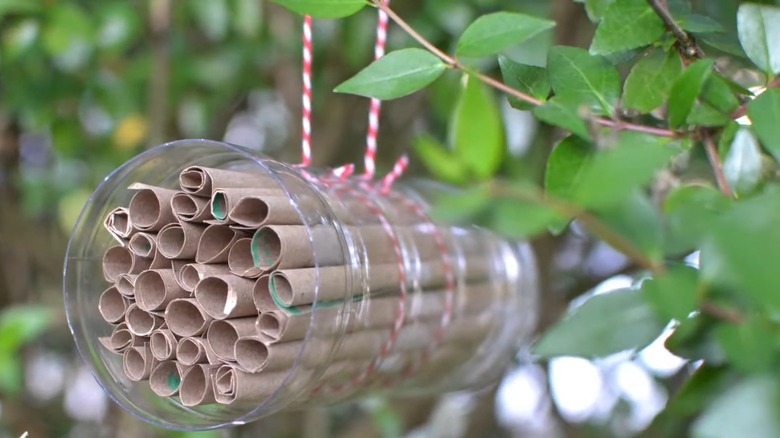
The first thing you want to keep in mind is the placement and angle of your bee hotel. Suspend it in a spot, such as an east- or south-facing post, fence, or shed that receives ample sunlight because solitary bees are cold-blooded. The developing larvae depend on the warmth, too. Avoid trees to keep potential predators away and to ensure that the spot you pick isn't under too much shade. Though the aerial-nesting solitary bees will appreciate it if you suspend it near flowering plants.
Another thing you want to do is hang your hotel at a height of about 3 feet, but don't move it higher than 7 feet. This will ensure the bees or their larvae don't get disturbed by your lawn mower's vibrations and are out of reach of predators like raccoons. Moreover, hang it securely by tying twines both at the front and back instead of only the middle to prevent it from blowing away in strong winds. Also, try suspending it at an angle, with the open mouth tilting down to keep rainwater from collecting within and inviting bacteria and fungi. And when it gets cold outside, don't leave your bee house out. Place it in a cool, dry spot (such as your shed) for a few months before hanging it out again. Finally, don't forget to disinfect your hotel post a season to ensure the nesters don't contract a disease.