

This Late-Blooming Perennial Flowers After Lavender Has Faded And Attracts Birds & Butterflies

If you're looking to create a pollinator-friendly garden in your yard, one of the most important things to consider is blooming seasons. After all, pollinators are active throughout much of the year, and if you plan only for spring, you may find that your late summer and fall visitors are left without any blooms to visit. For example, lavender can be a popular pick for attracting more butterflies and birds to your garden, but many species cease to bloom come the end of summer. That's why you may want to consider a choice like this late-blooming perennial.
California fuchsia (Epilobium canum) is a semi-evergreen perennial that birds, including hummingbirds, and butterflies can't get enough of. It blooms from late summer to fall, which means it outlasts nearly every lavender species aside from French lavender (Lavandula dentata), which begins blooming in late spring and can last until fall. Because of this, California fuchsia can be a top choice if you're looking for a vibrant flower that you can enjoy year after year. California fuchsia is also quite durable, with resistance to drought and few concerns about pests and disease once it's established. Its drought tolerance and lack of required pruning also make this a good plant for beginner gardeners wanting to attract more wildlife to their yard without adding a variety of chores to their plate.
How to grow California fuchsia
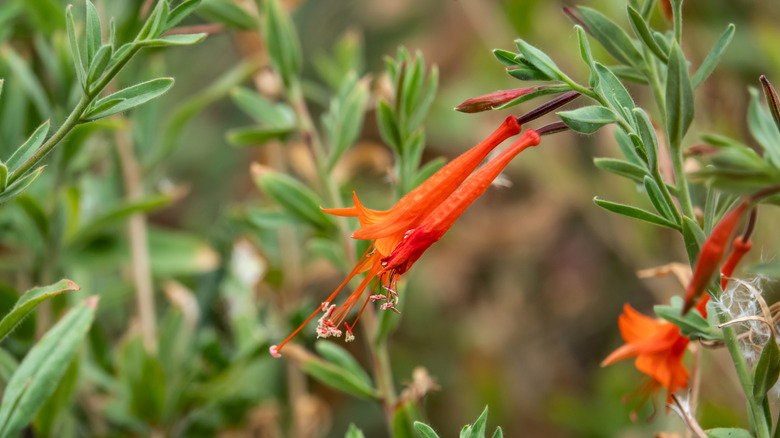
If you're thinking about adding California fuchsia to your pollinator garden, you'll be glad that this low-maintenance plant is easy to care for. However, there is still a bit of preparation involved in ensuring that this plant thrives within your garden, especially because it's a perennial. This means first learning about the right hardiness zones for growing this plant, which happen to be USDA Hardiness Zones 8 through 11. Outside of these zones, you may not have much success with California fuchsia, and it's likely best to try another wildlife-magnet flower.
Because of its drought tolerance, California fuchsia isn't finicky when it comes to watering. It has low water needs, and once it's established, you may only need to water it once a month during the summer. When it comes to sunlight, it's a bit more particular. It does well in both full sun and partial shade, which means that south-, east-, and west-facing locations in your yard can be good choices. However, you'll want to avoid north-facing spots that receive little sunlight or anywhere in your yard with heavy shading.
As mentioned above, pruning isn't required for California fuchsia. While this is true, especially because it dies back in the winter, there are a few optional steps you can take to help it thrive each year. This means cutting it down to the base once it's finished blooming and has gone dormant. Doing so encourages new growth.