

Should You Be Pulling Dead Weeds After Spraying?
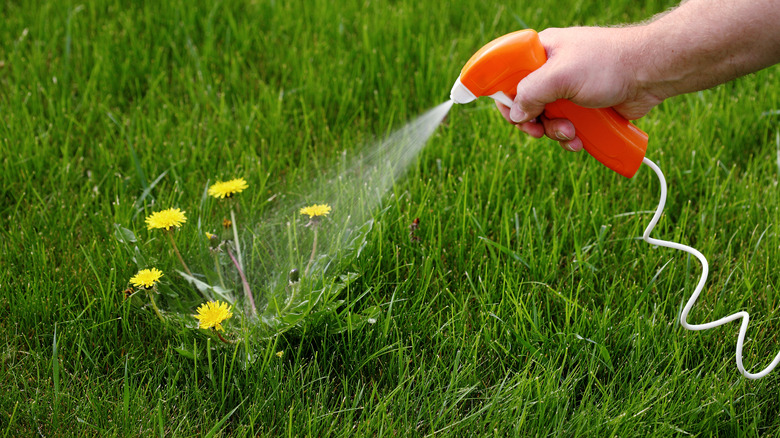
No matter how comfortable you are using herbicides, most people know to take safety precautions to protect children, pets, pollinators, and even their own skin. What that means in practice varies depending on whether you're spraying or pouring on the herbicide and which product you're using. Not all advice about spraying weeds to kill them relates to safety precautions. Some concerns relate to the method you use to apply the herbicide or deal with the aftermath. The question of whether you should pull out the weeds after they've died often crops up. You may see the brown, crumpled weeds and think you need to remove them right away. However, it's usually better to hold off on pulling them out of the ground because the herbicide is still damaging the weeds.
Why do people choose to use herbicides? Sometimes weeds grow in hard-to-reach places like sidewalk cracks, which makes them challenging to control without spraying. Systemic herbicides like 2,4-D kill the plant, including its root, while hand-pulling often leaves the roots behind to sprout again. Systemic herbicides are absorbed through the leaves of perennial weeds and move through the plant's stems to the roots. While the solution works its way down to the plant's crown and roots, where the target tissues are, the weed can look brown and dead but still be alive. It may take seven to 10 days — or sometimes longer — for the solution to kill the plant, depending on the environmental conditions at the time of application. Waiting at least seven to 10 days before pulling out treated weeds gives the herbicide time to work.
What to do with dead weeds that have been treated with herbicide
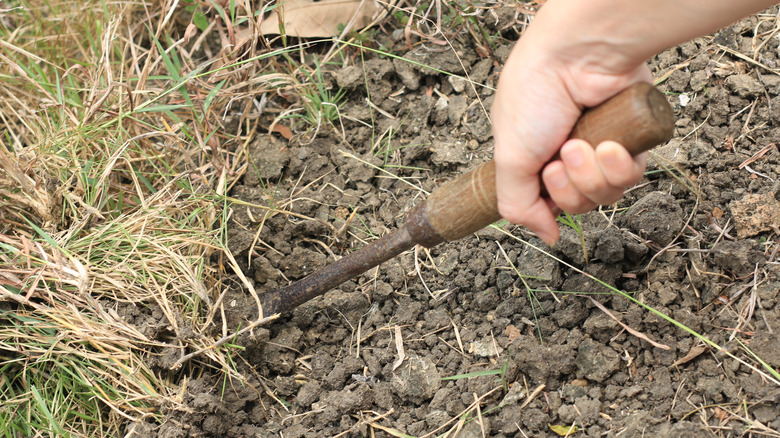
For some people, including those with limited mobility, applying herbicide to weeds means you don't have to pull them out at all. You can just leave them to die wherever they grow. However, some gardeners want to clean up the dry, brown weeds in their lawns after they've sprayed them — as long, of course, as they give the herbicide the minimum seven to 10 days it needs to work properly. If that's you, you can rake the area to remove the dead weeds. Do it gently so you don't disturb the surrounding turfgrass. Likewise, the simplest solution for effectively removing weeds from a gravel drive, patio, or pathway that have been sprayed with herbicide involves pulling them out and then smoothing over the gravel with a rake.
One of the most compelling reasons to pull weeds out after you've sprayed them with herbicide is to remove the seeds. Some common weed species can produce hundreds of thousands of seeds per plant. Dump these weeds in the trash rather than on your compost pile. Some chemicals in common herbicides, like quinclorac, can contaminate compost, while others can take several years to break down in the soil. You might also want to consider the difference between hand-pulling versus getting weeds sprayed. Using herbicides for weed control isn't the right approach for all parts of your yard. You should, for example, avoid spraying weeds in a flower bed or vegetable patch. Since broadleaf herbicides target broadleaf plants (it's in the name), many home gardeners prefer to employ other effective ways to banish weeds from their lawns. Hand-pulling weeds, smothering them with mulch, or cultivating dense turfgrass are a few options.