

Not Hydrangea: The Vining Plant For Brick Walls That Pollinators Love

A brick wall without vegetation can feel drab, but add some vining plants and the space suddenly feels cozy and charming. Climbing hydrangea (Hydrangea petiolaris) is an option some landscapers choose to do this job, but we have a better solution if you want to bring in birds and beneficial insects: hummingbird vine (Campsis radicans). This plant is known by a handful of other colorful names, including cow-itch, devil's shoestring, and hellvine, but one name, trumpet vine, describes its brightly colored flowers perfectly.
Pollinators love those orange, gold, or burgundy flowers, which bloom all summer long and into early fall, sprinkled throughout the plant's compound, deciduous foliage. And thanks to hummingbird vine's clinging, aerial roots, it can climb walls effortlessly; you won't need to twine it around or train it up a trellis. Since it can become quite heavy when mature, sturdy brick walls provide the perfect support. It uses the small cracks and crevices in the brick to make its way upwards, stretching up to 10 feet wide and 40 feet high. Gardeners who find these features appealing will want to add trumpet vine to their lists of climbing plants that'll effortlessly blanket the space with color.
How to grow hummingbird vine to attract pollinators
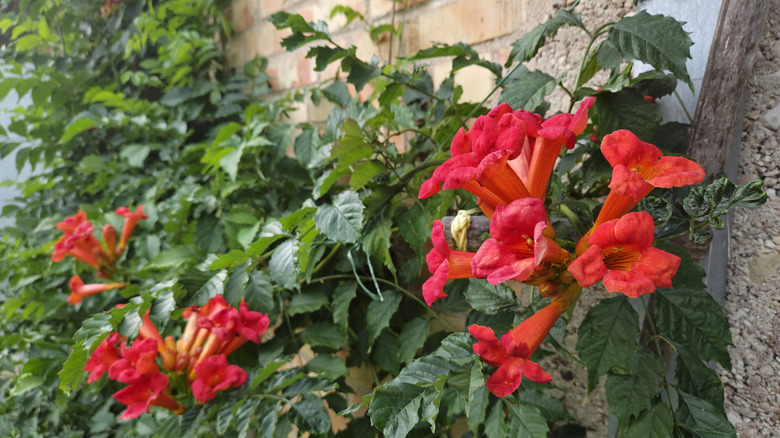
As a U.S. native, hummingbird vine is more popular with local pollinators than climbing hydrangea, which is native to Asia. Still, some gardens will be better suited to growing this vining plant than others. Hummingbird vine hails from the eastern and central regions of the U.S. and is hardy throughout USDA Hardiness Zones 4 to 10. If you live in one of those zones and are excited to add this climbing plant to make your backyard into a cozy oasis, you'll be happy to know that this vine is quite flexible about soil type and sunlight. Hummingbird vine can thrive in both full sun and part shade, as well as in a range of soil types, including clay, sandy, acidic, and alkaline soils.
As for its wildlife benefits, hummingbirds, butterflies, moths, and long-tongued bees love this wall-climbing vine for its nectar, and it's also a larval host for a type of sphinx moth. All of this makes it the perfect vine to incorporate vertically into a native plant or pollinator garden. Does it have any attributes that make it less than perfect? Yes — hummingbird vine is one of those plants that, while not invasive, is an aggressive grower. It can spread easily and crowd out other plants, and containing it will require some maintenance, namely removing suckers regularly. To make life easier, consider choosing a spot where you can let hummingbird vine ramble and roam. Another downside to this brick wall climber is that it has mildly poisonous flowers and leaves — you'll want to keep it out of reach of curious tots and pets.