

The Addition To Steer Clear Of When Amending Clay Soil For Gardening
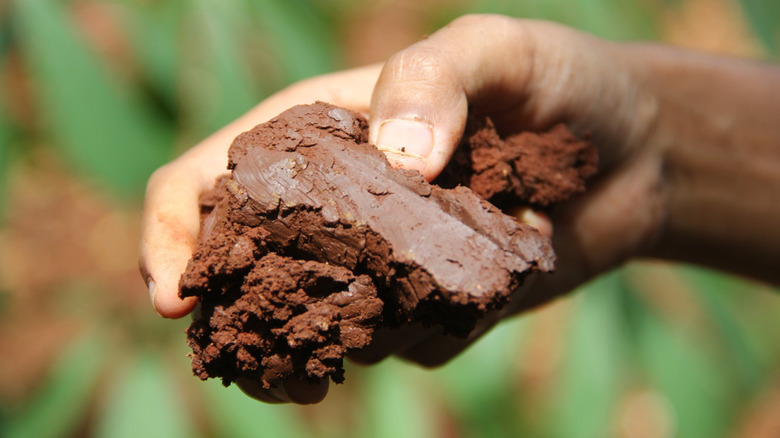
Clay soil is notoriously difficult to work. It's dense, sticky, takes ages to drain, and has a generally poor structure that makes it difficult for air and soil life, like worms and microbes, to move through. The internet is awash with bad advice for how to improve clay soil. As a master gardener and permaculture specialist with 20 years of experience, I can tell you that one common recommendation, to add sand to your clay soil, is a truly awful idea. In theory, it sounds like it should make sense. Clay is heavy and wet, while sand is loose and gritty. Clay takes forever to drain. Sand drains quickly and freely. It seems like mixing those two should give you a soil with the best attributes of each component, but that's not what actually happens. Instead, you'll get something akin to cement. It's extremely dense, compact, and hard, and is almost impossible to work with.
While lovely loamy soil is the preference for most gardeners, having clay soil isn't necessarily terrible. Clay holds water and nutrients well and you'll find many beautiful plants that thrive in clay soil. You'll even find some tasty veggies that happily grow in clay soil. The problems tend to come from how easily clay compacts, leaving it waterlogged after rain and rock hard during dry weather. While it's possible to amend clay to improve its structure, if you live in an area with clay soil, you're not going to turn it into sandy or loamy soil. It will still be clay, just with a better structure. And there are far better ways to improve heavy clay soil than tipping sand into it.
Why adding sand to clay soil makes things worse
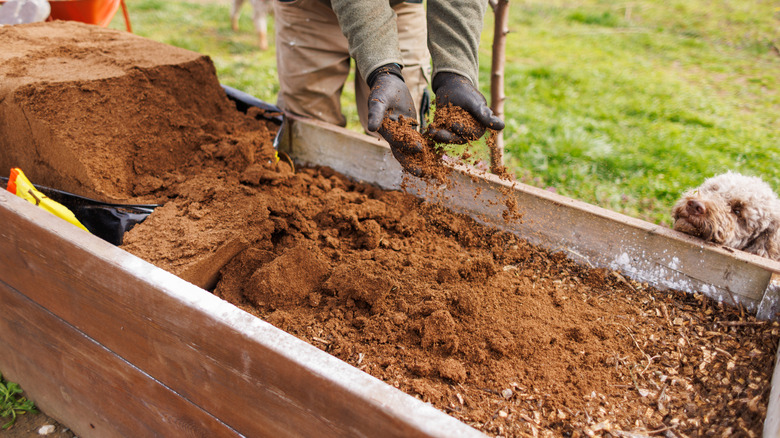
The reason that clay is so dense is, oddly, because the mineral soil particles are so tiny. Sand particles, on the other hand, are comparatively humongous. It's this difference in particle size what causes you to end up with something cement-like if you mix the two. People assume that adding sand will open up the clay and create lots of lovely airflow and drainage channels. Actually, because clay particles are so fine, they stick to the surface of the sand particles and pack into the spaces around them. You end up with a more compact mixture, with pretty much no airflow or drainage channels, and it's remarkably difficult to work with.
You've essentially increased compaction and reduced the porosity of the soil and when it dries, it dries very hard and is super difficult to work with, even if you bring in a tiller. It's really not great for plants either. To significantly alter the soil texture, you'd have to make the soil 80% sand by volume, which is almost impossible in a home garden and isn't something you'd particularly want anyway. Overly sandy soil is just as problematic, if not more so, than clay. Just adding a few bags of sand across your garden beds isn't enough to adequately change soil structure. Instead all you'd end up doing is reducing pore spaces for oxygen and water, making it difficult for roots, worms, and microbes to move around, and making it almost impossible to effectively dig. You definitely won't be improving drainage or structure.
How to improve clay soil naturally
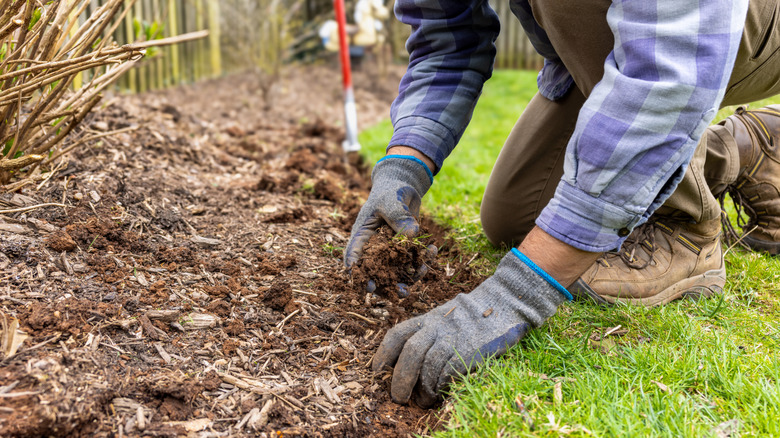
Being a permaculture specialist, I prefer not to dig unless I absolutely have to, especially clay, because when it's dry, it's hideously hard work to dig and when it's wet, you can very quickly cause significant compaction. Improving heavy clay soil in your garden, doesn't take a huge amount of effort, but it does take time. You need to add carbon-rich, fibrous organic matter like compost, leaf mould, well-rotted manure, and shredded leaves over the top as mulch. This fibrous matter helps build good soil structure over time. It breaks down with exposure to the elements and the soil organisms and eventually gets worked into the actual soil, where it starts to create that beautiful, crumbly structure that's perfect for growing almost anything. As the structure improves, so does drainage and aeration. Even the activity of soil life improves, because worms and all of the other tiny little beings that live and work in your soil can move around more easily.
Adding lots of organic matter to clay soil in the form of mulch improves drainage, aeration, and workability, but this will take you many seasons. Building soil health is an ongoing project. On established beds, spread a 2- to 3-inch layer of any suitable organic mulch. Don't dig it in. Instead, let the worms, fungi, bacteria, weather, and plant roots gradually break it down and incorporate it. You'll want to do this at least once a year and, if possible, twice a year. Every year that you do this will have a beneficial impact and over time you will end up with a darker, crumbly, more biologically active soil structure.