

Turn Old Wood Pallets Into The Cutest, Hanging Porch Swing Bird Feeder With A DIY
We may receive a commission on purchases made from links.
You can head to your local pet store or online sites such as Amazon and find a number of bird feeders in all kinds of designs, colors, and materials — but there's just something extra special about building your own. Case in point: YouTuber Steve Ramsey shared a very unique way to make a bird feeder that's perfect for your front porch. The feeder is built like a tiny porch swing, because apparently even birds deserve a place to relax and watch the sunset.
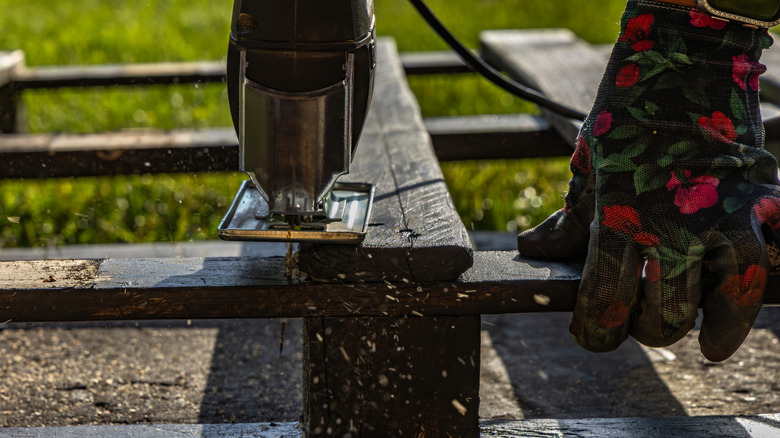
For the feeder build, he uses typical pallet wood pieces, which have been cut down to size and then secured together using mostly wood glue. Additionally, a small aluminum screen — like those used for storm doors — is used to house the bird mix in the swing's seating area. Since pallet wood is often free scrap material that you can source locally, that's one less cost you have to worry about. However, this project does call for a few tools, so this budget-friendly DIY feeder comes with the caveat that you'll want some of that equipment on hand already.
To complete this build, you'll need a table saw, miter saw, a drill, bar clamps, a sander, and wood glue. Additional supplies include metal mesh screening, deck screws, four screw eye hooks, and rope or string for hanging the feeder. You can find miter box kits (which include a saw) on Amazon for less than $30, such as this Jeyntanc 4-Piece Miter Box and Japanese Pull Saw Set, which is only $21. Mesh screening can also be found for under $10. For example, this $6 Ouskr Durable Window Screen Mesh would work perfectly for the mini swing design.
Building the swing bird feeder
First, lay down a sheet of wax paper to protect your work table. Next, use a pry bar or reciprocating saw to break your pallets apart. For this build, the demonstrator takes ½-inch pallet slats and uses a table saw to cut them down to ¼-inch strips.
After cutting the strips, you're going to build the swing's back panel. Start by cutting two pieces around 11 inches long for the front and back edges, and two pieces around 5 inches long for the sides, then glue these together into a square frame. Next, cut and glue roughly fifteen 1x6-inch slats vertically to the panel, evenly spaced about ⅛ inch apart. Then glue two edge pieces upright along the panel's top and bottom. As you work, be sure to clamp each section and let it dry fully before attaching new sections. Now it's time to add the mesh screening that'll house the seed mix.
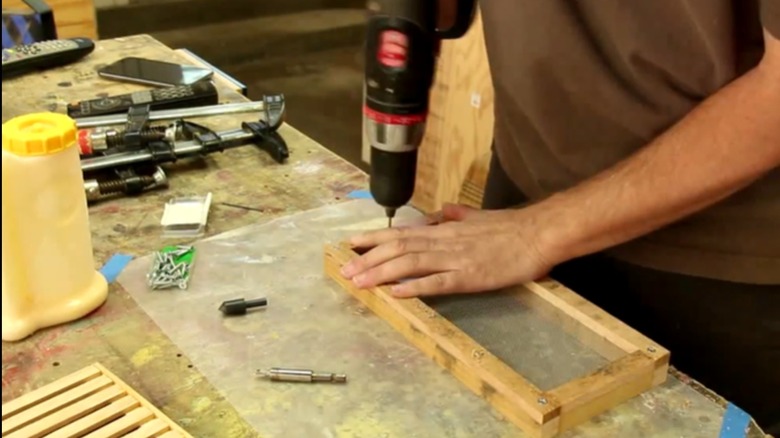
The screening will be sandwiched between two wooden frames — one made from ¾-inch pieces and the other from ¼-inch pieces — both roughly the same size as the back frame. So cut the screening ½ inch smaller than these pieces all around, place it between the frames, then secure the entire piece with wood glue and screws. To create the armrests, glue two thin strips at their corners into an L shape, then attach each to the swing's back panel and base, clamping until dry. Now you can secure the back panel to the seat frame. Do this by cutting two thin edge pieces. These strips should match the depth of the back panel and be long enough to run flush from the top of the panel down to the base. Glue them along the back panel and base.
Finishing touches and small upgrades for your bird feeder
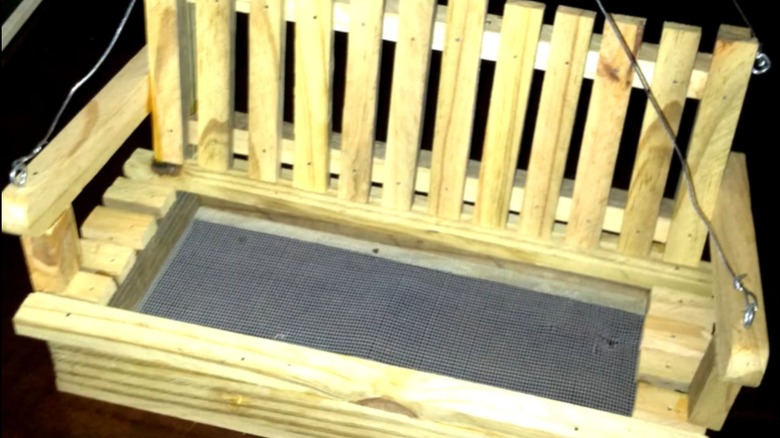
Now that the main areas of the design are complete, it's time for a few finishing touches. As an option, you can also create the illusion of additional seating. To do this, use your miter saw kit to cut small accent pieces of roughly 1 square inch. Glue these pieces onto the top sides of the base, right below the armrests. Once everything is dry, apply a wood stain and let it dry. Next, screw eye hooks into the top back corners and front lower sides of the base. Finish up by looping rope through the hooks and then hanging the swing.
To give this design a more vibrant appeal, or to attract certain bird species, consider painting the feeder instead of staining it, since certain colors can help draw in the types of birds you want in your yard – — such as hummingbirds with red paint tones or blue jays with blue. If you prefer to stick to the farmhouse feel of the build, try creating a weathered look by using chalk paint. Or keep the rustic aesthetic and add a touch of modernity by going with a darker-toned stain, such as Minwax's Dark Walnut Stain.
For more accents, consider using pinecones, branches, and even dried flowers around the base of the swing, giving it a natural, seasonal touch. To upgrade the design and help it last longer, add an umbrella-like cover, such as this Eyrosa 11.5" Metal Bird Feeder Rain Guard. It can protect the feeder from rain and keep hungry squirrels at bay. And of course, you can always paint it to match the swing for a cohesive, finished look.