

Not WD-40: The Alternative From Amazon That Quickly Removes Tool Rust
We may receive a commission on purchases made from links.
The squeaky hinge gets the WD-40. So does the stubborn zipper, the dirty gardening tools, and even the stained carpet. The penetrating oil has certainly earned its reputation as a do-it-all workhorse. There are several brilliant ways you should be using WD-40 in your garage. Among them: Removing rust from tools. However, it's not the only game in town. Eco-friendly and non-toxic, water-based rust-remover Evapo-Rust is a low-effort way to get your tools back in fighting shape with minimal scrubbing.
To take you back to high school chemistry, the product works through the process of selective chelation. The solution binds to and removes rust while leaving the metal underneath unscathed. It's also safe for use on plastic or wood that may be part of the tool because Evapo-Rust is acid-free. However, the product can react badly with active metals like magnesium, so users should keep the composition of their tools in mind.
Some of the more than 13,000 reviewers who gave the product a 4.6 out of 5-star rating rave about the ease of use. "Cleaned up some rusted parts quickly and effectively, just removed the surface rust and didn't damage unaffected areas," noted one of the 2,400-plus buyers who gave it a 5-star rating. "There is no scent or odor which is a big plus. Cleaning it off parts is as simple as washing said part in water."
How to use Evapo-Rust to keep your tools clean
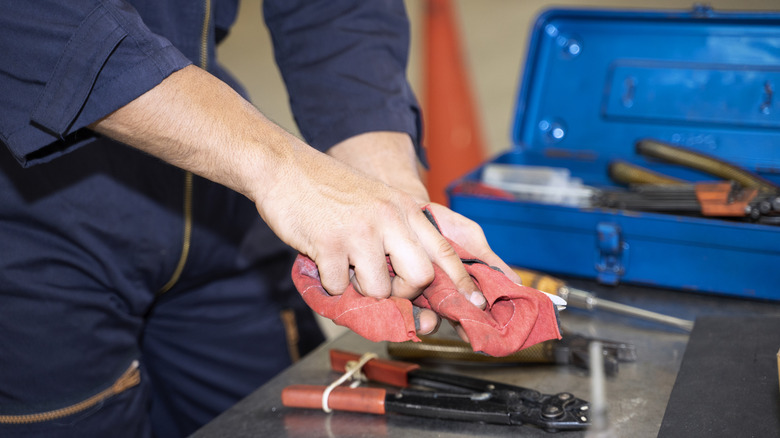
Okay, so things got a bit rusty in your tool box. Before getting started, you'll want to remove any dirt, grease, and stubborn gunk using a degreasing dish soap and some hot water. Then, using a container large enough that you can fully submerge the tool, dunk it inside the unscented formula. For light rust, a half-hour soak should be enough. But if they require heavy-duty work, you'll want to let it sit for at least 12 hours, ideally up to 24. After, rinse it thoroughly, then pat dry. You can pour the leftover solution back into the container.
For tools that are too large to fit into a container, the brand makes a gel that can be brushed or rolled on. You can also use a protective layer of either version to prevent rust before it can build up. That telltale burnt orange is a result of the iron in the metal reacting to a combo of oxygen and water. So it's key to wipe your tools down after each use and store them in a cool, dry place. You can even consider tossing a few silica gel packs into the box for extra insurance.