

Stop Tossing Tin Cans And Paper: Turn Them Into A Hanging House For Bees
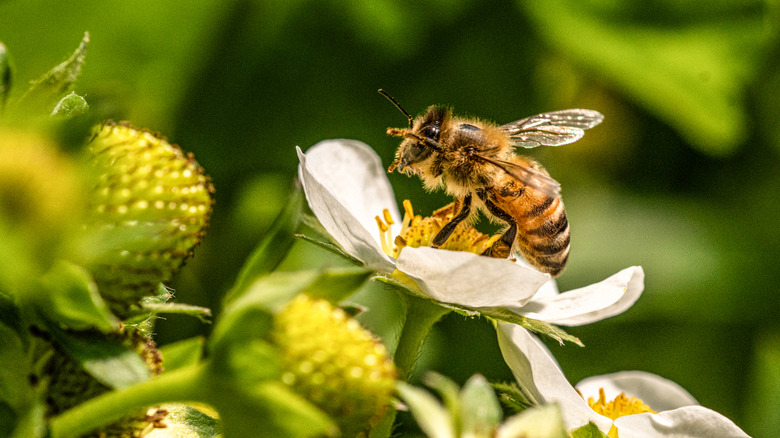
Of all the insects you might find buzzing around your garden, bees are definitely among the most welcome. Bees are pollinators, which means they carry pollen between plants. Pollen is vital for plants to reproduce and thrive, so more pollination means a healthier, fruitful garden. While bees can sting, common bumble and honey bees typically only do so when threatened, so there's no reason to encourage them to visit your yard unless someone in your household has a bee allergy. There are tons of ways to attract bees to your garden, such as by planting the flowering herbs that pollinators love. But you can also give them somewhere to shelter while giving your recycling bin a break. If you have an empty aluminum can and some scrap paper, you can turn both into a simple hanging bee house.
Sadly, the bee population is in serious decline, largely due to the destruction of their native habitats, which is why so many gardeners are using impressive DIYs to create new functional hives for bees. This craft helps counteract that destruction by giving the bees a new home and allowing them to contribute to your neighborhood's ecosystem. All you need is an empty tin can, thoroughly rinsed out, and some scraps of paper. The basic idea is to roll the paper into hollow tubes and pack them into the can, creating a cluster of protected spaces. Before you start crafting, carefully flatten or cover the can's sharp rim so it can't cut you or visiting wildlife.
This simple craft is good for your garden
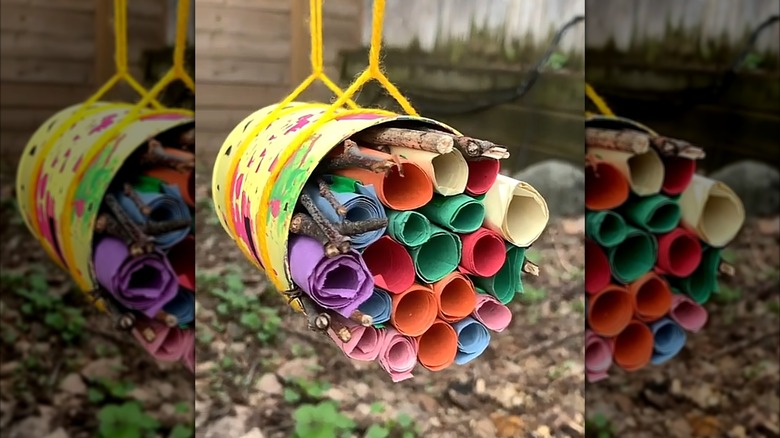
Once the tin can is clean and the rim is safe, make the paper tubes. Any type of scrap paper will work, such as construction paper or old paper bags. Roll each piece tightly around a marker or pencil, then secure it with a strip of tape so it doesn't unravel. Ensure the openings are wide enough bees. If you have a few wide plastic straws lying around, you could use those instead of making your own tubes. Either way, stuff the tin can with tubes, trimming off any material that goes past the rim. For extra structure, you can also stuff the paper tubes into empty toilet paper rolls first, then arrange the rolls inside the aluminum can; this helps with something larger, like a coffee tin.
Now wrap the can with a couple of strands of twine so you can hang your new bee house somewhere in your garden. Choose a sheltered spot that's protected from heavy rain and strong wind, ideally facing morning sun so the nesting tubes can warm up. Before you do, though, you might want to take a few moments to decorate the outside using colorful duct tape or acrylic paint. Bees are attracted to bright colors, especially when they stand out against the foliage. You could also appeal to the bees' preference for an organic aesthetic by adding sticks or flowers to any gaps in the can itself.
After the bee house has been hung up, you can expect a new wave of buzzing pollinators to grace your garden. To increase the local bee population even further, you may want to consider turning an old nursery pot into a sanctuary for ground-nesting bees next.