

What Happens If You Don't Put Gravel Under Pavers?
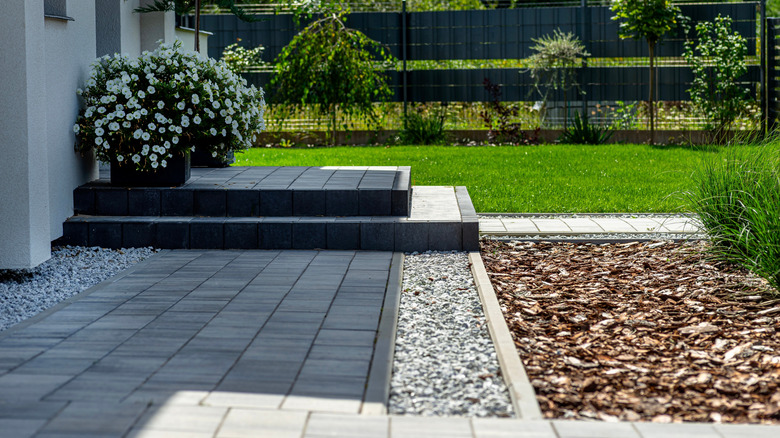
Pavers are a common choice for homeowners looking to build or replace a patio or driveway. Most people like pavers because they are easy to clean and maintain, and some varieties, like Indian sandstone, can last a lifetime. But with any building project, it's key to make sure the foundation is right. If you want to make laying pavers less of a headache, you must put gravel underneath to help prevent the pavers from moving or sinking. The gravel layer under the pavers is often referred to as a sub-base.
If you lay pavers without gravel underneath, it is highly likely that your pavers will warp and experience water damage. A gravel sub-base creates an efficient drainage system that stops water from pooling on top of it. Excess water can cause damaging erosion, leading to mold and mildew growth. With this added moisture, your pavers can also become a popular spot for insects and rodents to breed. But if you lay pavers on a solid gravel sub-base, you can avoid these issues and ensure proper drainage and a solid foundation.
How to lay pavers properly
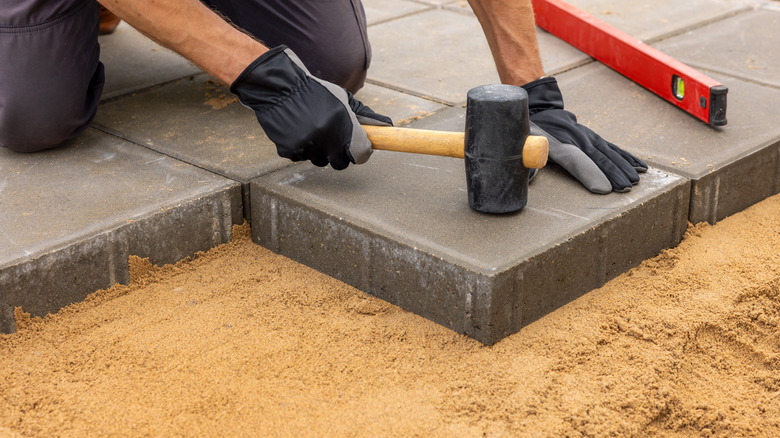
You can lay the pavers yourself or hire someone. To accomplish the DIY paver project, you will need various tools, like a shovel, a rubber mallet, a sub-base such as gravel, a compactor plate, sand, a screeding board, cement, and a brush or broom. Keep in mind the project will likely take you longer than a professional, who can lay the patio in about three to four days.
Dig your patio area about 6 inches deep. This space will hold your gravel sub-base, sand, and pavers. Next, fill the space with gravel to about 4 inches and pat it down using a plate compactor. This step is important to avoid any loose or sunken patio pavers. Spread sand over the gravel to a depth of 1.5 inches using a screeding board for an even layer. As with the compactor step, leveling the sand is also essential to prevent uneven pavers.
Now, place a paver at one corner and use a rubber mallet to tap it into the sand layer. Repeat this process for the remaining pavers, leaving a small gap between each and making sure each paver is level. Lastly, generously fill in the joints, or the spaces between the pavers, with sand using a brush or broom. Pack it down firmly for a seamless finish.