

Forget Mums: The Bright Purple Alternative For Your Container Garden
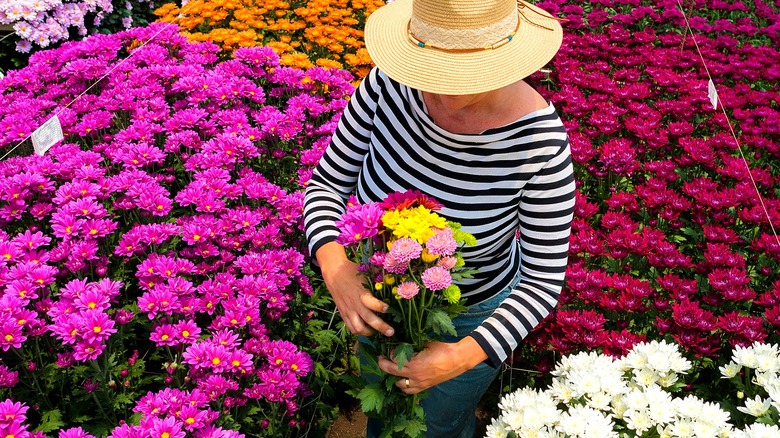
Adding flowers to containers for that perfect display can be fulfilling with the right pop of color from the right species. Chrysanthemums, for example, come in many shades and a variety of shapes, and make great container plants. But if you're a little weary after looking at everyone's dazzling collection of mums, consider branching out. For instance, an option that will bring bold new color and texture to your container garden is purple passion plant (Gynura aurantiaca), a unique flower that will have your neighbors staring thanks to its eye-catching, soft and velvety, purple-edged foliage.
Native to the warm tropical climate of southeast Asia, including the island of Java, this plant — also known as velvet plant — is often chosen as a fast-growing houseplant to make your interior space lush. Being hardy only in zones 10 to 12, it doesn't tolerate frost and prefers warm temperatures at all times. If you live outside these zones, growing it in a container can allow you to bring it inside immediately when the temperatures dip and the threat of frost heightens.
No matter how you decide to grow purple passion plant, though, its showy look and texture is one you don't want to pass up. Specifically, when its dark green, toothed leaves develop fine hairs all along their edges in a contrasting, shimmering purple. In addition, it also grows flowers (in fact, it's in the same family as mums!) toward the end of its life cycle. However, the scent that's associated with these small orange-yellow blooms has been described as "unpleasant."
Growing purple passion plant in containers
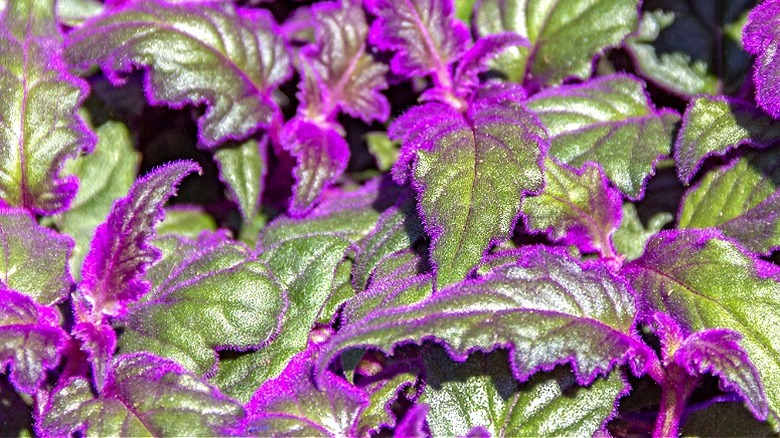
The purple passion plant requires specific sunlight and water for it to thrive and display the best color. To achieve the iconic purple edges of this velvety plant's leaves, make sure to give it bright indirect sunlight, and keep it away from harsh sun rays.
As said, the plant is hardy to zones 10 to 12, so unless you live in the southern part of states like Florida or California, this species needs to be moved indoors prior to the first frost. It also enjoys humid conditions, so you might struggle to grow it outdoors at all in dry areas. When it comes to watering needs, keep the soil moist, but allow for it to dry a little in between waterings. Also, avoid too much water in winter.
If you do persist and grow the purple passion plant as a chrysanthemum alternative, it can be a rewarding endeavor. Its unusual leaves can be a magical addition to your containers, with the fine purple hairs giving the leaves the appearance of being dusted with pixie dust. Given this evergreen perennial's habit to sprawl and tendency to spread vines, consider adding it alongside other trailing plants perfect for hanging baskets for a fresh new look in your container garden.