

How To Quickly Fix Sagging Shade Sails
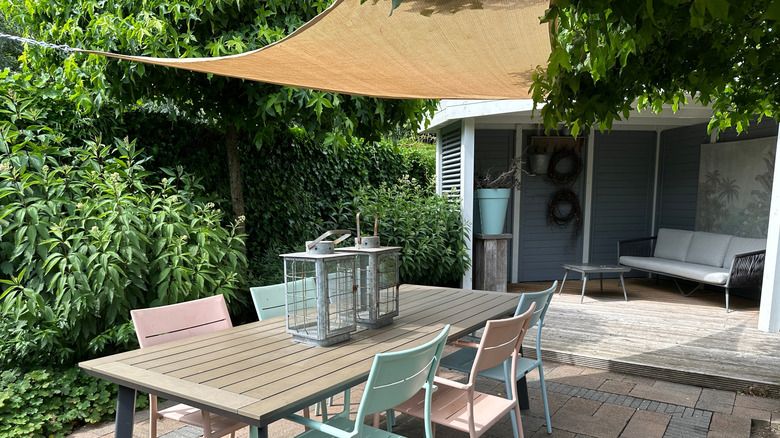
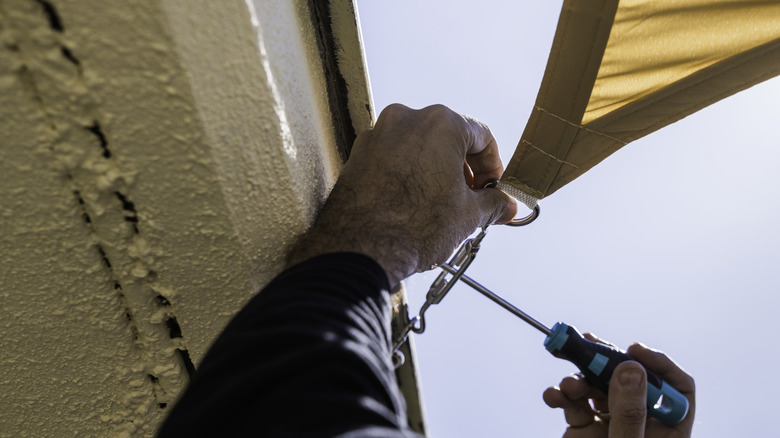
The sun provides light, warmth, and energy, but it can also be a nuisance. All that heat is unwelcome if you're trying to relax on your exposed patio on a sunny summer afternoon. Luckily, there are many ways to add shade (and privacy) to a yard without any trees. You can shade your outdoor space with a DIY retractable canopy, a cantilever umbrella, or shade sails. Any of these options will help keep your outdoor space cool and comfortable throughout the day. Shade sails can, however, sag over time, ruining their aesthetics and effectiveness. You can fix this problem without replacing the sail. Simply tighten the tensioners (also called turnbuckles) at the corners to maintain even tension across the shade sail.
This quick fix addresses many of the most common reasons for sagging shade sails: loose hardware, stretched fabric, insufficient tension, and pooling water. When making adjustments, avoid overtightening the tensioners. Excessive force can put unnecessary stress on the fabric, stitching, or hardware. If a quick tightening doesn't solve the sagging, remove the sail and check whether the fabric is permanently stretched. In this case, repositioning the attachment points can still remedy the issue and provide enough tension to keep the sail from sagging, at least for a while longer. If the problem is the hardware — for example, if eye bolts, hooks, and turnbuckles are worn out, rusty, or deformed — then you might need to replace them altogether.
How to keep your shade sail from sagging again
Frustrated with a sagging sail? Before you say no to shade sails and explore alternative ways to cover your patio, try the tricks above. It's worth it to extend the life of your investment. Shade sails are visually pleasing, affordable, and highly flexible. A properly installed and well-maintained canopy won't sag or dip, and a few simple steps can help keep it taut in the long term. For instance, when adjusting the shade, tension it firmly to remove any wrinkles or loose folds. To ensure the shade doesn't collect water or flap in the wind, pull it tight at each corner.
Keep your shade sails in good shape by inspecting the canopy and its hardware every two to three months or after strong winds, storms, or heavy snowfall. Check the fabric for minor sagging, damaged stitching, and loose corners. Examine the hardware — the steel cables, carabiners, and anchors — for signs of damage or deformation. Replace worn hardware as needed. Although a properly installed sail should be able to hold its own in bad weather, some adjustments may be necessary to help it withstand the elements and stay in good condition. Addressing problems early can prevent minor sagging from worsening and extend the life of your shade sail.