

Is It Okay To Leave Your AC Unit Plugged In All The Time?
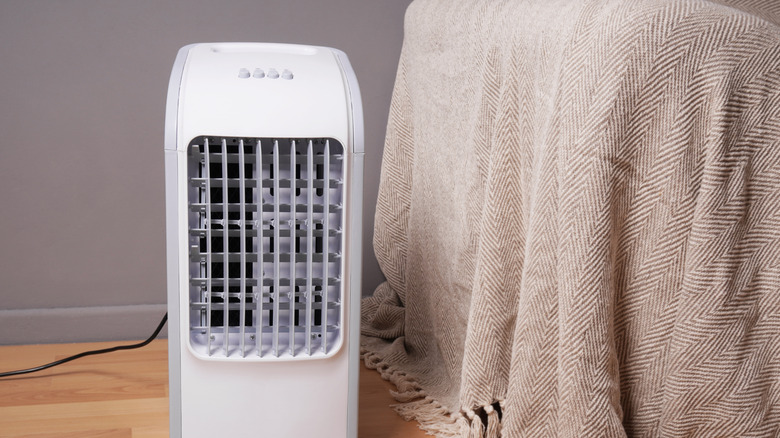
Keys? Check. Wallet? Check. Phone? Check. Whether you're leaving your home to head to work or take a day trip, the mental checklist you go through is usually pretty simple. But is it enough? You might, for example, wonder if leaving your AC unit plugged in all the time, even when you're not home, is a good idea. It turns out that forgetting to unplug certain appliances before leaving for a trip is a big mistake, and your AC unit may be one of them. Central HVAC can run continuously. Instead of turning it off before you go on vacation, you should set your thermostat to between 50 and 85 degrees Fahrenheit, depending on the season. In any case, you can't easily unplug a central air-conditioning system, so the question doesn't really apply.
The first question to consider is whether you can — or should — run your AC unit when you leave the house. The answer depends on how much energy your machine uses to cool a room down. If you have a portable window unit, you should turn it off if you're out for more than two hours. If you're just leaving home for an hour or less, you can leave it on. Now that question is answered, the second thing you need to consider is whether you should unplug the unit from the outlet after you turn it off. Generally speaking, AC units are safe when plugged into a grounded, correctly rated outlet, but that doesn't mean you should always leave it plugged in. There are safety risks and energy waste to take into consideration.
Unplug your AC unit when you go on vacation or a storm is forecast
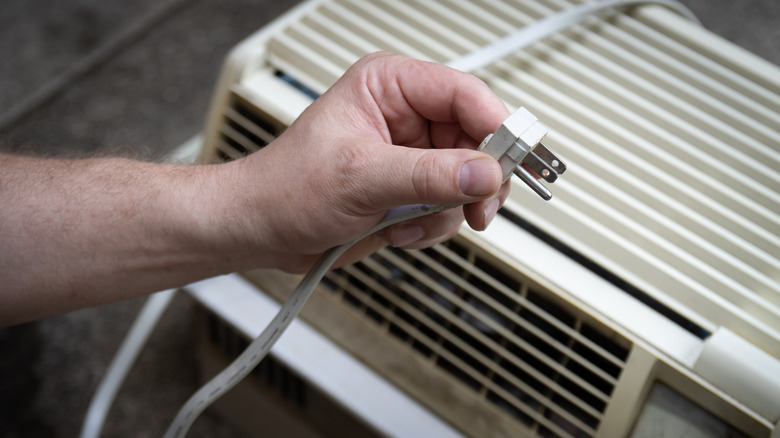
While it's typically safe to leave AC units plugged into the wall, there are some caveats worth considering. First and foremost, a continuously plugged-in unit needs to be in good condition. There can't be anything blocking the airflow, and the electrical and refrigerant components should be well-maintained. If you're unsure about the condition of your AC unit, unplugging it when you're not using it is probably safer.
Another reason to unplug your machine is that there's a risk of a power outage. A power surge when the connection is restored could seriously damage your AC unit. If you're going on vacation, you may not know whether a power outage will occur, so it's best to be proactive and unplug your AC unit on your way out the door. The same applies if a severe storm is forecast.
Plugged-in AC units also use energy even when they're off. If you're going on vacation and not running your machine while you're away, unplugging it is a good way to save the electricity it uses in standby mode. Reducing phantom load (also called parasitic load or energy vampires) from all kinds of appliances, including AC units, can lower your household electricity consumption, which could in turn lower your bill. It's a relatively small contribution — if you forget to unplug your AC unit, it's not the end of the world, energy-use-wise — but the savings can add up over time.