

How To Prevent Condensation On The Inside Of Your Fridge
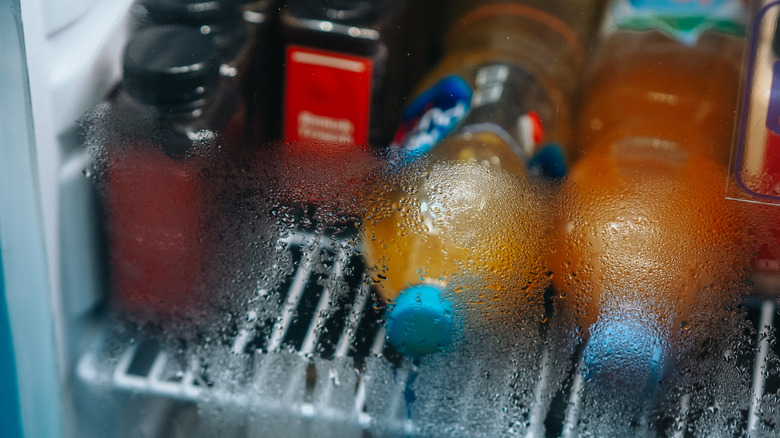
Moisture is one of the biggest concerns when it comes to food safety, which means that condensation inside your refrigerator may be a bad sign. Noticing a small amount of condensation now and then isn't anything to worry about, especially if it disappears after a few hours. But constant condensation that drips down the walls and shelves is a strong indicator that something is wrong with your fridge. If not addressed, the problem could persist until it creates an unsafe environment for your food. There are many factors that could be creating excess condensation in your refrigerator, ranging from overloaded shelves to the humidity level in your kitchen. Fortunately, many of these issues are relatively simple to address and could help keep your fridge in good condition.
The main culprit behind condensation is humidity, and humid air can enter the fridge in a myriad of ways, such as by stocking the shelves with hot or uncovered food. The heat from something like a leftover bowl of soup can create moisture in the refrigerator, so it's best practice to cover food and allow hot dishes to cool somewhat before refrigerating them. It's also important to organize your fridge in such a way that there is plenty of room for air circulation, which will cut down on any humidity.
If you've organized your fridge like a professional chef but still notice condensation, there might be an issue with the door seal. Sometimes this is fixed by simply cleaning away any grime or debris, but if this doesn't work, the seal may need to be replaced. You can check if the seal is faulty by seeing if you can easily pull a piece of paper from under the closed door; if you can, the seal may not be making proper contact.
Tips for reducing your refrigerator's humidity

In some cases, a simple solution for a humid refrigerator is to lower the interior temperature. Food can begin developing bacteria more rapidly once it gets above 40 degrees Fahrenheit, so it's recommended to keep a refrigerator a few degrees colder than that. Things differ between manufacturers, but in general you can set a fridge's temperature to anywhere between 32 and 40 degrees Fahrenheit, so you have a bit of range to find the right setting for your appliance. Being aware of your fridge's temperature zones will also make it easier to stay organized. Speaking of adjusting settings, it's also important that you use the humidity controls correctly on your crisper bins — excess condensation is not normal in them, either. As long as you're tinkering with the inside of your fridge, you should also take a moment to check and clean the air vents to ensure they are providing enough airflow.
Outside of the fridge itself, you can help reduce condensation inside the appliance by monitoring the humidity in your kitchen. Frequently opening the refrigerator door is never a good idea, but it can be especially troublesome if you live in a hot or humid climate. After checking to see if the humidity levels in your home are out of whack, you can mitigate the problem and stop more moisture from creeping in by using a dehumidifier or exhaust fan. In the unfortunate situation that condensation continues to occur despite your adjustments, it's best to call in a professional. That way, you can start with an appliance you know is working properly, and you can utilize these habits to reduce the humidity inside your fridge.