

Can You Overtighten Lawn Mower Blades?
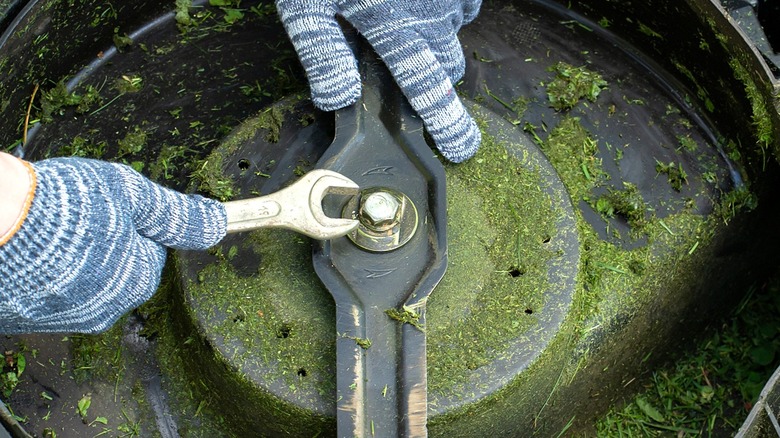
While most modern lawn mowers have a wealth of features that makes them easy for anyone to use, it still helps to have a bit of machinery experience if you want to keep one of these powerful tools in good working condition. For example, lawn mower blades need to be replaced regularly: Once every few years, but sharpened after every 20 to 25 hours of use. For either of these tasks, you'll need to remove the blade, then add it back to the lawn mower. When you do, be sure not to overtighten the blade, as it is possible to do so. A lawn mower blade should spin easily when you move it by hand.
Lawn mower blades work by spinning rapidly to shear swaths of grass. This can't happen if the bolts securing the blades are overtightened. Along with making the mower ineffective, the blade may end up snapping under the extra tension and cause other problems with the mower. Of course, you also don't want the lawn mower blade to be too loose, or it could detach while the mower is running and create a dangerous situation.
When properly attached, a lawn mower blade should be able to spin freely but not shift around on the bolt. To double-check your work, you can always consult the owner's manual for your mower, which should tell you how much torque is proper.
Overtightening mower blades can be dangerous
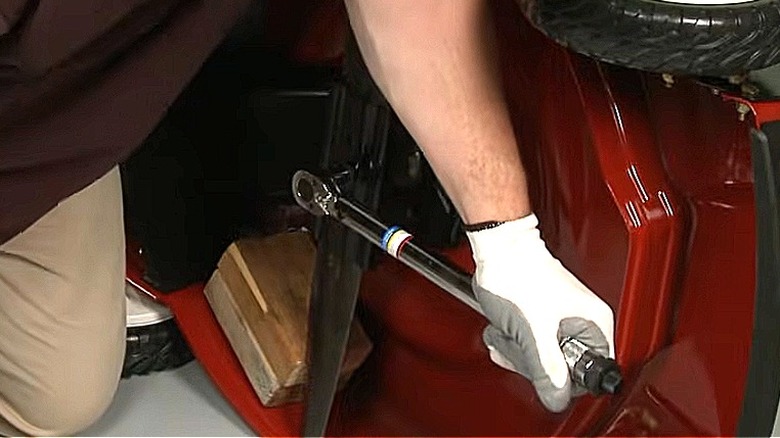
Like with any of the overlooked lawn mower maintenance tasks everyone forgets, before working on your mower blades you should first ensure that the machine is shut off with no chance of turning back on. If you have a push mower, you should remove any gas from the tank before tipping it over so you can access the underside; you should also wear a sturdy pair of gloves to avoid any cuts.
Sticking a plank of wood between the blade and the rim of the lawn mower deck will allow you to work on the bolt without making the blade spin around. After removing the old blade, take a moment to clean any rust or debris off of the hardware, and decide if you need to make any adjustments to the mower height.
Once you're ready to install the new blade, grab your torque wrench and socket, and use your free hand to hold the blade in place. Take note of how much torque your wrench is producing per click, and start turning until you've hit the manufacturer's recommended amount of torque (for example, if you have a Troy-Bilt lawn mower, the torque should be between 38 and 50 pounds per foot for push mowers). Once the blade is securely on — but not too tightly — it should be set for the next yard-work season; and don't forget, lawn mowers can do a lot more than just cut grass.