

What Is The 30-Second Rule For Garbage Disposals?
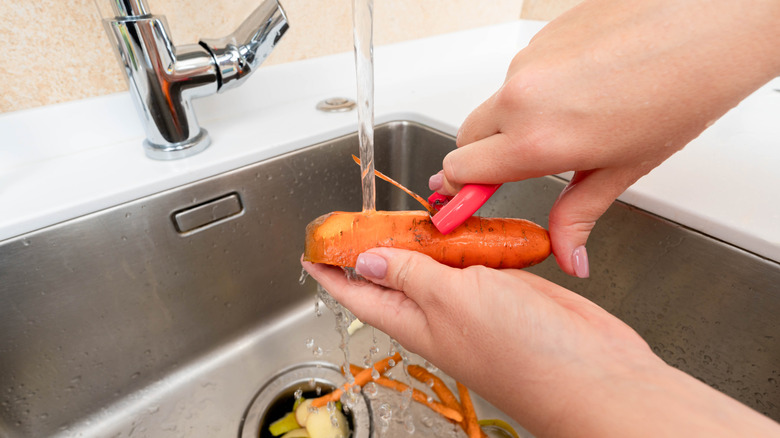
It feels like the kitchen is full of rules. The "throw spaghetti on the wall" rule to see if it's done. (Please it's not just us.) The five-second rule, obviously. (Just kidding.) But there is one rule you may be missing that is key to keeping your garbage disposal running smoothly: the 30-second rule.
The 30-second garbage disposal rule is simple: run water for 30 seconds before and after using the garbage disposal. And before you ask, yes, it's worth it. Why? It all comes down to one thing: water. Running water ahead of the grind helps food waste move down the pipes and away instead of clogging up your plumbing, and after rinses any remaining residue away. It also helps keep stray odors and damage at bay, helping your garbage disposal really last. In other words, this rule is a win, win, win.
There is one part of this rule that anecdotal evidence is divided on: whether it reduces heat in your disposal's motor. Some folks claim yes, while others state it makes no difference. Our take? It certainly can't hurt.
The Dos and Don'ts of the Garbage Disposal 30-Second Rule
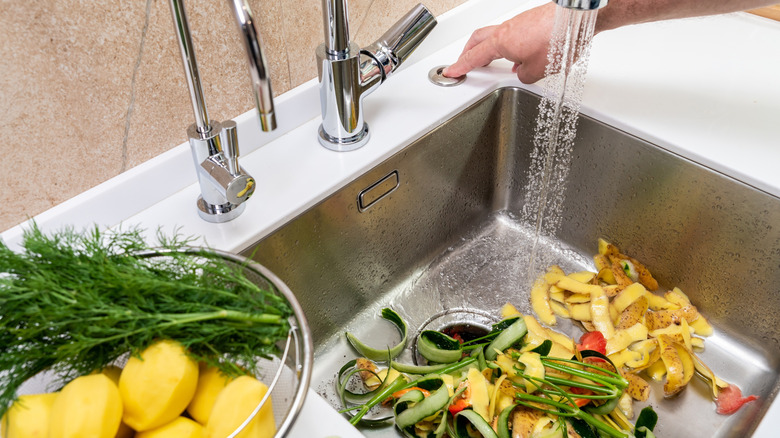
If you're thinking, "Okay, turn water on for a bit, run disposal, run the water some more, then turn off, got it," hold up. Yes, the rule is straightforward, but there are a few dos and don'ts to keep in mind. The first one? Do run the water for 30 seconds before and after. Most homeowners know the correct length of time to run your garbage disposal is at least 10 seconds, but most think that the water only needs to run while the machine is on. Making sure there's plenty of water in the disposal is key to the machine running properly and being able to do its job. Speaking of water, don't only use a trickle of water. Aim for a continuous flow. This helps make sure there's enough liquid to wash away debris and rinse the appliance clean.
Another do to keep in mind is to turn the tap all the way to cold. When it comes to cleaning, especially in the kitchen, most of us default to hot water out of habit, but the truth is, it could actually cause more damage. Why? Hot water melts the fats, grease, and other gunk created by processing food waste. When you rinse it down the drain, it could blanket the inside of your plumbing, creating clogs or other issues down the road. On the other hand, cold water keeps all those bits solid, making them easier to chop and rinse away. Plus, it keeps the appliance parts moving easily, reducing friction and lowering the potential damage to your garbage disposal.