

Do You Need To Fill Holes After Using Lawn Aerators?
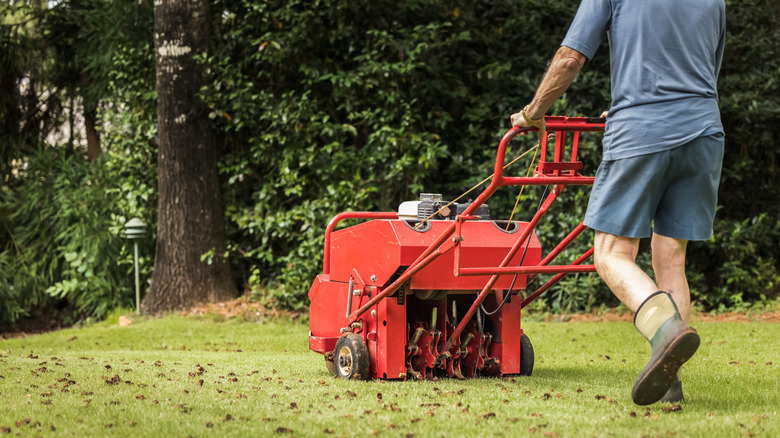
Lawn aeration is the process of breaking up the soil to create more air space and allow more moisture and nutrients in. This is done using an aerator tool, which punches holes in the soil and may leave your lawn looking less even. This unsightly effect is compounded if you're using a plug aerator, since the tool actually removes clumps of soil and leaves them on the lawn. After seeing your pockmarked grass, your first instinct may be to try to fill in the holes to restore your lawn, but this isn't helpful. Instead, leave the holes as-is after using a lawn aerator — they give you an opportunity to treat your grass with amendments.
Aeration makes a lawn more accepting of soil treatments, and filling the holes is a mistake everyone makes when aerating their lawn at least once. For instance, this is a great time to sow new grass seed. You can either aerate and overseed your entire lawn to make it look lusher next season, or you can focus your efforts on patchy areas of your lawn. After reseeding, you can also add a layer of topdressing to boost grass growth — the grass blades will eventually fill in the aeration holes. As you might imagine, the deeper a topdressing, such as compost, is incorporated into the soil, the more nutrients it will provide. Even if you don't plan on sowing grass seed, your lawn will still benefit from basic maintenance tasks like watering and fertilizing post-aeration.
It's best to leave the aeration holes in your lawn untouched
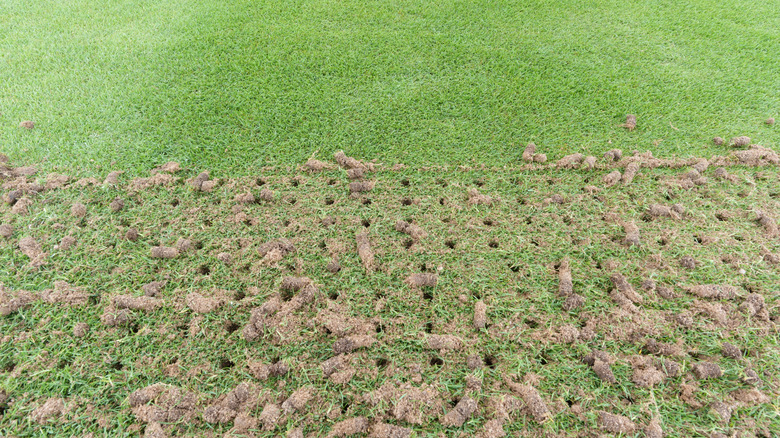
In general, these guidelines apply regardless of whether your aeration tool left behind plugs of grass and soil. In fact, leaving behind these cores is a clever way to transform a lackluster lawn into a stunning green oasis. They naturally degrade into the soil, infusing it with nutrients and beneficial microorganisms. However, there are a few situations where you will want to rake up the soil cores. Foot traffic from people and pets can compact the clumps, smashing them into the grass and suffocating it. This is made worse if the soil is wet and the cores become a muddy mess. You also don't want the cores to become an obstacle when mowing the lawn.
Ideally, you should wait at least two weeks before allowing any foot traffic or lawn equipment on your aerated grass. If the soil plugs remain longer than that, collect them and add them to your compost pile. They're great to use as part of your topdressing on your lawn or other parts of your garden, or you can use them to level an uneven yard. For folks who take a lot of pride in their lawn, it can be a bit painful to see it full of aeration holes and loose clumps of dirt, but these tiny tunnels into the soil create healthy grass. There's no reason to skip this important step, since you don't have to waste money on pricey lawn aerators: you can rent one for less at Home Depot.