

The Right Wood Choice Can Keep Carpenter Bees Away From Your Home
We may receive a commission on purchases made from links.
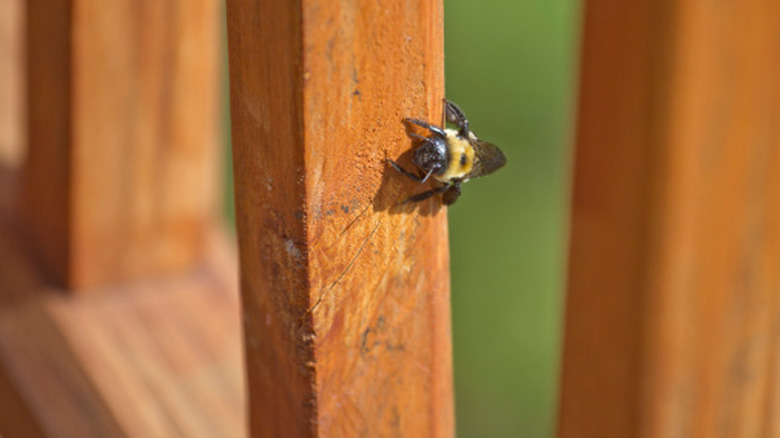
Normally, sprucing up your home's exterior is exciting. There's so much you can do to make it feel new again. You can, for example, build a wooden deck or garden shed in your backyard and paint the structure a fun color. Adorn your new outdoor space with potted plants, and you'll attract pollinators. If, however, your yard is home to carpenter bees, those bumblebee doppelgängers with a penchant for chewing through timber, you need to carefully consider your choice of materials.
Carpenter bees drill holes into wood not to consume it but to lay their eggs. They use their mandibles for this purpose and prefer to bore into softwoods, such as pine, cedar, Douglas fir, redwood, ash, mulberry, pecan, and mimosa. Building outdoor structures from hardwood may discourage carpenter bees from nesting. Hardwoods like ipe and black walnut are quite expensive, while hickory, black locust, and white oak are slightly more affordable.
Because carpenter bees come back to the same nest every year, discouraging them from your property in the first place is essential. The damage they cause accumulates over time and can eventually make a structure unsound. Plus, water can seep into the holes the bees drill, causing the wood to develop rot or grow mold, creating more than just an unsightly problem. What's worse, carpenter bees can invite troublesome birds to your yard, like woodpeckers and flickers. Their attempts to feed on the bees' larvae can compound the damage.
Making the switch to hardwood? Consider the finish
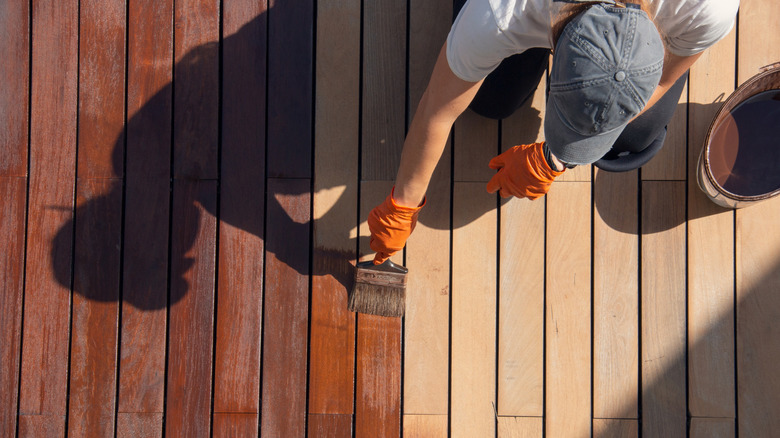
Although using hardwood over softwood for structures in your yard may deter carpenter bees, it's far from a foolproof solution. Where alternate sources of wood are scarce, they may still build their nests in hardwoods, provided they can tunnel through it. In your fight against these pesky insects, it might be useful to break open a can of polyurethane or oil-based paint to finish hardwood structures. Since the bees follow the wood grain, painted timber can deter them. Fill any holes or cracks with putty or caulk before painting the wood. If you're tired of keeping carpenter bees from your outdoor structures, there are other options.
The efficacy of staining exposed wood to protect against carpenter bees is less clear. However, if the alternative is leaving the wood bare, staining may be worth a shot. You can also try to keep carpenter bees from drilling into your deck with a sweet smell they can't stand: almond oil. Apply a coat of the oil annually in spring to treat any newly weathered wood before new bees emerge from their nests. If you can't or don't want to paint your hardwood structures, choose pressure-treated wood coated with a preservative. As a last resort, you can buy repellents that you mix into wood paint or stain to dissuade boring insects. A three-pack of 5-gallon bottles of Walla Walla Environmental Bug Juice Insecticide Paint Additive costs about $90.
Caveats about hardwood when dealing with carpenter bees
Carpenter bees typically nest in decks, fascia boards, siding, trim, barn walls, eaves, and rafters. While choosing hardwood over softwood goes some way toward protecting these parts of a building, it's equally important to consider the condition of the timber. Carpenter bees are partial to bare wood — unfinished, unvarnished, unsealed, old, decaying, or dead. It doesn't matter if the wood is soft or hard; if it's structurally unsound, it will attract them. Moreover, these wood-ruining bees like to get a head start on nesting if they can and will target timber that's cracking, splintering, or full of nail holes. All of these provide easy starting points for boring holes.
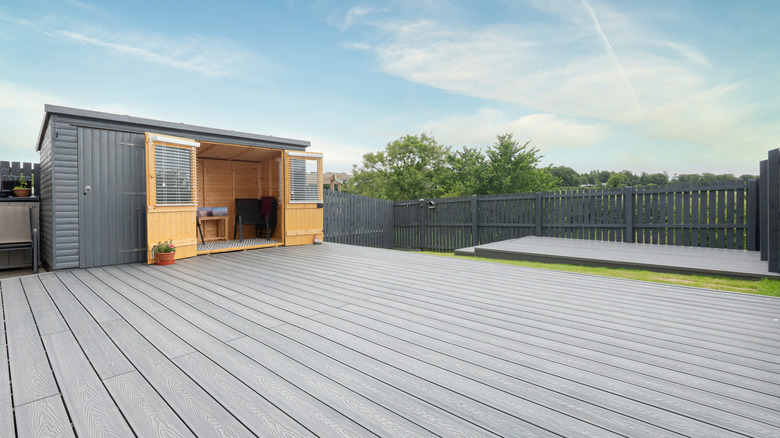
Alternatively, you can use granular or liquid insecticides that kill any bees that attempt to bore into the wood. The active ingredients in these chemical controls include permethrin, cyfluthrin, or carbaryl, and many of these products are only approved for use by professional exterminators. It's rarely feasible — both practically and financially — to coat every bare wooden surface in your yard with insecticide. Moreover, preventive insecticides have a short life and require frequent reapplication, making them a last-resort option. If you prefer to take a chemical-free approach, ditch timber altogether and use building materials that carpenter bees won't bore through, like composite, aluminum, or vinyl. They're less rustic-looking, but they're arguably longer-lasting.