

How To Trap Bugs With A Chemical That's Already In Your Garage
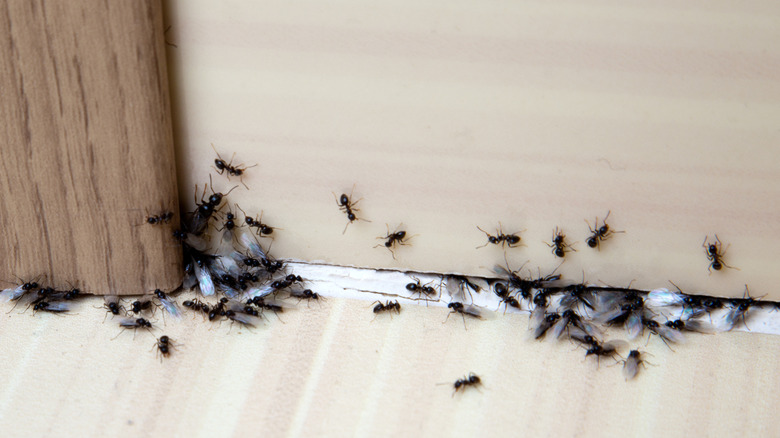
Things like ants and fruit flies are among a host of bugs you don't want living in your house. Commercial traps and sprays are one way to deal with them, but apart from the cost, there are concerns about their toxicity and the way they impact the quality of the air you breathe. There is a chemical that you might already have in your garage that can be a useful alternative: antifreeze. Let's take a look at how it works and a couple of things you'll probably want to avoid.
Antifreeze contains an organic compound called glycol. It's a type of alcohol, and as such, it doesn't freeze until the temperature is much lower than for water. That's why it's used in your car radiator and washer fluid tank. However, it's not the booze that attracts bugs, it's the sweet smell and sugary flavor. If the antifreeze in your trap is deep enough, the bugs will wander or fly in and drown.
They might also die because some antifreeze is poisonous, and not just to bugs. So before you start filling trays or saucers and putting them around the house, it's vital that you know which ones are safe to use.
Did you know that automotive antifreeze and RV antifreeze are not the same?
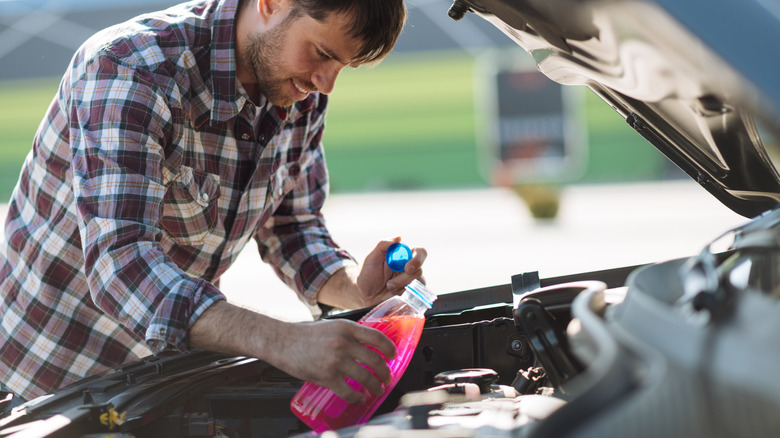
Automotive antifreeze contains ethylene glycol. It works as a bug killer, but it's toxic. In fact, it can be lethal to both animals and people if swallowed. You wouldn't want to use that with kids or pets around. On the other hand, RV antifreeze contains propylene glycol, which is not toxic. There's even a food-safe version.
You might think it would be less effective, but in some tests it captured more bugs than the poisonous sort. However, propylene glycol can be quite thick. Enough that some bugs could literally just walk across the surface. A few drops of unscented dish soap used as a surfactant (something that loosens the surface tension) will solve the problem.
The drawback with antifreeze bug traps is that they don't discriminate. There are lots of insects you should avoid killing because of the benefits they offer as pollinators and as natural pest controllers. So antifreeze is great if you've got ants in the basement, but if you use it in the yard to tackle aphids, you risk killing bees too.
There are also some bugs that are better left for the pros to deal with. Cockroaches, for example, are not particularly attracted to antifreeze. Although they will eat sweet foods, they're equally happy with cheese or something that's rotting. That said, if you have some RV antifreeze in the garage, it's safe to try, so you can see just what you do catch.