

Gardener Uses Bricks To Make An Incredibly Beautiful Bug Hotel
We may receive a commission on purchases made from links.
Bug hotels can attract a host of beneficial insects to your garden, from pollinators like bees to aphid-eating ladybugs and hoverflies. Perhaps a bit less cute but still important, they can also encourage spiders, parasitic wasps, and beetles to make themselves at home. As awesome as this sounds, pre-made house-shaped bug hotels can cost anywhere from $15 to $100. Luckily you don't have to drain your wallet to make your garden a pollinator haven. In fact, there's an alternative that you can build quickly and potentially for free depending on how you source your materials.
DIY by KreativniTechniky on YouTube strayed away from the common gable-roofed design by crafting an insect haven with stacks of bricks layered with organic matter. The cherry on top is a wildlife watering station made from a plant saucer and well-placed pebbles (essentially a bug's equivalent to a rooftop pool and bar). There's even a clump of moss that adds another natural element to the design. One commenter summed up the DIY perfectly by calling it "So simple, effective and beautiful!" And it's true, this rustic version can bring character and purpose to your outdoor space without resembling a tiny human dwelling.
Stack bricks and organic matter to create an insect haven
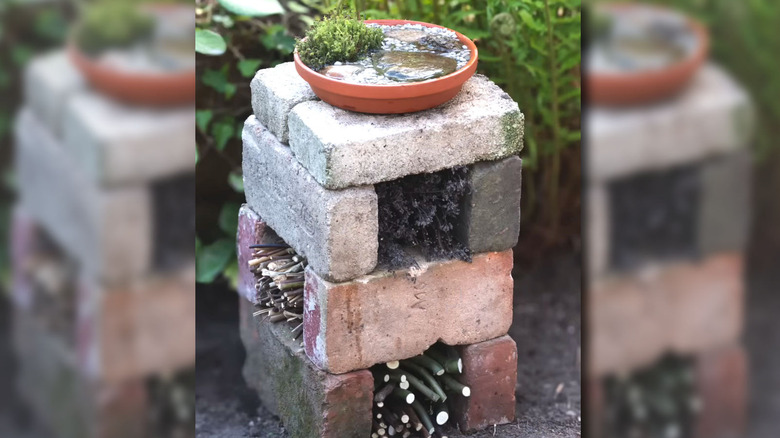
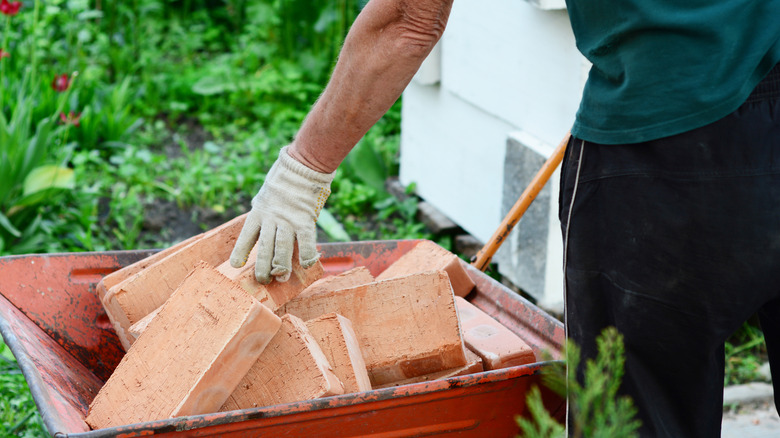
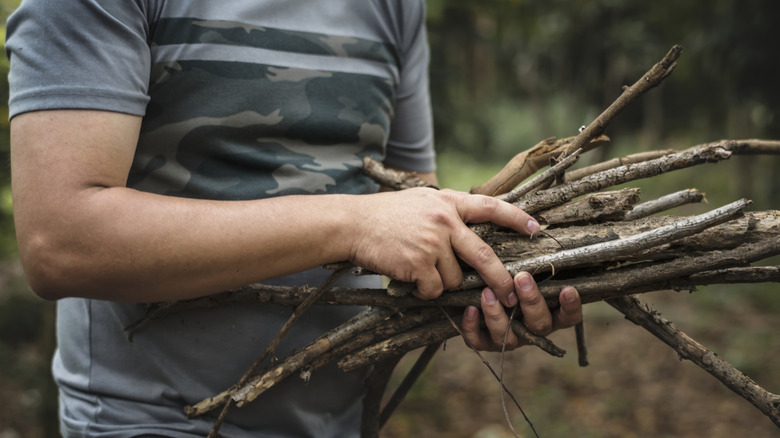
Based on the video, you'll need approximately eight garden bricks of the same size, along with collected twigs, bamboo (or more wood — whatever you have on hand), and dried plant matter. The plant saucer should be large enough to hold a shallow layer of water along with rocks and moss. When filled with water, the rocks can provide landing spots where insects can access the water without having to land directly in it. Use a mixture of natural materials to create different hiding places, keeping nesting materials like hollow stems and bamboo protected from excess moisture. Use twigs and branches you find around your yard, or recycle unused logs from your firewood pile as long as you know they haven't been treated with potentially harmful chemicals.
When it comes to building this DIY bug hotel, keep in mind that the size of the bricks you have will determine the width of the crevices created and how much material you'll need to fill them. DIY by KreativniTechniky stuffs each section with organic matter before adding a new layer of bricks, but you can always gather more twigs or foliage to fill large gaps and create more nooks and crannies for bugs to shelter in. If you're able to source some of the materials from around your home or yard, you may be able to build the structure for approximately $10 or less. Grab these Multi-Toned River Pebbles from your local Dollar Tree to save on costs. Yoou may also be able to find an inexpensive plant saucer there or secondhand if you don't have one already. An old plate or decorative bowl could work just as well.
Tips for optimizing your rustic bug hotel
The best spot to put an insect shelter is close to a tree, shrub, or hedgerow. Extra points if the spot gets sunlight at some point during the day to reduce chances of mold. Nearby flowers can make the location even more attractive to pollinators by providing a convenient source of nectar and pollen. Ensure the bricks are resting on a level surface to prevent the structure from turning into a nature-inspired Jenga tower. You may have to dig out an area or use paving stones to create an even base. This will also keep the "rooftop watering hole" from tilting and leaking water everywhere.
One commenter did say that in their garden, it would just become a "luxury slug/snail hotel", and while it's true that you can't control who's "checking in", the presence of beetles could help keep the population down. Another person mentioned concerns about mosquitoes breeding in the water station. To prevent the saucer from becoming a mosquito breeding site, regularly dump the old water, rinse the saucer, and refill it with fresh water. During summer months, it may also dry out frequently depending on where you live and how much sun the spot gets. You can also sprinkle the pool with a Bti-based larvicide, like Mosquito BITS, since they have no effect on beneficial insects but will disrupt the mosquitoes' lifecycle.