

What Do The Green Stains On Your Concrete Driveway Mean?
Many homeowners appreciate concrete driveways for the clean, uniform look they can add to a yard, and the fact that it's easy to spruce up your driveway with a unique finish. Concrete is also supposed to be relatively low-maintenance, which makes it all the more frustrating when its surface is marred by a mysterious green stain. Fortunately, this isn't a sign of some toxic waste buried beneath your property, and instead typically has a very natural and treatable cause. A green stain on your concrete driveway could be from algae, moss, or other biological growth, but regardless of the specific culprit, it's usually possible to remove the stain and take steps to prevent it from coming back.
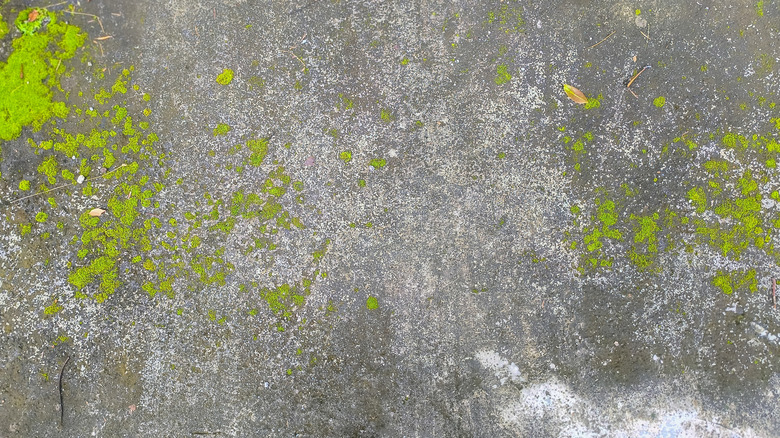
There are a few features that may help you determine what's causing a green spot. For instance, if the stain is especially dark or even black in some areas, it's likely mold or mildew. Moss tends to form soft, raised patches or mats, while algae typically creates a flatter green film across the surface. These types of growth thrive in damp conditions, so implementing better drainage solutions or reducing excessive shade around the concrete may help discourage them. Mold, moss, and algae can also thrive around damp leaves and other debris, so regularly sweeping your driveway can help keep the surface cleaner and drier. If you live in a humid environment, it's especially important to ensure your driveway gets enough sunlight to stop moisture from accumulating.
Green stains can be caused by algae, moss, or mildew
A thorough scrub with a stiff-bristled brush may be enough to remove the surface level of any green concrete stain, but to ensure whatever is growing in your driveway doesn't come back, you'll have to take more involved measures. One straightforward way to tackle green growth is to use a commercial cleaner labeled for removing mold, moss, or algae stains from concrete. Alternatively, you could mix up your own cleaner by diluting vinegar or bleach with water; use a 3:1 ratio of water to bleach, or a 1:1 combo of water and vinegar. Whatever cleaner you go with, the first step is to prepare your driveway by removing any debris and creating a barrier to protect any nearby plants. Then, apply the cleaner according to its directions, allow it to sit for the recommended amount of time, and scrub the affected area if instructed.
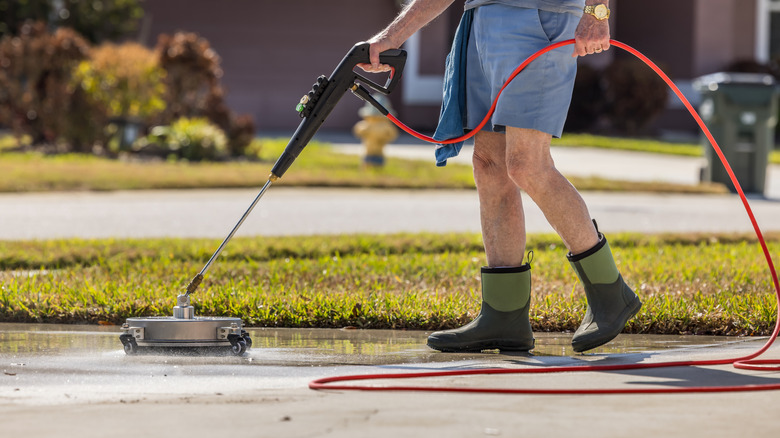
After rinsing away the cleaning solution as directed, inspect the area for any remaining discoloration or growth. If so, you may want to use a pressure washer to better clean the concrete's nooks and crannies — doing so can make your driveway look brand new again. If your driveway has cracks or other damaged areas that hold water, repairing them may help reduce places where moisture can linger. Depending on the type and condition of your concrete, applying an appropriate sealer may also help protect its surface. Even if you aren't currently dealing with any stains, it's a good idea to clean your concrete driveway regularly, sweeping away leaves and debris and addressing areas where water tends to linger can help you stay a step ahead of whatever little green organisms want to make the slab their home.