

Not Wood Chips: The Best Type Of Mulch To Use Around Your Home's Foundation
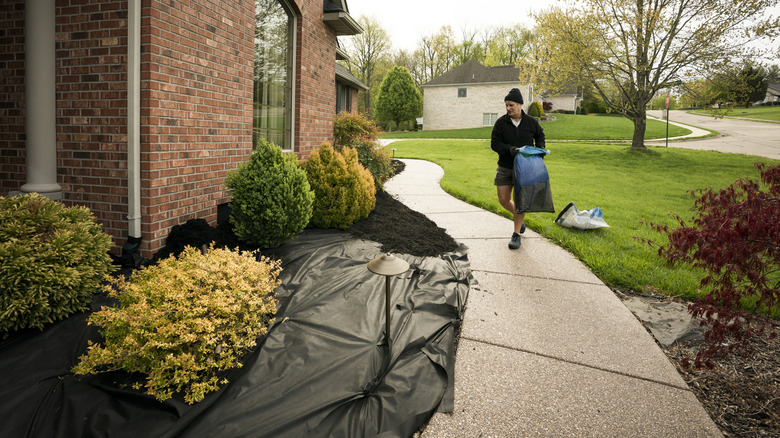
There is no room for compromise or mistakes when it comes to your home's foundation. Whether you are building a concrete slab, crawl space, or basement foundation, this load-bearing structure should be able to support and transfer the weight of the house into the ground. This makes the materials surrounding the foundation worth carefully considering. While wood chips can be one of the best types of mulch for the garden, it isn't for areas directly next to a home's foundation. Because, apart from trapping moisture, it's the type of mulch that attracts the most bugs. For areas directly against the foundation, inorganic materials like gravel, rock, or river stones are a better choice.
Compared to wood mulch, inorganic materials do not contain organic matter that pests, like termites and carpenter ants, feed on or build their nests with. Additionally, they are less likely to hold moisture, which is quite important since trapped water can lead to mold growth and structural damage to the property. You can still use organic mulch, like shredded hardwood, in your garden beds, but be sure to position it away from the foundation instead of near or directly against it.
How to use gravel around your home's foundation
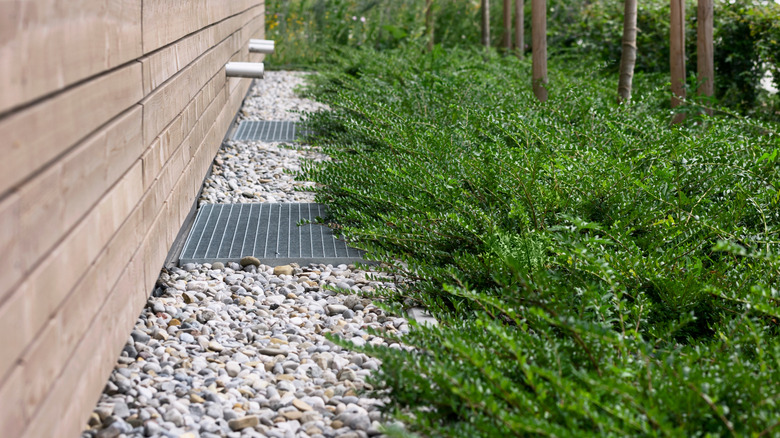
Before you can even lay the gravel on the ground, it's important that you clear existing organic material, such as dried leaves and wood fragments, from the area surrounding your home's foundation walls. Use tools like a shovel or rake to do this, or you may get down and dirty and grab them with your gloved hands. Next, spread the gravel, rock, or river stones evenly across the area, covering the first 12 to 18 inches next to your house's structure. The goal here is to preserve your home's structural integrity by creating a border between the foundation and organic matter. The inorganic materials can serve as a barrier around your home to keep rodents out, as well as more invasive pests.
When spreading the inorganic mulch, see to it that the rocks do not get mixed with wood and other organic matter that can decompose. Otherwise, this defeats the purpose of clearing the area before starting the project. If you have a garden bed next to your house, keep the wooden mulch much farther out from the foundation walls instead of allowing it near the siding or concrete. This setup will let you continue using organic mulch where it is needed for your garden plants while keeping the area around the foundation free of it. It's also worth noting that gravel and stones can help stop soil erosion during the rainy season, which also helps sustain the structural integrity of the house.