

Not Foxglove, Not Caladium: The Pale Pink Flower That Thrives In Shaded Beds
We may receive a commission on purchases made from links.
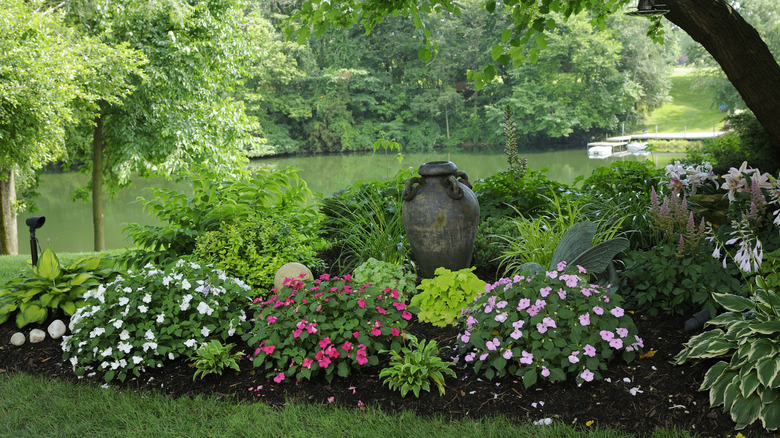
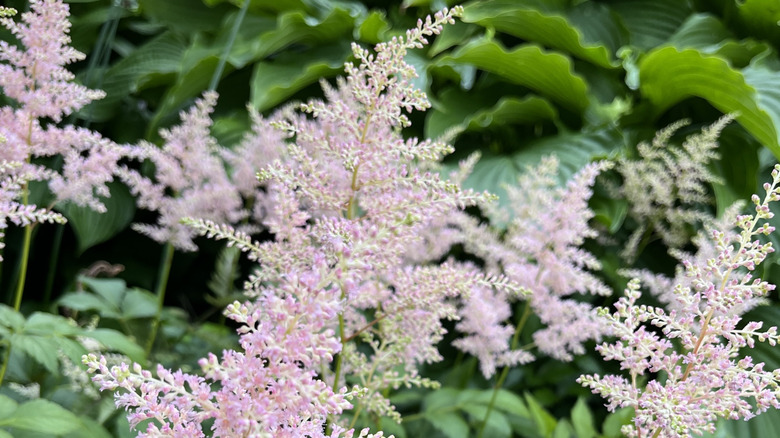
Here's a hot take: sunny gardens are overrated. You need to stay on top of your watering schedule or your plants will wilt, and weeds flourish in all that bright light. Working under the hot sun is draining, too. Have you considered growing a gorgeous, healthy shade garden instead? Under lower light conditions and cooler temperatures, weeds grow more slowly, and your plants need less water and less maintenance. If you're ready to explore all that shade gardens can offer, start with false goatsbeard (Astilbe 'Europa'), not least because this pretty perennial explodes with fluffy plumes of tiny pink flowers each spring.
The densely packed flower spikes of false goatsbeard are gorgeous, but they're not the only thing contributing to the plant's beauty. The plant grows 2 to 3 feet tall and forms compact clumps that rarely need pruning. After the first frost, you can cut the fern-like foliage to the ground and cover the plant with mulch for protection against cold temperatures. This Astilbe cultivar thrives in USDA Plant Hardiness Zones 4 to 8.
As you would with any new plant, make sure the spot where you plan to plant false goatsbeard has the right amount of sunlight. This plant prefers partial to full shade. Keep in mind, too, that lighting conditions can change across the day and the season. What's in shade in the morning may be in full sun in the afternoon, so take your time deciding. Broadly speaking, astilbes thrive in moist, fertile, well-draining soil. If the soil contains too much clay, add compost or other organic matter to amend it.
Caring for false goatsbeard in a shade garden
Although shade-loving plants often require less maintenance than their sun-loving counterparts, they're not maintenance-free. Plant false goatsbeard in your garden after the last spring frost or in early to mid-fall. Keep the soil evenly damp but not soggy. Add a layer of mulch around the plant to keep weeds at bay and, perhaps more importantly, retain the moisture astilbes need. Plus, it can help cool the plant's roots in summer.
Give false goatsbeard a phosphorus-rich, slow-release fertilizer in spring, after the blooms emerge. A 5-pound bag of The Grow Co Triple Super Phosphate 0-46-0 Fertilizer costs about $19. If the plant is growing too slowly, it may also benefit from an application of balanced fertilizer (10-10-10) in the middle of summer. Although there are many perennials you should deadhead for blooms that keep coming, astilbes aren't one of them. Removing spent flowers won't result in repeat blooming. Instead, leave the flowers on the stems for visual interest later in the season.
Divide false goatsbeard clumps every few years in early spring or fall. Make sure each division has an eye — a bud on the roots that will produce new shoots — before planting them elsewhere in your garden. There are lots of gorgeous astilbes to plant in your shade garden in spring alongside false goatsbeard. You could also choose to pair this plant with other species to add more texture and color. Consider Japanese forest grass (Hakonechloa macra), which has cascading, sword-like leaves, or Siberian bugloss (Brunnera macrophylla), which contributes delicate blue and white flowers in spring.