

The Old-Fashioned, Forgotten Shrub That Fills Your Garden With Color All Season
The year was 1866; the enthusiast was George Robert Hall, the horticultural trader (and former physician) who reportedly introduced Japanese honeysuckle to the United States. That year, the plant that piqued Hall's curiosity and caught on with the populace was black jetbead (Rhodotypos scandens). However, chances are you haven't seen, let alone heard of, it today.
As breeders incessantly introduce new plants with superior traits, like disease resistance, more petals, or improved hardiness ranges, old plants are often replaced with worthier brethren. Black jetbead, also known as white kerria and jetberry bush, perhaps met a similar fate. While it was amply fashionable in the nineteenth century when anything from the oriental east was an exotic marvel worth having, the reputation didn't stick. Yet, this old-fashioned, now-forgotten shrub can wield wonders in your garden all season long.
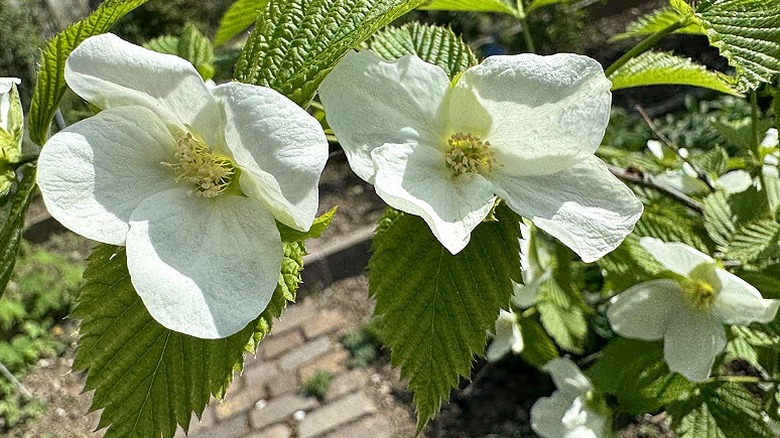
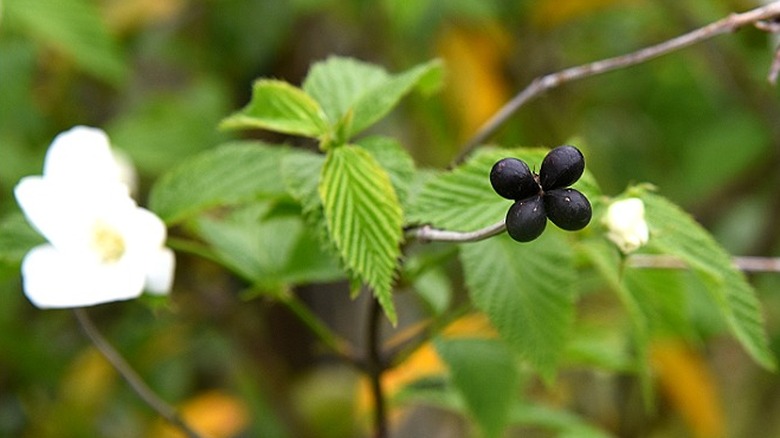
As one of the earliest deciduous shrubs to green up in spring, black jetbead doesn't take long to produce its flowers. By May, expect waves of unsullied, four-petaled white flowers that contrast beautifully with the plant's ribbed foliage. These blooms last into June and are followed by hard, red drupes that turn black in the fall and remain standing on stems through the winter, offering ornate interest. In fact, you may be able to spot these old fruits next year sharing space right alongside new flowers. Their leaves may develop blushes of yellow in autumn, too, though it isn't very significant.
Black jetbead is a highly versatile plant
Beauty aside, black jetbead stands out for its adaptability. If you can't figure out whether your plants are dying from excessive sun or shade, planting this fast-growing shade plant will ensure your garden is effortlessly filled with color. That's because it can handle full sun, deep shade, and the in-between spectrum, solving the Goldilocks equation like a champ.
Moreover, black jetbead can handle most soils. So, if you're looking for beautiful plants that will thrive in clay soil or tolerate alkaline pH, this one is worth a try. However, just ensure it has good drainage, as super dry or waterlogged soils can turn this otherwise easy-to-maintain plant straggly. Surprisingly, despite belonging to the rose family, it exhibits little susceptibility to diseases and pests, save for cankers and thrips. It can also withstand urban pollution, salt sprays, and drought.
Black jetbead can overwinter successfully in USDA zones 4 to 8. Note that the plant takes over five years to mature fully and often grows wider than tall. Since it takes on a billowy, bushy form later in life, it's more appropriate in informal or cottage gardens. However, if you're willing to shear and shape its leaves (winter end is the ideal time for it), you can plant black jetbead as a low-maintenance hedge. Since the veined leaves fill out the shrub densely, you can also use these plants to add privacy to your yard.
Drawbacks to growing black jetbead
Unfortunately, black jetbead has invaded forested areas in the eastern U.S., outcompeting and displacing understory layers and the wildlife dependent on them. Turns out, deer avoid the plant's foliage, which doesn't help in containing its spread, while birds, despite the lack of pulp, gorge on the fruits and disseminate the seeds far and wide. So, if you live in states where black jetbead is labeled invasive, such as Delaware, Maryland, New Jersey, and North Carolina, it's best that this forgotten shrub remains forgotten.
Outside of the invasive areas, it's safe to plant black jetbead. But do note that the plant can get weedy due to its self-seeding tendencies. So, infrequently, you may find errant seedlings to tug out for a tidy landscape; considering this shrub isn't widely available, you could give the uprooted seedlings away to gardening friends to share the joy. Also, be aware that the beady fruits growing on black jetbead contain amygdalin, a highly toxic substance capable of killing humans. So, plant it where kids and pets will not accidentally ingest its fruits.