

How To Prevent Concrete Bird Baths From Cracking And Leaking With A Solution From Amazon
We may receive a commission on purchases made from links.
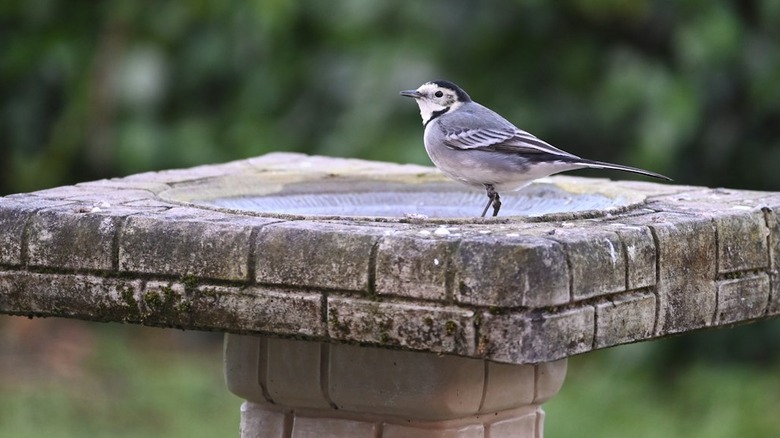
Concrete bird baths are popular thanks to their sturdy build and classic appearance, but they can suffer from pitting or cracking, especially if you live in a region with repeating freeze-thaw cycles. To protect your investment, it's a good idea to seal your bird bath. However, sealing an artificial water source like a pond or bird bath isn't as straightforward as it sounds, especially if you have wildlife health to consider. That's where a nontoxic epoxy liner like Pond Armor Pond Shield comes into play.
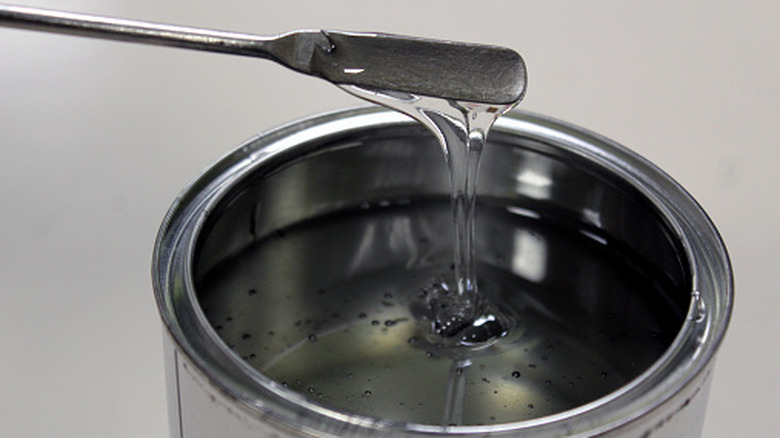
Pond Shield's formula is self-priming, so it's easy to apply and doesn't require days of waiting for multiple layers to cure. The flexible formula is designed to expand and contract with the concrete as temperatures change, preventing future cracks from developing. Plus, it's nontoxic to animals, including birds, amphibians, and even your curious dog.
At the time of writing, Pond Shield is $48 for the 1.5-quart kit, which can cover 60 square feet. It has a 4.3-star rating with nearly 500 reviews. Many positive reviews liked the smooth finish and found that it effectively sealed leaking cracks. "Follow the instructions and you will be fine," says one five-star review. "Produces a very tough surface and makes cleaning the birdbath very easy." Negative reviews experienced issues with discoloration, a common issue in resin products, and a few reported that the product started to harden much faster than the packaging claimed.
How to seal a concrete bird bath
You'll need a couple of days of dry weather and mild temperatures to effectively seal your bird bath. Start by thoroughly washing and rinsing out the bath. Audubon recommends using a mixture of nine parts water to one part vinegar to clean bird baths, or you can opt for a nontoxic concrete cleaner if your bird bath has stubborn stains. To avoid spreading diseases, follow these critical bird bath cleaning dos and don'ts. Let the bath air dry completely, in direct sun if possible.
Once the concrete is dry, use a stiff brush to sweep out any remaining dust or particles. This will help the epoxy apply smoothly and give the bird bath a clean finish. To apply, choose a small roller brush or paintbrush that you won't mind throwing away after use. Pond Armor claims a single coat is enough for most applications, but depending on how well your first coat goes on, you may want to let it cure and apply a second layer.
Follow the application instructions on the packaging and be prepared to work quickly yet carefully. Some users reported the resin began to set within an hour. "Unfortunately it cured up way too quickly...only ~15 minutes in max, maybe less like 10," says one review. When you're finished, dispose of excess epoxy resin the right way to avoid contributing hazardous chemicals to the environment.
What to do about yellowed epoxy
Unfortunately, yellowing is a common hidden downside with many resin epoxy formulas, and reviews report that Pond Shield can have the same issue. Clear resin turns yellow due to a variety of factors, including oxidation, UV exposure, or simply from being applied too thickly. The yellowing can take months or even years, but it is basically inevitable, especially if your bird bath is in direct sun. Worse, once hardened resin turns yellow, there's no way to reverse it.
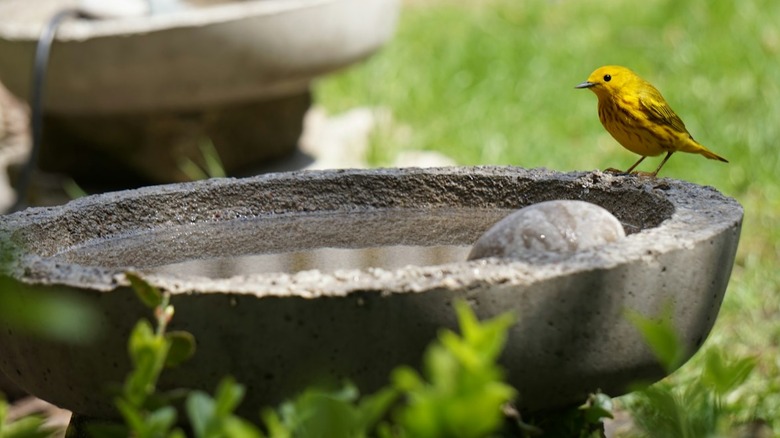
To hide unwanted discoloration, consider covering the bottom of your bird bath with decorative gravel or river rock. Luckily, this fix is not only attractive, but the birds might prefer it. According to Cornell Lab, birds dislike both deep water and slippery surfaces. Some people actually avoid concrete bird baths, as their bowls tend to be too deep for visiting birds, but adding partly submerged rocks or gravel to a bird bath creates a safer and more welcoming habitat.