

Does Mulch Eventually Turn Into Soil?
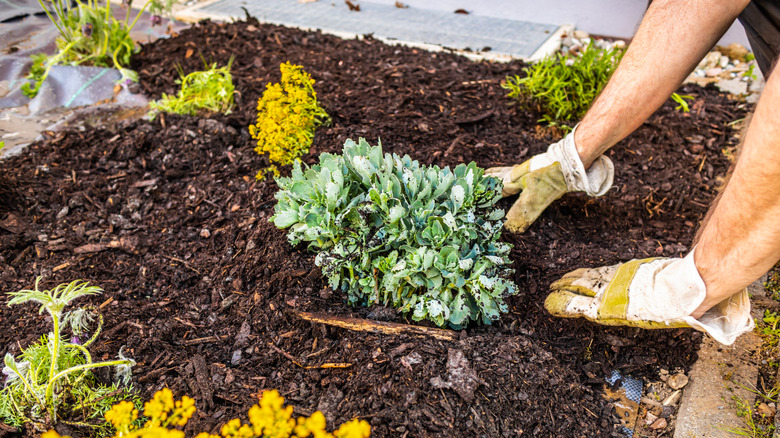
Mulch provides many benefits to your lawn or garden. It protects new growth, wards off weeds, and helps the soil retain moisture, which are important for the health of your plants. Organic mulches also nourish the soil as they decompose and return nutrients and organic matter to it, making them particularly useful for gardening. However, organic gardening mulch needs to be replenished and/or replaced regularly, which raises the question of what happens to the old mulch.
Plant-based mulches, such as grass, straw, and wood mulch, eventually decompose into organic matter that becomes incorporated into the soil. How fast that decomposition happens depends on the type of garden mulch you're using. Grass clippings, for instance, decompose relatively quickly, while woody materials such as chips or shredded bark can take much longer to break down. That doesn't necessarily mean you need to remove old mulch before adding more. If the existing layer is still thick, however, continuing to pile fresh mulch on top can create poor growing conditions for your plant.
How old mulch decomposes, and what can go wrong
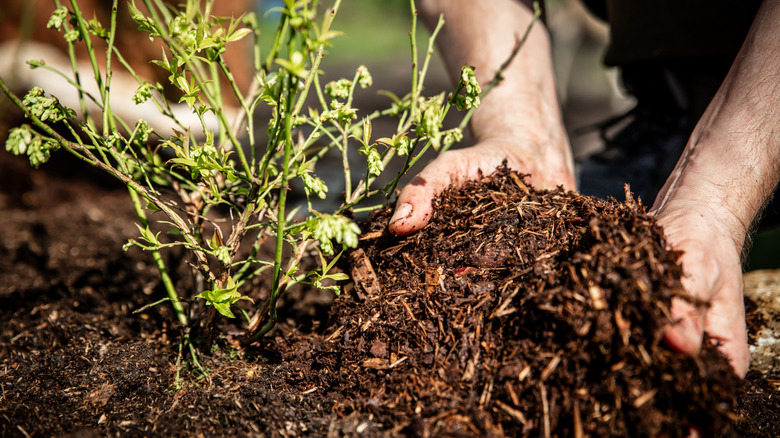
Organic mulch can decompose in two ways: either by oxygen-using organisms (aerobic decomposition) or organisms that don't use oxygen (anaerobic decomposition). Aerobic decomposition is generally preferable, as bacteria, fungi, and other organisms break down the mulch in the presence of oxygen, gradually returning organic matter and nutrients to the soil. When mulch is stored in large, wet piles with little oxygen, however, anaerobic decomposition can produce acids and other compounds that create what's commonly called "sour mulch." Freshly spread sour mulch can damage nearby plants. To prevent mulch from going sour, avoid leaving it in large, wet, compacted piles for extended periods. In the garden, keeping mulch at an appropriate depth also helps prevent excessive moisture and poor air circulation around plants.
Another option is to add it to your compost heap. The decomposing plant matter is great for hot compost, which you can then use as an organic fertilizer. When managed properly, the slow breakdown of organic mulches into soil can help to maintain healthy conditions for your plants. The trade-off is that decomposing organic mulch typically attracts the most bugs by providing a fertile environment for insects and other organisms. Many are harmless or beneficial decomposers, although some pests may also take advantage of the moist, sheltered environment.
One caveat is inorganic mulch, which is usually made of rocks instead of plant material. Some examples of inorganic mulch include gravel, pebbles, or lava rock mulch. So while inorganic mulches have advantages, including their longevity and low replacement needs, they can't be composted or used to add organic matter and nutrients to garden soil through decomposition.