

Attract More Hummingbirds To Your Garden With This Fragrant Hanging Herb
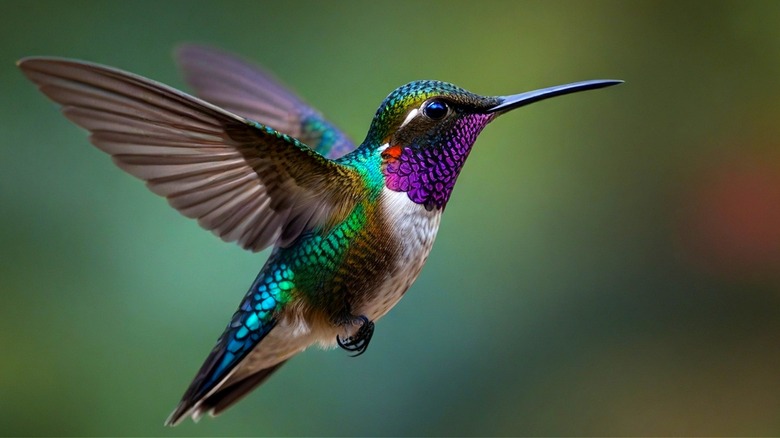
When you're trying to make the most of a small backyard, or simply looking to add a splash of color to the structures around your home, choosing a hanging planter can be one of the best options. This is especially true when it grows a plant that pulls double- or even triple-duty by boosting visual appeal, while also adding other garden benefits, like attracting more pollinators or serving as a culinary herb. That's the case with hanging rosemary (Salvia rosmarinus 'Prostratus Group'), an evergreen shrub that blooms fragrant leaves and pale blue flowers beginning in spring.
Also known as creeping rosemary, hanging rosemary is a perennial, hardy in USDA growing zones 8 through 11. While hummingbirds, along with other pollinators like bees and butterflies, are drawn to the flowers themselves, this aromatic herb's highly fragrant foliage keeps it valuable even when it's out of bloom. Hanging rosemary is nontoxic to most pets, and it's also deer resistant – although neither of these will likely be a problem if you choose to spotlight the shrub's creeping growth and plant it in a hanging container. It only grows up to 2 feet tall, but it can spread up to 3 feet.
How to grow hanging rosemary for hummingbirds
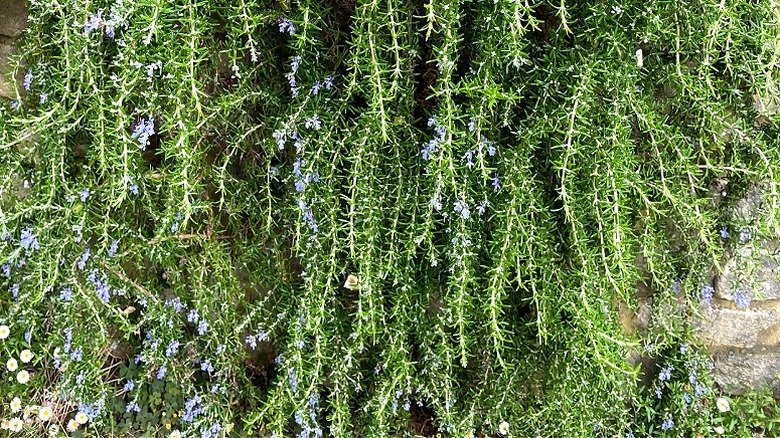
When you're growing hanging rosemary specifically as a way to attract more hummingbirds to your garden, the key is to encourage as many flowers as possible. After all, that's the part nectar-loving hummingbirds will be most drawn to. To do so, it's important to prune your rosemary correctly; in this rosemary's case, it does best when you prune away only new growth (i.e., the tips). You want to avoid hard-pruning this plant. On the bright side, hanging rosemary doesn't require much pruning, with most trimming only needed for shaping purposes.
You also want to ensure that you pick the right location and, if you're using a hanging planter, the right soil. Hanging rosemary grows best when you offer it full sun. This means if you're hanging it on a porch or similar area to attract more hummingbirds, you'll need to double-check that it won't be in the shade during the day. A south-facing location is great for this. Outside of sunlight requirements, once it's well-established in your garden, hanging rosemary holds up well to suboptimal conditions.
It can handle heat and humidity; avoid planting it in heavy clay soil, or soil that drains poorly. That said, one of the biggest things to keep in mind when planting in any type of container is that the soil can dry out faster. Fortunately, because hanging rosemary prefers well-draining soil and can tolerate occasional dry spells, this is less of a concern with this woody hummingbird-magnet.