

Not Aloe: The Cheeky Succulent That Is Unlike Any Average Houseplant
We may receive a commission on purchases made from links.
If you're on the hunt for the best succulents to grow indoors, ditch the popular options like aloe. Sure, it's easy to care for and looks striking, but it's also a little boring. Instead, there's a far more interesting succulent that's endemic to one small area in South Africa, has a conversation-starting appearance, and produces cute hot-pink blooms. Bababoutjies (Gibbaeum heathii), also cheekily known as baby bums or baby's bum, is sure to become the star of your houseplant collection.
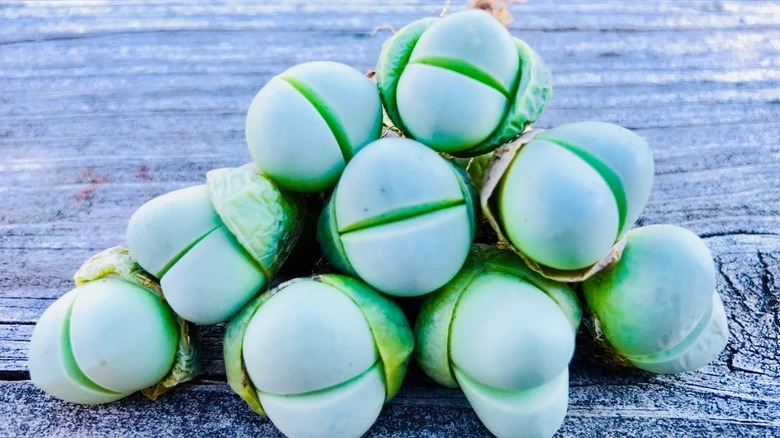
This incredibly cute succulent is native to the Klein Karoo, a valley in a mountainous part of South Africa that's well-known for its unique flora and fauna. The cheeky common name of this plant comes from its bulbous, bisected leaves, from which pink, daisy-like flowers appear in winter and spring. These traits, paired with the species' rarity in the wild, put it squarely in the category of blooming succulents you probably didn't realize existed but now must have.
Broadly speaking, succulents are some of the easiest plants to grow for beginner gardeners and houseplant parents. In fact, because the bababoutjies plant grows between quartzitic stones in nature, it thrives in rockscaped containers indoors. However, while succulents are known for being easy, low-maintenance plants, they're not maintenance-free. You need to take good care of your new bababoutjies plant if you want it to flower.
How to successfully grow bababoutjies plants indoors
Choosing the right soil for your bababoutjies plant is vital. In the wild, it grows in a specific environment that you need to recreate as best as possible. Well-draining soil is non-negotiable to reduce standing water while ensuring your plant gets the moisture it needs. A loamy growing medium like Back to the Roots 100% Organic Succulent and Cacti Mix works well. Adequate aeration is also important, so the soil should contain perlite or a similar structural addition.
Bababoutjies plants are well-suited to most indoor environments — outdoors, they thrive in Zones 10 to 11. Like many succulents, this species grows best in full to partial sun, so choose a spot with bright light and good ventilation. Ideally, that would be a south- or east-facing window in your home. If you're unable to provide your bababoutjies plant with adequate sunlight, you might need to invest in a grow light. The full-spectrum Sonamindary Desktop Plant Light costs about $32 and provides the 6000K color temperature recommended for succulents.
Your bababoutjies plant's watering needs change throughout the year. During summer, you'll rarely need to water this succulent; you won't need to water it often in fall and spring, either. Unlike many succulents, bababoutjies plants do most of their growing in winter, and that's when you need to water them routinely. Before giving it any water, however, check that the soil is dry. A waterlogged bababoutjies plant is susceptible to rot. Keep an eye out for mealybugs, woolly aphids, and scale bugs, which occasionally infest this succulent.