

If You Want Healthy, Thriving Snake Plants, Avoid These Fertilizers
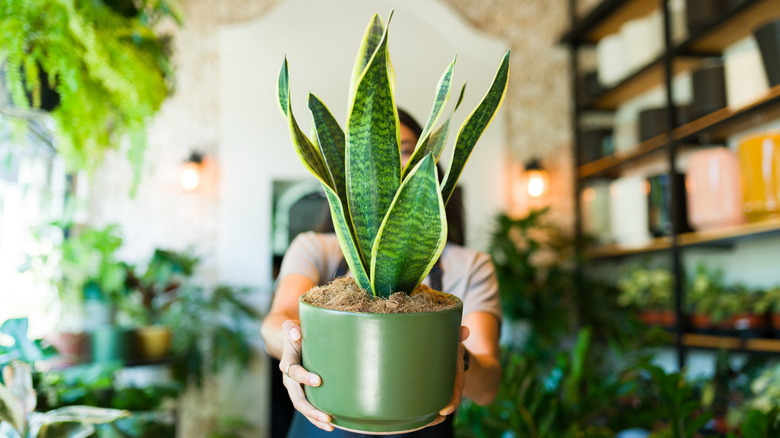
Some plants have a reputation for being impossible to kill, but even then, fertilizing them is where things can go wrong. And in the case of the famously unkillable snake plant (Dracaena trifasciata, formerly Sansevieria trifasciata), these slow growers don't need the same heavy feeding that fast-growing houseplants benefit from. In fact, some experts suggest that fertilizing snake plants indoors may not be necessary at all, while others concede that a balanced, all-purpose fertilizer applied at half strength during the growing season is more than enough for snake plants.
High-nitrogen fertilizers encourage lots of leafy growth, but too much can leave a snake plant soft and stretched-out. Similarly, too much phosphorus is unnecessary unless there is a genuine nutrient deficiency. While plants do need phosphorus, adding extra does not automatically mean more roots, flowers, or growth. Another big mistake is using full-strength fertilizer on any houseplants, as they generally grow slower than your outdoor plants. Remember, what makes sense in a garden bed is going to be far too much poured into a small pot. Excess nutrients are not a good thing — they can cause root damage, brown leaf tips, yellowing leaves, and stunted growth.
Choose a gentle feed and use less of it
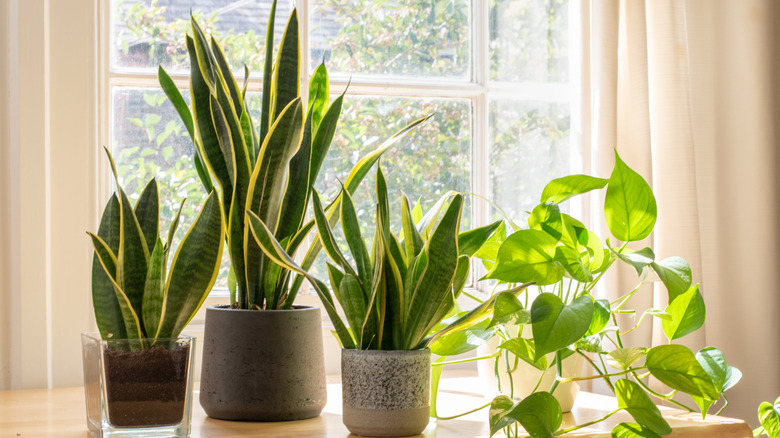
If you are a fan of keeping snake plants by your bed for natural air purification or decorating the darker corners of rooms, and you want to give them a little extra feeding, then reach for a basic, balanced houseplant fertilizer. It's key to look for a fertilizer with a 10-10-10 nutrient formulation (or similar), so that no nutrient is applied too heavily. Then, follow the product directions to add it at half or even quarter strength. Trust us, less really can be more in this case. And it's all about timing, too — the best times to feed your snake plants are during their active growth phases, which is usually every three to four weeks in the spring and summer. You don't need to feed them during the darker winter months when they are dormant.
If you're already worried that you've over-fertilized them, the clues may be in the leaves or in the crusty residue found on the potting mix, which signals salt buildup. To drain the excess nutrients away, give your snake plant a good few thorough waterings, but make sure to allow the soil to dry out completely between each one as they don't like being overwatered. If you think that's not enough of a fix, a fresh potting mix may be the better reset for this famously low-fuss plant.