

The Fall-Planted Bulb Squirrels Won't Touch
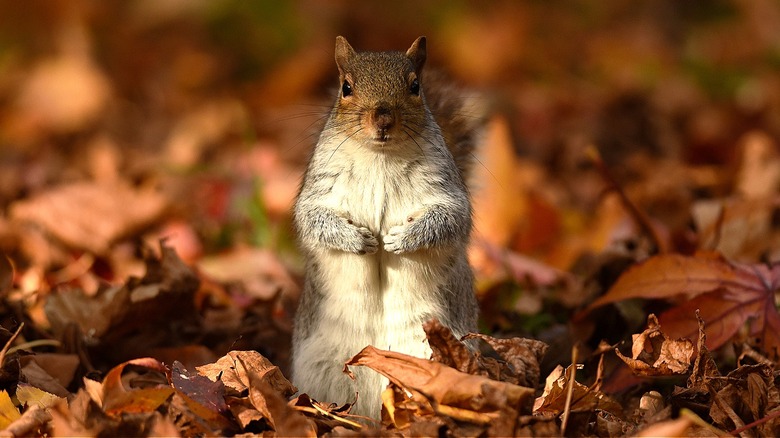
Imagine spending hours in the fall planting bulbs. The next day, you go outside to survey your work and find a crime scene, with scattered soil and debris from scavenging squirrels. And if you still want pretty flowers in the springtime, you must decide whether or not to start again or call it quits. The good news is that there's a lovely flower that grows from bulbs which squirrels naturally avoid. Glory of the snow (the common name for two closely related species, Chinodoxa luciliae and Chinodoxa forbesii) shouldn't attract squirrels to your yard space. Not only will these stunning purple perennials complement woodland gardens, but they're critter-resistant choices for fall-planted bulbs.
Both species (which differ only slightly) feature tiny flowers that sometimes bloom before spring has a chance to arrive, popping out in late winter. The classic version showcases a lavender-blue color with a white center in a star-shaped bloom. Native to western Turkey, glory of the snow works well in rock gardens or, as mentioned, woodlands. These short flowers have been sold as bulbs for over a century, first introduced in the late 1870s.
This fall-planted bulb is hardy in zones 3 through 8, which means it can survive in colder areas easily. When picking a spot in your garden, although you won't need to worry about squirrels, you do need to mind the soil. Glory of the snow doesn't like heavy soils that don't drain well. So, focus on choosing a site that is well-drained with bright light. Glory of the snow, although non-native to the United States, can naturalize if planted in optimum conditions.
Grow glory of the snow to avoid attracting critters
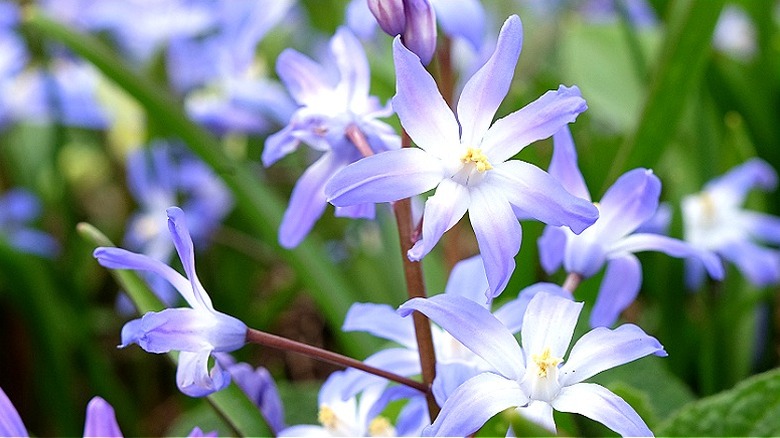
When it comes to these spring-blooming bulbs you can plant in fall for a colorful cottage garden, the key is to get the timing right. Putting them in the ground, 2 to 4 inches deep, in the autumn is essential to successful blooming. It's also a good idea to double-check your soil composition before adding certain amendments, like bone meal. Little critters may not eat your glory of the snow bulbs, but they could be tempted to dig them up if you spread bone meal among them. Not all soils need phosphorus (of which bone meal is a concentrated source), and if it does, you might be able to achieve the same thing with another supplement, like slow-release fertilizer pellets.
The tiny size of Chinodoxa bulbs can make it tricky to know where or with what other species to plant them. For example, it might not be ideal to plant glory of the snow with crocus bulbs. While squirrels should stay away from the one, they probably won't leave the crocuses alone. To avoid a mess from dug-up bulbs, opt for another rodent-resistant bulb like the related Siberian squill (Scilla siberica). Some of the best companion flowers for glory of the snow include other species that grow well in zones 3 to 8, such as lungwort (Pulmonaria officinalis), which is also a short, early-blooming flower, with similar sun requirements. Lungwort is also resistant to rodents like rabbits, making it a great companion choice.