

Not Mums: These Shrubs' Huge Flowers Keep The Feel Of Tropics In Your Yard From Summer Until Frost
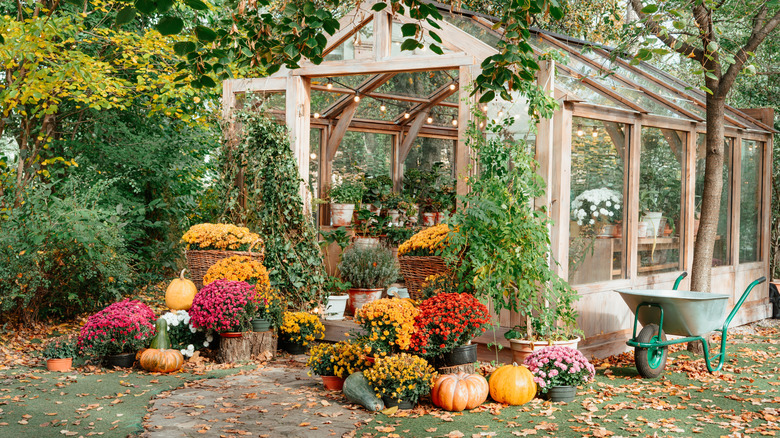
Fall is a great time for planting shrubs and perennials. However, a lot of the plants you see at stores this time of year, like ornamental peppers, celosia, or mums, aren't made to last through the winter in many parts of the country. If you'd rather spend your money on something that will produce huge flowers from summer to frost and come back year after year, consider getting a hardy hibiscus (Muenchhusia moscheutos). This species which will grow in Zone 4 to 9 gardens. Hardy hibiscus are different from tropical hibiscus, but you still get that exotic vibe in your yard.
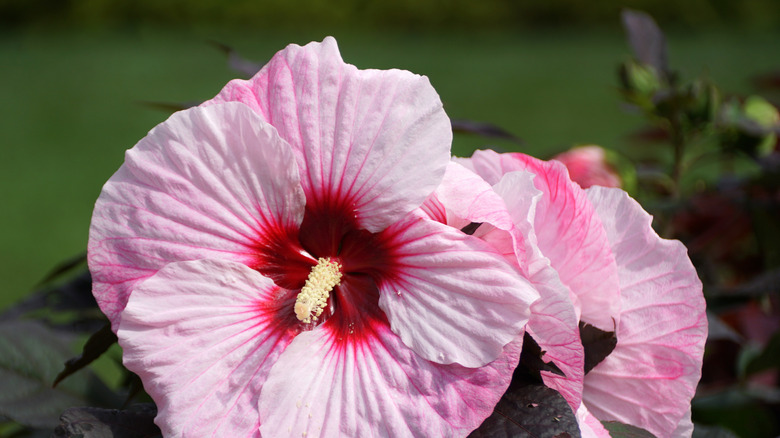
Muenchhusia moscheutos is a species with several colorful varieties of hibiscus flowers. With large hollyhock-like blossoms that get up to 12 inches in diameter, hardy hibiscus plants have very big, showy flowers and they attract butterflies. Although the plant itself looks like a large, rounded shrub, it's a perennial. Different varieties grow anywhere from two to six feet tall and get just as wide, dying back to the ground every year after blooming from mid-summer to fall.
Each flower only lasts a day or two, and plants need plenty of water to produce larger blossoms. Color variations include a wide range of reds, pinks, burgundies, and whites with contrasting centers and striking stamens. Some popular cultivars include 'Luna', a dwarf variety that's excellent for containers, and the pink 'Perfect Storm', which has a red eye and dark purple foliage and comes from the Proven Winners Summerific series.
How to care for hardy hibiscus purchased in the fall
Purchased in the fall, hardy hibiscus can be planted right away. Perennials do best when given time to establish before winter really takes hold, so this time of year, put them in the ground at least six weeks before your first frost. Choose a spot with plenty of sun and moist soil, like a rain garden on the southern side of your house. When you prune hibiscus in the fall, don't cut them back too early. When the leaves drop after it freezes and the plant dies back to the stem, it goes dormant. Then, you can either cut it all the way back to the ground or leave 12 to 24 inches of the stems for pollinator habitat.
Skip the fertilizer when you plant in the fall, since that's the wrong time of year to encourage growth. It's better to wait until you start to see the fresh, new stalks in late spring. Hardy hibiscus are one of the last things to come up, so don't give up on yours if it's slow. Pinch the tips in the spring for a bushier plant, and deadhead throughout the blooming season. Hardy hibiscus is native to the central and eastern United States, and grows well in top soils similar to creek banks and wetlands. If you have poor or sandy soils, hardy hibiscus will benefit from compost or fertilizer. Keep in mind that it also needs plenty of water to avoid problems like leaf scorch.