

Put Your Traditional Mulch Away: Use This Laundry Room Find Instead
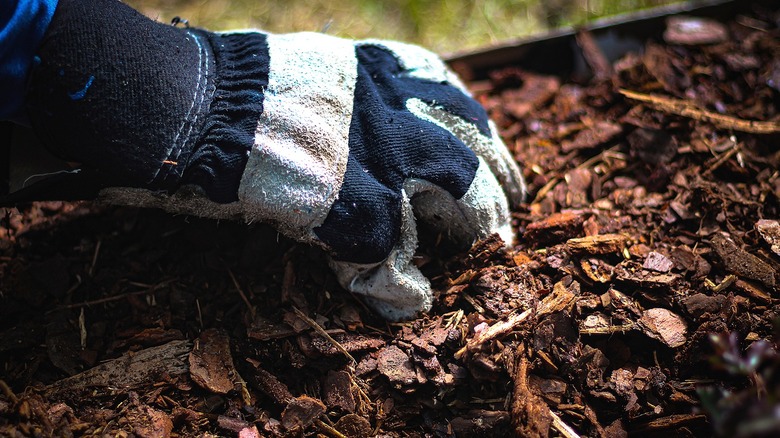
Science is at the heart of gardening, and many home gardeners are essentially scientists testing out hypotheses in real life. Whether it's trying new things or working with new plants or materials, a lot of gardening decisions are made on a wing and a prayer. If you're someone who likes a "let's try it and see if it works" approach, you could test dryer lint in the garden to see if it's worth exploring as an alternative to traditional mulches.
Regular mulch, such as bark, straw, or leaf mold, goes on soil about 2 to 4 inches deep. If you're experimenting, try using an inch or two of dryer lint and see how it works. Mulch is used for a lot of reasons, and one is to conserve moisture by reducing evaporation. When you water regularly, a layer of mulch helps ensure that your soil always stays moist, which is necessary for plants because they use water to carry nutrients for growth. The microbes in the soil that assist with nutrient cycling also need moisture. A good mulch allows water to seep through while also blocking evaporation, and your experiment will test how well lint is able to do this.
Since synthetic materials like polyester and spandex shed microplastics, it's best to experiment with lint from a load of all-cotton towels washed without any harsh chemicals. Also, skip the dryer sheets, as they leave a residue your plants may not like.
Tips for experimenting with dryer lint as mulch
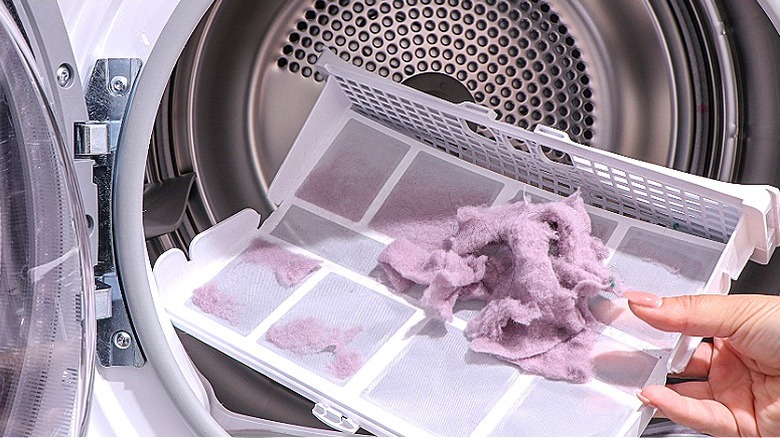
If you're going to experiment with an idea the right way, you need to set up a controlled experiment like scientists do, and record your results. For example, you could start with a couple of potted plants growing in similar pots under the same conditions, one with dryer lint and one without. Then record how the plants respond, with observations on everything from plant health to how often you have to water.
In addition to water conservation and weed suppression, mulch also prevents erosion. Since heavy rain or a hard spray of water can cause soil to erode, consider using dryer lint to protect your garden soil and record what happens with that, too. Dryer lint will also stay in place better if you cover it with a little soil or mulch, so that's another variable you can test for.
Also, the same as you would when placing down any type of mulch, keep dryer lint away from the stems to avoid problems with pests and disease. Keep in mind, too, that dryer lint isn't recommended as nesting material for birds because it gets soggy and loses its fluff when wet. Expect it to mat in your pots, too, and plan for that in your experiment. On a related note, lint can also be used in the bottom of the pot to keep soil from falling out.