

The Fall Plant With White Flowers That Adds Beauty To Your Ponds
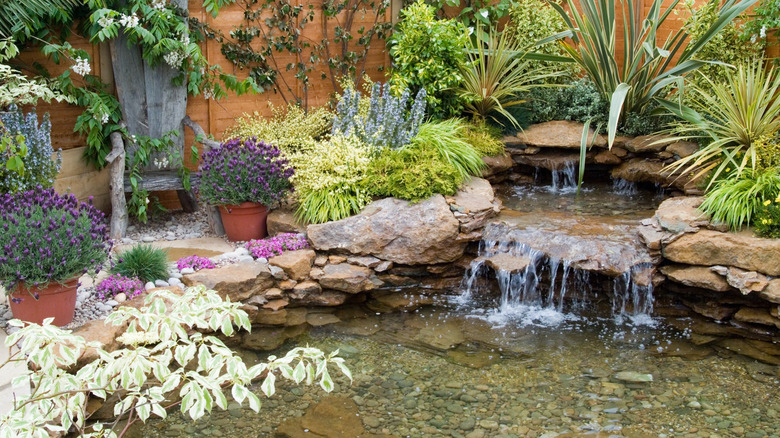
Garden ponds are often associated with the large, vivid flowers of tropical waterlilies that need summer warmth to thrive, but it's actually a good idea to get one started in the fall. Milder temperatures may allow you to dig and install the pond with more ease, and you're less likely to disrupt existing wildlife. Plus, there's no shortage of aquatic plants to add to your water features, and many of them keep blooming past the summer. Water hawthorn (Aponogeton distachyos) is one of them, a perennial that puts out its unique spikes of white flowers in autumn. The blooms may stick around into the winter as long as temperatures remain mild. Not only are the flowers captivating, but they're said to give off a scent similar to vanilla.
The plant, also known as cape pondweed, grows submerged in shallow ponds throughout USDA Hardiness Zones 6 through 10. Its leaves look and act like those of a water lily, floating delicately above the water's surface, and its eye-catching white blooms are held up by short stems peeking out of the pond. As gorgeous as this plant of South African origin is, there are some places where it shouldn't be grown. Due to its risks to native vegetation, it's prohibited to buy or transport the plant in the state of Washington. But if you're out of the danger zone and have a pond or boggy area with between 6 inches and 2 feet of water, you can bring home one of these graceful plants from a nursery or pond supply store.
How to grow a water hawthorn in your garden pond
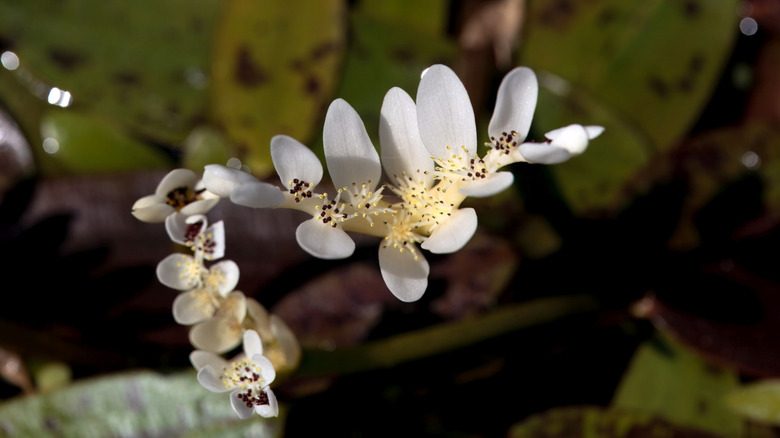
Whether you're establishing your watery wildlife refuge for the first time or preparing your outdoor pond for chilly autumn days, growing the water hawthorn in full sun or a partially shaded spot in the pond can add a touch of beauty. Bury their bulbs in a container that you can lower into shallow water and place on the backyard pond edge. You can move the container into deeper water as the plant gets taller and to the deepest point during its dormant season. When planting, make sure to create a topsoil and sand mix or use prepackaged loam instead of potting soil, which may be too light. Water hawthorn tends to do well in soils that contain clay or sand. Once your plant is anchored, maintenance is simple with monthly fertilizing during its growth periods.
The precise timing of a water hawthorn's flowering pattern depends on where you garden, but fall blooms are a constant. Since it doesn't favor water warmer than 70 degrees Fahrenheit, in hot climates you can expect blooms in spring and fall with a summer dormancy in between. In areas where the winters get cold, flowers emerge in the summer and stay through the beginning of fall. Knowing the bloom time can help you decide what other plants to add into the water so you can get continuous flowering and enjoy the environmental benefits of a garden pond.