

Faster Than A File: The Wall-Mounted Harbor Freight Find That Sharpens Chainsaw Blades
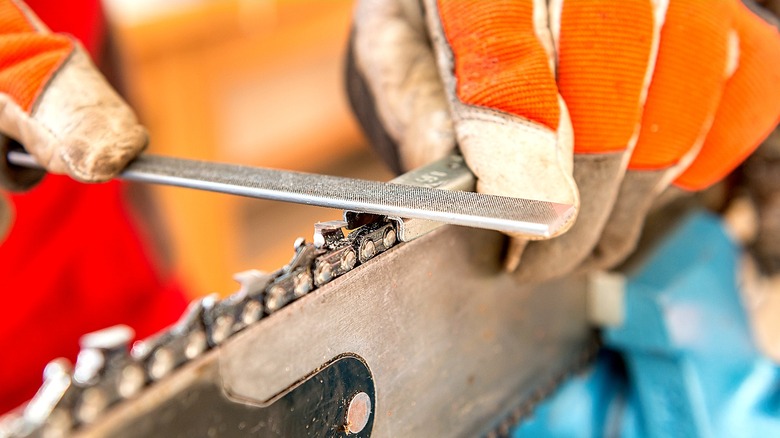
Use a chainsaw long enough, and its blades will start to dull. This makes cutting feel like far more work than it should, and it can leave you struggling to get through even smaller branches. While you can try sharpening your chainsaw with a file, anyone who's ever hand-filed a chainsaw chain knows how tedious and time-consuming it can be. Plus, with a file, it's not easy to maintain the same sharpening angle across all the chainsaw teeth. As an alternative to this manual approach, there are electric options, like the Chicago Electric Power Tools electric chainsaw sharpener ($34.99).
Chicago Electric is Harbor Freight's in-house tool brand, which is why this chainsaw sharpener is exclusively sold at Harbor Freight. It uses a 4 ¼-inch grinding wheel that can run at up to 5,000 RPM to sharpen chainsaw blades (quickly), and is powered by a 120-volt motor pulling 8.5 amps. Its chain vise and table vise can adjust and tilt 35 degrees to fit various chain designs and pitches. As for the weight, the sharpener weighs just under 5 ½ pounds, and it can be mounted on a wall or a bench.
As of this writing, the sharpener has a 4.5 average out of five stars from over 5,250 reviews, with 94% of customers recommending it. That said, some customers have described the product's build as one that could be improved, while others have mentioned that the power isn't enough. A customer from 2025 reported, "The sharpener barely had enough power to turn the grinding wheel, much less sharpen a chain. The machine would almost stall with the least amount of pressure, and the motor heated up pretty hot." Now, these are valid concerns. So, make sure you check out some other top tools to sharpen your chainsaw as well before making a purchase.
Using the Chicago Electric chainsaw sharpener
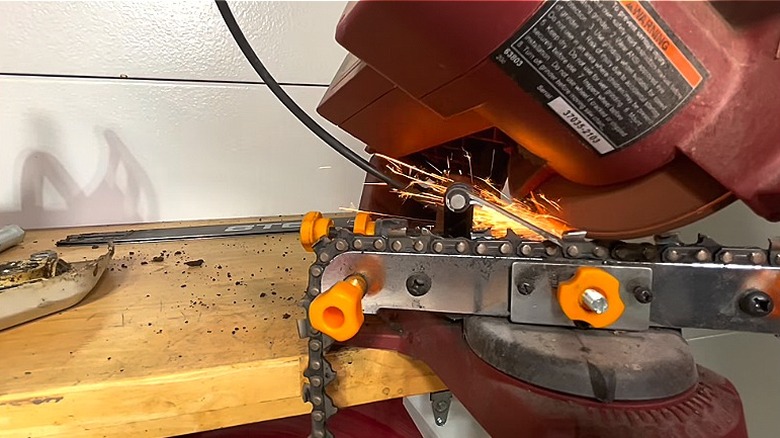
Powered tools like the Chicago Electric Power Tools Electric Chainsaw Sharpener work fast, but if you want to get good results from them, you must make sure that you keep a few things in mind. For one, you must set the chain vise, sharpening angle, and depth stop correctly before sharpening the chainsaw blades. These things will vary from brand to brand. So, check the specifications of your chainsaw before setting everything up.
Once the sharpener is set, work slowly. Try to work in several light passes and don't try to sharpen the chainsaw blade in just one go. This could easily heat up the sharpening wheel and the chainsaw teeth, which could cause damage to both. Also, when sharpening, make sure you sharpen the bottom curve of each chainsaw tooth as well. Not doing so is a chainsaw sharpening mistake to avoid at all costs, and it could stop the chainsaw from cutting cleanly.
Pay attention to the placement of the sharpener, too. For instance, if you are going to mount the Chicago Electric sharpener on a wall, make sure that there's enough open space around and below the sharpener for the loose chain to hang and move freely. Lastly, know when sharpening a chainsaw is no longer worth it. If your chainsaw's chain has cracked or broken cutters, damaged drive links, or loose rivets, don't sharpen it; replace it instead. Even if you can't see damage, if the cutters have been worn down beyond the wear marks (found on each tooth), it's recommended that you replace the chainsaw instead of trying to sharpen it.