

No More Huge Energy Bills: Check This Before You Adjust Your Thermostat
We may receive a commission on purchases made from links.
You know that feeling: The thermostat is set to a comfortable temperature, but somehow you're still feeling hot and sweaty. Sure, you could just dial down the thermostat, but there's an issue: it increases energy bills. So, what if there were a way you could make yourself feel a bit cooler without dialing down the thermostat? Well, as it turns out, there is. Just check the humidity and lower it if it's high.
Humidity messes with your body's cooling system. If the air is thick with moisture, sweat can't evaporate off your skin as easily, and your body struggles to cool down. This is also exactly why a 90-degree Fahrenheit day with high humidity can feel closer to a scorching 100 degrees Fahrenheit. AC manufacturers use this knowledge, designing units to not just bring the temperature down, but to reduce humidity. This makes the room feel cooler without lowering the thermostat.
High humidity is not just a comfort issue, either. It can cause several other issues. For instance, in homes, it could encourage mold and contribute to peeling paint. Similarly, high indoor humidity can cause health issues like coughing and skin rashes by encouraging mold. Put simply, if your home is feeling hot despite a comfortable thermostat setting, it's time to reduce humidity. This is especially true if you see any steamy windows. It is a clear sign that it is time to dehumidify your home.
How to decrease humidity indoors to feel cooler for less
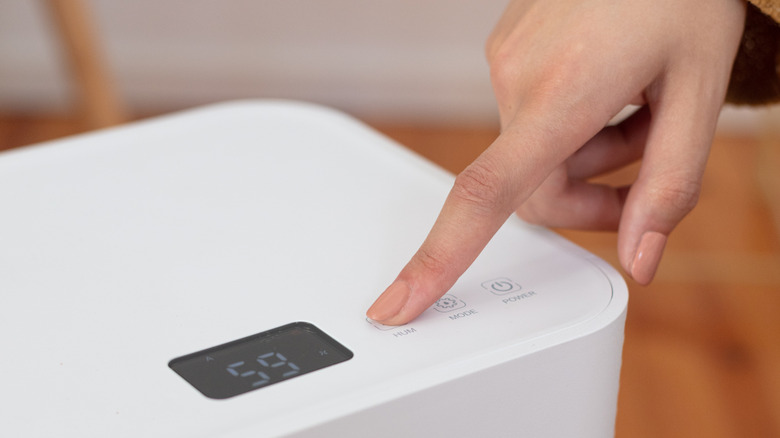
First of all, get a hygrometer. It will save you from the trouble of guessing if the humidity in your home is high or low. A lot of hygrometers these days, such as the TempPro TP50 Digital Hygrometer, show both temperature and humidity. Ideally, indoor humidity should be around 30% to 50%. If, however, you are seeing a reading higher than 50%, it's time to take measures to dehumidify your home, and probably the easiest way of doing so is to use a dehumidifier. Just make sure that you know how to choose the right size dehumidifier for your space.
If, however, you do not have a humidifier or do not want to get one, you can also run your AC to dehumidify your home. In fact, it is one of the fastest ways to dehumidify your home in the summer. Similarly, another way to lower humidity without using a dehumidifier is to use exhaust fans. This is especially useful in places like kitchens and bathrooms, where indoor moisture tends to be high. Nevertheless, when combined with a comfortable thermostat setting, lower humidity can make your home feel noticeably cooler.
However, you should not just focus on reducing humidity. If you want to make your home feel cooler, you should also take measures to cut down on the moisture you are adding indoors. For instance, fix plumbing leaks if there are any and dry wet areas quickly. Likewise, make sure that your clothes dryer is venting outside so all the moisture that your dryer is pulling from your clothes is not just ending indoors, increasing the humidity levels.