

How To Prevent Your Dresser From Tipping Over For Good
We may receive a commission on purchases made from links.
If you have a toddler in the family, you're aware of all the scary dangers that are lurking around your home. While you may have put childproof plugs in your outlets and removed window covering cords, furniture-related safety concerns are easier to miss. According to a 2022 report by the Consumer Product Safety Commission, there were 581 tip-over fatalities involving furniture, TVs, and appliances in the U.S. between 2000 and 2020. Of those killed, 81% were children. In fact, one highly rated dresser was recalled for that exact safety violation. Kids can be naturally curious and eager to climb, and it only takes a few unsupervised minutes for them to attempt to scale a dresser. To ensure these hefty pieces of furniture are safe for everyone, you need to secure them to the wall.
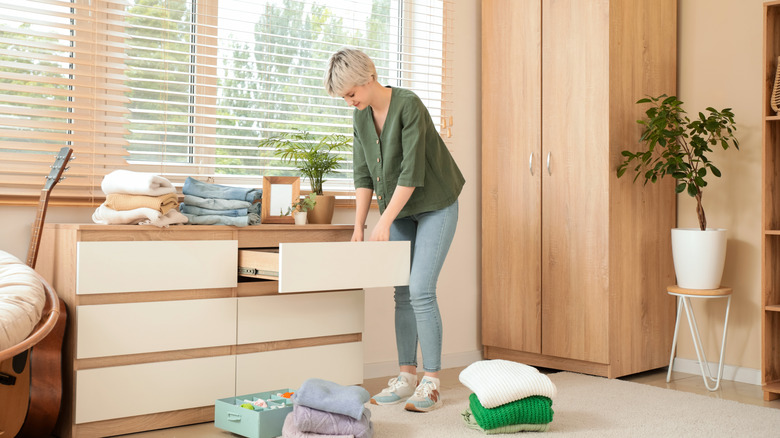
While you may feel that your dresser is too heavy to pose a risk, tip-over incidents can happen when furniture is top- or front-heavy. Furniture placed on an uneven surface, such as a fluffy rug, could tip over. Opening multiple drawers at the same time is also a tip-over risk. The Stop Tip-overs of Unstable, Risky Dressers on Youth (STURDY) Act, which went into effect in 2023, requires manufacturers to test dressers for tipping before making them available to consumers. Still, if you're looking for tips on baby-proofing the home, it's a good idea to secure any dresser that poses a tip-over risk to the wall. Metal and plastic anti-tip kits are simple to install and cost around $10. You simply fasten one bracket to the dresser and the other to a wall stud, then thread a nylon or metal cable tie through the brackets and tighten it until the dresser is secure.
Secure your dressers to the wall with anti-tip kits
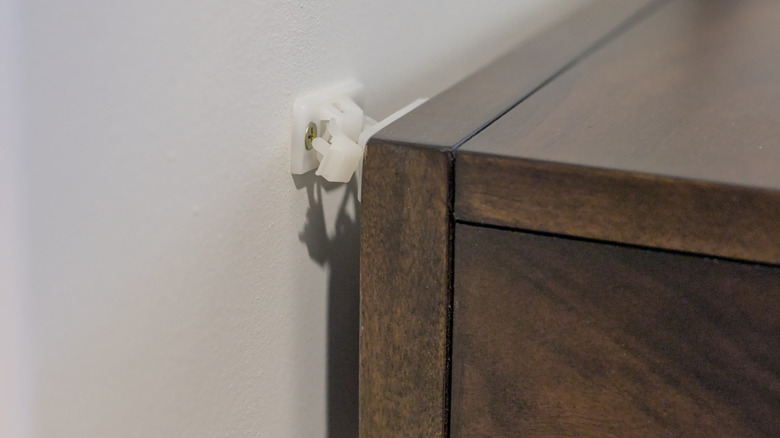
Anti-tip kits are easy to find at big-box retailers, local hardware stores, and online marketplaces like Amazon. Choose a kit with metal brackets and heavy-duty nylon straps or braided steel cables, as these will hold up better over time. Most dressers need at least two sets of brackets and straps, though wider dressers could benefit from more. If you've stacked dressers, you'll need to anchor them together before securing them to the wall.
Screw the brackets into the frame of the dresser rather than the thinner, flimsier back panel. While most homes have timber studs in the wall, some have metal studs. If your walls have metal studs, you'll need to choose a kit designed for them, such as the QuakeHold! Furniture Strap Kit. Always check the kit manufacturer's installation instructions, but in most cases, you'll need to swap out the wood screws for 1⅝-inch (fine-thread) drywall screws. If you can't locate any studs, use heavy-duty drywall screws with toggle bolt anchors rated to at least 50 pounds of pull force.
While securing your heavy furniture to a nearby wall is crucial, there are other steps you can take for extra protection. Store the heaviest items in lower drawers to prevent the dresser from becoming top-heavy. You can also install drawer straps to prevent kids from pulling the drawers out. A set of 12 self-adhesive Infinno Cabinet Locks costs about $9. Don't place desirable items on top of the dresser to discourage children from climbing it.