

Not Bee Balm: The Plant That'll Fill Your Yard With Minty Fresh-Smelling Flowers
Walk by a yard planted with mint, and it's hard to miss the scent of this herb. The crisp, invigorating fragrance makes you feel like you've stepped into a commercial for wintergreen chewing gum. If you want this refreshing smell in your yard, but without the downsides to growing mint, plant Agastache 'Rose Mint' (Agastache pallidiflora ssp. neomexicana), also known as Bill Williams mountain giant hyssop and New Mexico giant hyssop.
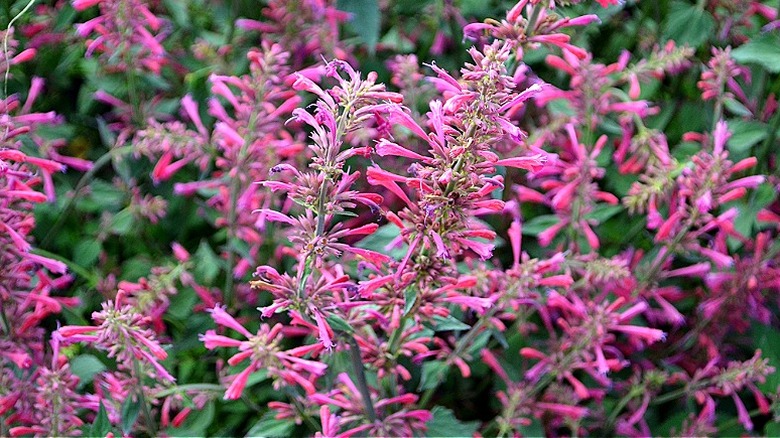
Although 'Rose Mint' is a member of the mint family, gardeners don't have to worry about it being invasive. This perennial, hardy to USDA zones 4 to 10, loves full sun and well-drained soil (though it can also thrive in poor soil, too) — making it a favorite for "plant it and leave it" gardeners. The plant maxes out at 24 inches tall, and can spread 12 to 18 inches wide. Between June and September, 'Rose Mint' sends out spikes of purple-pink flowers, slightly resembling the blooms of lavender shrubs.
This plant can be used in similar ways as mint, offering edible flowers and leaves to flavor teas, jellies, and desserts. It also has medicinal uses (as is the case with many agastache species) for treating respiratory and digestive issues. And, if you're hoping to bring more pollinators into your yard and garden, know that 'Rose Mint' is beloved by various pollen movers, especially bees.
Care and maintenance of 'Rose Mint'
When planting 'Rose Mint,' aim for a spot that gets full sun, or at least six hours of direct sunlight daily. Though the plant is tolerant of different soils, ensure it drains well; to improve conditions, you can amend the soil with pea gravel, sand, and/or compost. Also, although a mature 'Rose Mint' is low maintenance in terms of watering needs, it will require regular watering in its first season.
The compact size of this plant gives it versatility, for use in a border (providing mid-height interest between taller plants and ground covers), among wildflowers in a large bed, in an herb garden, on slopes, or in container arrangements – preferably near your front door for visitors to enjoy its minty scent. Options for companion perennials include pink muhly grass (Muhlenbergia capillaris), graceful tufts of grass topped with pinkish-purple plumes that last from late summer to fall; the vibrant black-eyed Susan (Rudbeckia) that comes in warm colors like bright yellow, deep orange, and scarlet; or coneflower (Echinacea purpurea), with prominent circular flowers that will nicely complement the spikes of the 'Rose Mint.'
As for the plant's maintenance, 'Rose Mint' is one of the many perennials you should deadhead for blooms to keep coming. Also, if you don't want 'Rose Mint' to spread around your garden, deadheading wilted flowers will reduce the plant's opportunity to self-seed.