

Not Mulch Glue: The Natural Solution That Keeps Gravel Driveways Neat
We may receive a commission on purchases made from links.
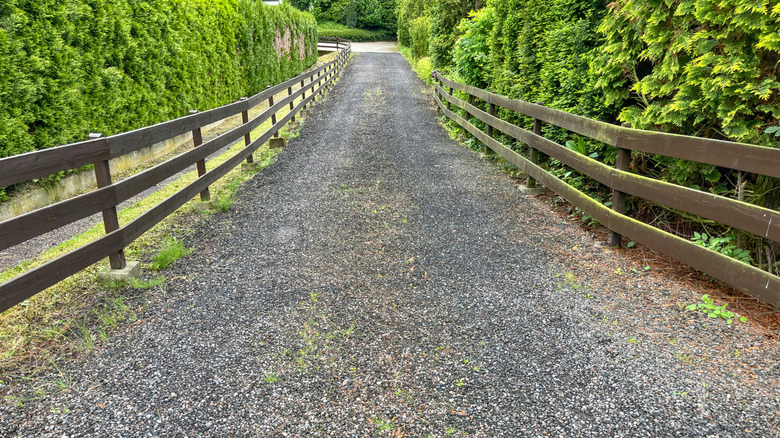
Gravel is an economical option for driveway construction, especially if yours is particularly long. It's cheaper than pavers or poured concrete and much easier to install. After excavating and grading the soil, you spread the gravel in layers, compacting each layer as you work. That's it! While gravel driveways are cost-effective, you need to know about their drawbacks, too. For instance, vehicle tires can kick up a lot of dust, which is both unsightly and unhealthy. Luckily, there's a solution for this particular issue: acidulated soybean oil soapstock. It's made from a by-product of soybean oil production, after all.
Like mulch glue, soybean oil soapstock is an easy-to-use solution that keeps gravel and mulch pathways from mixing. Basically, it stops gravel from moving around the driveway and dust from becoming airborne. The major advantage of soybean oil soapstock over mulch glue is that it's biodegradable and made from a renewable agricultural resource, with soybeans being the second-largest field crop grown in the U.S. Acidulated soybean oil soapstock is unique in that it's an oil-based rather than a water-based solution. It penetrates about 1 inch into a gravel driveway, then hardens, adhering to the soil underneath. This stabilizes the top layer of driveway gravel so dust and other small particles don't shift under vehicles. The oil repels rain, too, staying put rather than washing away.
How to use soybean oil soapstock on gravel driveways
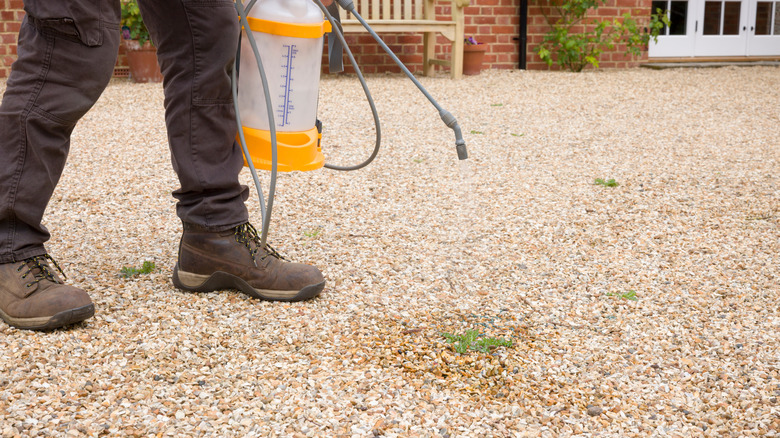
If you're convinced that soybean oil soapstock is the right product for your gravel driveway, you'll need to get your hands on some. In the U.S., the product is only sold by specialist distributors and soybean oil processors, typically by pail, drum, or tote — or by tanker truck for large construction projects. Your local soybean board should also be able to advise on where to purchase it. Buying soybean oil soapstock by the pail or drum should be enough for most residential driveways.
Once you have your pail or drum of acidulated soybean oil soapstock, how do you apply it to your gravel driveway? The answer is by spraying, though the method depends on the equipment you have on hand. You could use a truck with a spray bar fitted to the back, a four-nozzle HooLing ATV Boom Sprayer Wand, or a 2-gallon SideKing Battery-Powered Electric Pump Sprayer. You'll need 1 gallon of soapstock for every 36 square feet of gravel driveway — or ¼ gallon of soapstock per square yard. You don't need to mix this soybean oil-based dust suppressant with water; the soapstock is all you need. Apply it when the driveway is dry and the weather is expected to stay fine for a couple of days.
Your gravel driveway should stay dust-free and stable for three to four months before you need to top dress it with soapstock or add more gravel. Thanks to the stable surface, you shouldn't need to regrade your driveway as often, either. Soybean oil soapstock works best on driveways with about a ¼-inch layer of gravel. It can also stain your gravel, much like motor oil, so expect some discoloration.