

What To Do If You Find Stink Bug Eggs
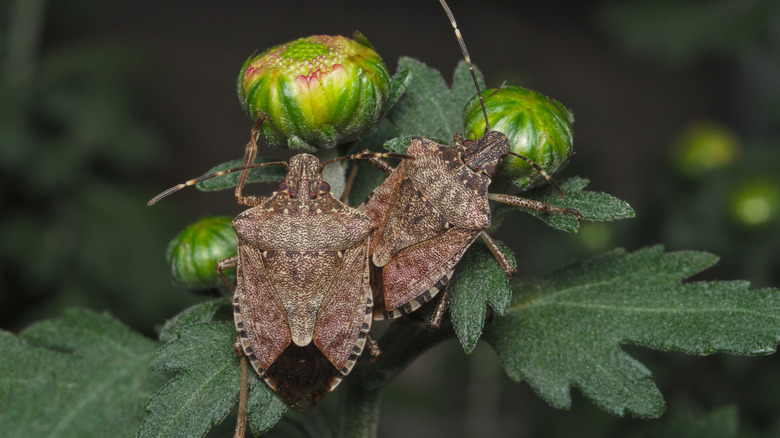
There's nothing quite like enjoying your outdoor spaces alongside the local wildlife. However, there may be instances that sharing isn't always caring, and when it comes to invasive or otherwise pesky stink bugs, you may wish to reduce their numbers in your garden or even in your home. As a result, after you've learned to properly identify stink bug eggs, you may wonder what to do after finding them. Fortunately, there are various ways to eradicate stink bugs and their eggs without releasing their scent, from DIY pest solutions to professional help.
There are various types of stink bugs, and not all of their eggs look the same, nor are you likely to find them all in the same place. The invasive brown marmorated stink bug is the most common species throughout the United States. They typically lay clutches of up to 30 eggs on fruit trees and nightshades like peppers and tomatoes. Shape and size wise, these eggs are similar to those of other species, with an oblong barrel shape and measuring only around 1 millimeter. However, the color provides the biggest physical difference, with eggs of the brown marmorated stink bug being white or light green. If you find eggs that look like the brown marmorated's, but they're in a larger clutch, are gray or yellow in color, or on different plants, then it may be a different stink bug species.
Ways to remove stink bug eggs
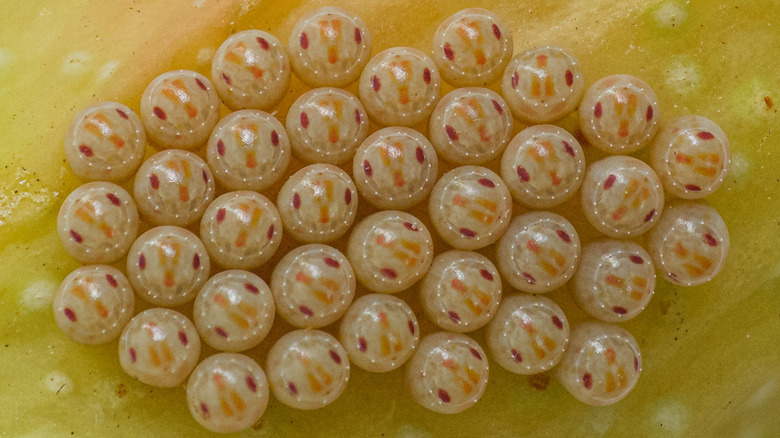
There are several ways to properly remove stink bug eggs from your home. One of the most important things to keep in mind is that, if elimination is your goal, you'll want to either physically or chemically destroy the eggs rather than simply removing them. Otherwise, they may still hatch. For example, instead of simply scraping off the eggs from the surface, dispose of them into warm, soapy water. The soap works to stop the eggs from hatching, helping actually eliminate the infestation risk rather than relocating it. DIY soap traps also work for adult stink bugs. You can also use tape to remove the eggs from surfaces, especially if there are larger clutches that you may wish to remove faster. If you do use a simple relocation method, such as tape without water or a vacuum, it's important to properly seal up the waste and dispose of it away from your home.
If you've had the misfortune of finding stink bug eggs inside your home rather than in the garden alone, you can use the methods from above, such as soapy-water traps or a piece of tape. However, you'll want to use more care indoors when removing stink bug eggs so as not to crush them. Crushing them can release that tell-tale unwanted scent, and while that may not be a problem outside, you likely don't want the odor of a stink bug clinging to your home's surfaces. Depending on the amount of eggs and their location, you may also wish to speak to a professional about more substantial removal methods.