

Not Creeping Phlox: The Lawn Plant That's Great For Erosion Control
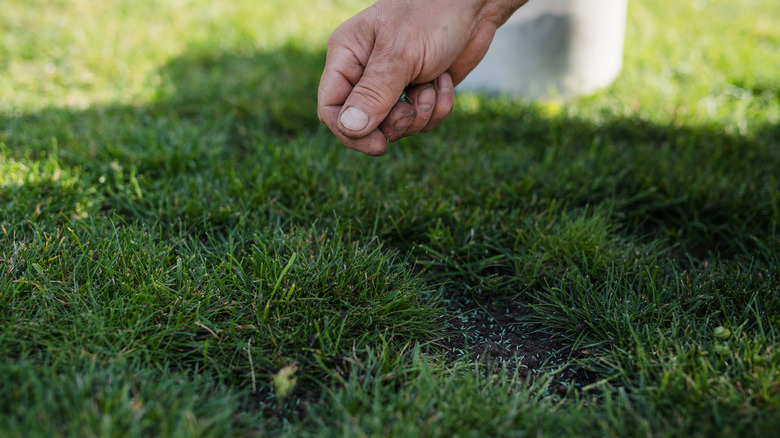
Nobody wants to lose half of their carefully curated lawn to erosion. Creeping phlox can be a helpful solution for reclaiming the bits of square footage that each rainfall seems to ravage, but it's not your only solution. Instead, there's also this eye-catching lawn plant that's great for erosion control.
Also known as Dutch white clover, white clover (Trifolium repens) is a low-growing perennial. You may recognize this plant by its three-part leaves or the small white flowers that grow from it. This plant typically stays less than 6 inches tall, but it can spread over 12 inches across your yard. Because of its spreading, mat-forming growth habit, it works well at covering bare soil, which can help with erosion control. That's not its only benefit, however, as clover is also a nitrogen fixer that can increase available nitrogen in the soil while working to keep it in place. Pollinators like clouded sulfur butterflies and native bees also love these clovers, which makes it perfect for pulling double-duty if you want to start a pollinator garden.
As far as maintenance goes, white clover is considered to be a low-maintenance plant. Its size makes it where mowing isn't required often but doing so occasionally can encourage further growth in your yard, helping keep erosion under control. However, as low-maintenance as it is, learning the proper care routine ensures this plant thrives and not just survives in your yard.
How to grow white clover
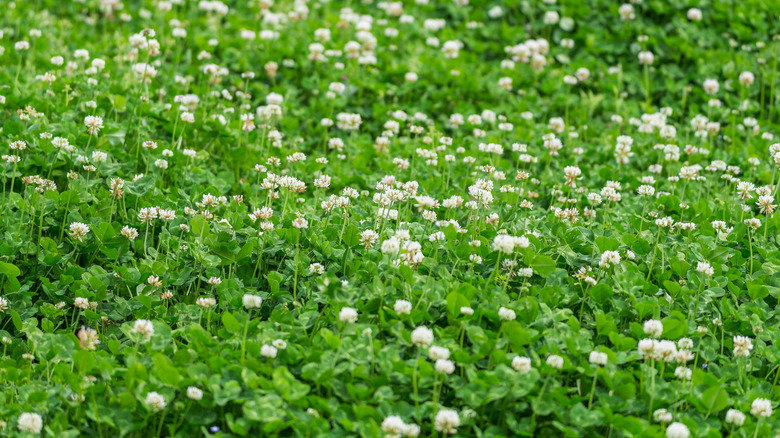
White clover is an adaptable plant that can grow in various locations within your yard. It handles grazers with ease, and its ability to tolerate both foot traffic and poor soil only further lends to its claim to fame as a great way to control erosion. It's also broadly hardy, growing as a perennial in USDA Growing Zone 3 all the way to 10. It tolerates several soil types but performs best in moist, well-drained soil with a suitable pH.
One of the most important things to keep in mind is that white clover specifically does not have a high tolerance to drought. Other legumes may be better suited to dry conditions, while white clover performs best where it has a consistent supply of moisture. As far as picking the right location in your yard to plant white clover, it does well with various levels of sunlight so long as it gets a few hours of direct sunlight versus indirect alone. Full sun can accommodate the needs of this lawn plant, as can partial shade. Keep in mind that the same spreading habit that makes white clover useful for erosion control can also allow it to creep into nearby turf or garden beds. If you don't want a clover-heavy lawn, be prepared to keep its spread in check.
If you've decided that white clover is the right choice for your lawn, then you may be interested in learning more about how to plant it. There are different options available, including a mini white clover that produces smaller leaves. White clover can also be seeded into existing grass if any has survived those high-erosion spots in your lawn. Keep the seeds consistently moist during establishment, but check the seed supplier's expected germination window for the specific variety and growing conditions.