

15 Uncommon Daffodils To Plant In September For A Gorgeous Spring
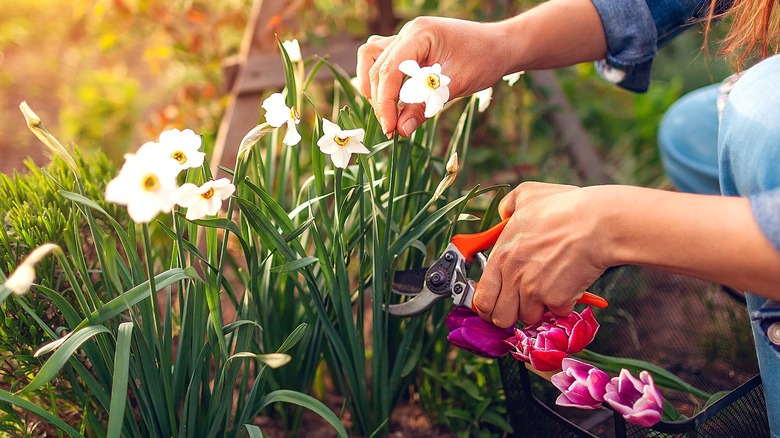
Daffodils are the colorful heralds of spring, popping up in parks, gardens, and woodlands with their sunny hues and nodding heads. In my work as a professional gardener, I've planted many daffodil bulbs and enjoy finding unusual varieties to plant for clients. Planting a mix of daffodils with a variety of sizes, colors, shapes, and textures can make for a wondrous spring floral landscape, and provide lovely cut flowers as well. I've gathered some of my favorite lesser-known varieties here for you to plant in September.
There are virtually hundreds of daffodil (Narcissus) varieties out there, categorized by many sub-types you may have seen mentioned in catalogs. These sub-types include trumpet daffodils, jonquils, large- and small-cupped narcissi, cyclamineus, triandrus, tazetta, split-cup (or split-corona), double, and poeticus. These categories mainly refer to the forms and shapes that differentiate these daffodil types from one another. My favorite online suppliers include Scheepers, Bluestone Perennials, and Old House Gardens, which has a great selection of heirloom varieties.
Daffodils are one of the best spring bulbs to grow if you have deer or squirrels, because they leave them alone. They're mostly hardy in USDA zones 4 to 8, with many hardy to zone 3. You should plant daffodils in early fall, well before the first hard frost, to help protect them from bulb damage. Late September through mid-October is ideal. Once they're established, daffodils will thrive with partial to full sun in well-drained soil. They naturalize very well and give you many more flowers as time passes. Once the clumps start to get big, you can divide them in late summer and replant the bulbs.
Goblet
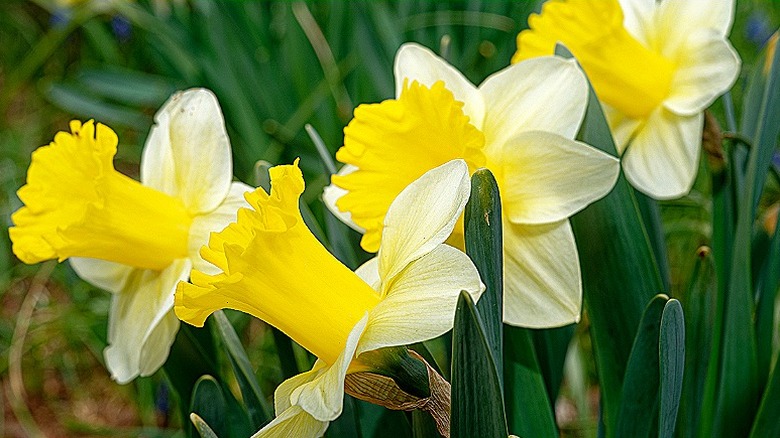
The classic daffodil most people envision when they think of daffodils is the 'King Alfred' which is a solid yellow heirloom trumpet daffodil. I like this contrasting two-tone variety, with showy bright yellow cups and pale cream petals. The trumpet is so prominent it has the well-chosen name of 'Goblet' almost as if wee garden fairies could use it to drink from. Reaching 18 inches tall, the 'Goblet' daffodil works well in the middle of the spring border behind shorter growing bulbs.
Altruist
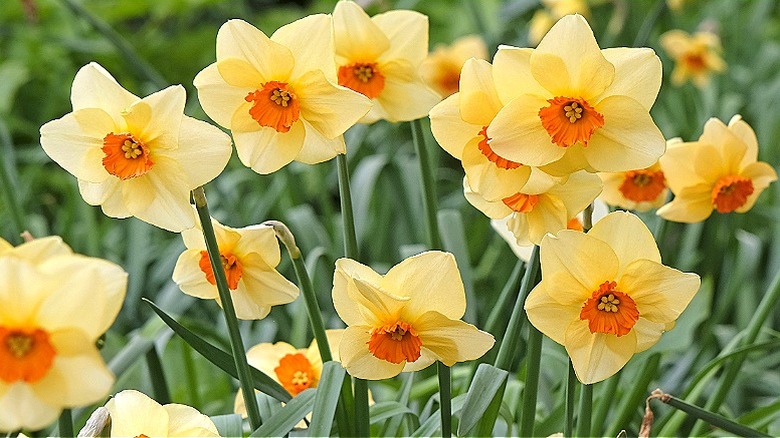
This adorable small-cupped daffodil has a wonderful color palette of creamy pale yellow petals with a copper-orange cup. 'Altruist' has a graceful form with overlapping petals and daisy-shaped stamens. It's medium height at 18 to 20 inches tall, perfect for planting in the middle of beds, by the mailbox, or along fences.
Gracy's Green
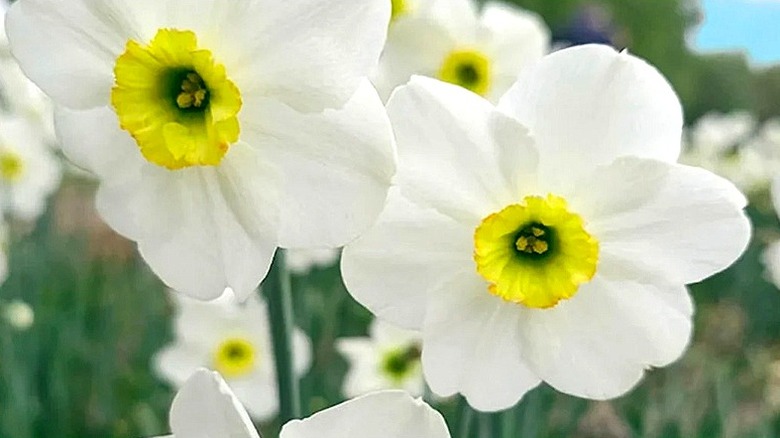
Yes, there are green daffodils! Or rather, daffodils with green accents that add some intriguing variety to your daffodil plantings. 'Gracy's Green' is a poet's daffodil (Narcissus poeticus), and these are characterized by wide white petals surrounding a shallow cup, sometimes rimmed very lightly with red. This daffodil is fragrant, grows 14 to 16 inches tall, and looks beguiling planted among your other daffodil varieties, or en masse in partly sunny woodland gardens.
Rip van Winkle
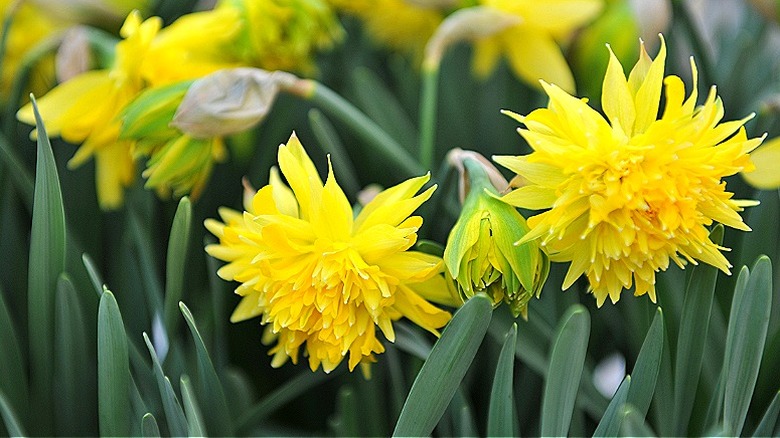
These cheery little ragamuffins are such a fun daffodil to grow. They're short in stature (8 to 10 inches tall) but have a fuzzy, full head of shaggy, bright yellow petals. Named for Washington Irving's short story, this heirloom dates back to the late 19th century. It isn't planted by gardeners much these days, but I sometimes see them planted along roadsides in rural areas in New York state. 'Rip van Winkle' daffodils are hardy in USDA zones 3 to 10, so they're great for warmer climates.
Thalia
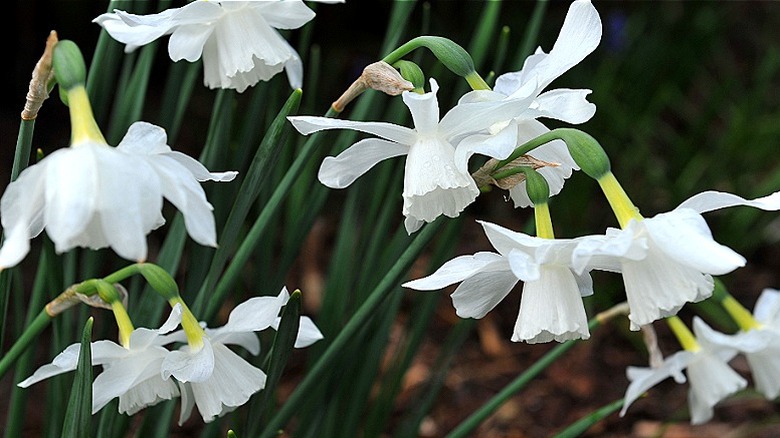
There are many solid white daffodils, including the well-loved trumpet daffodil 'Mount Hood.' This delicate white heirloom is a triandrus variety, which produces two or three flowers per stem. The snowy white trumpet and pointed petals lend a lacy, delicate look to your spring flower beds, blooming from late April through mid-May. 'Thalia' daffodils are also fragrant, and naturalize beautifully. I like them planted in partly shady spots where they add brightness to the spring garden.
Rapture
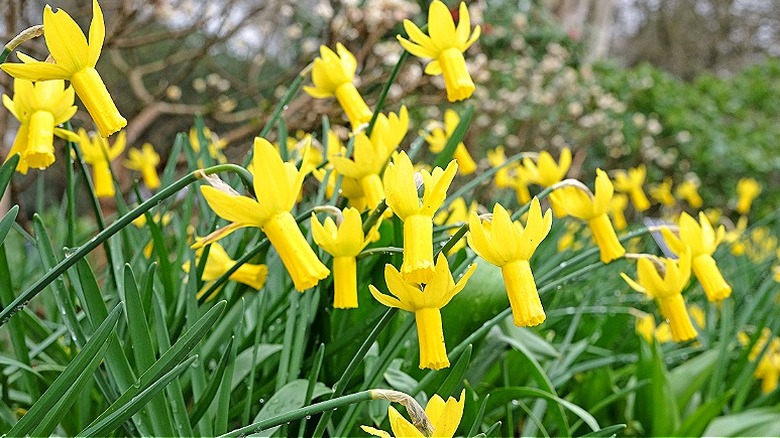
The 'Rapture' daffodil is one of the cyclamineus variety. These are on the smaller side and have unusual "reflexive" petals that curve backward, showing off the long trumpets. This perky solid yellow daffodil is deer- and rodent-resistant, very cold hardy (USDA zones 3 to 8), blooms early in April, and naturalizes eagerly in the garden. Another cyclamineus I love is 'Jetfire' which has yellow petals with orange cups. Plant these in the front of flower beds, in rock gardens, or in nooks and crannies that get sun for shapely spring beauty.
Westward
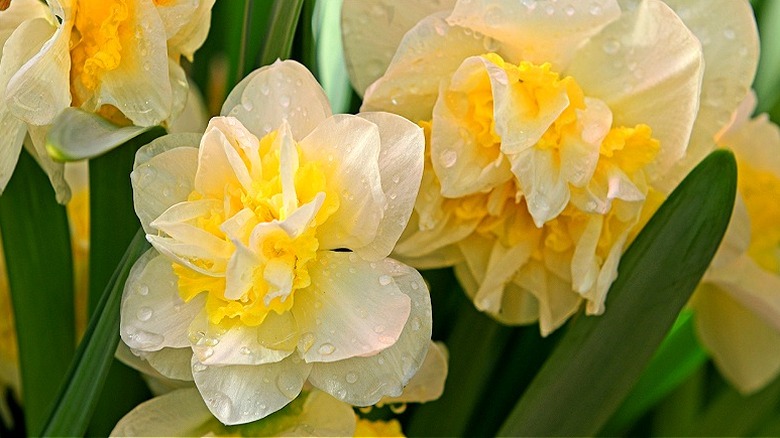
This double daffodil reminds me of 'White Lion' (one of my favorite early bloomers for its vigor and sweet fragrance), but this one is later blooming and has slightly larger flowers. Double daffodils really do add such wonderful texture to the garden. 'Westward' is a reliable and sturdy heirloom that has won awards, and deserves a prominent place in your spring garden.
Bright Jewel
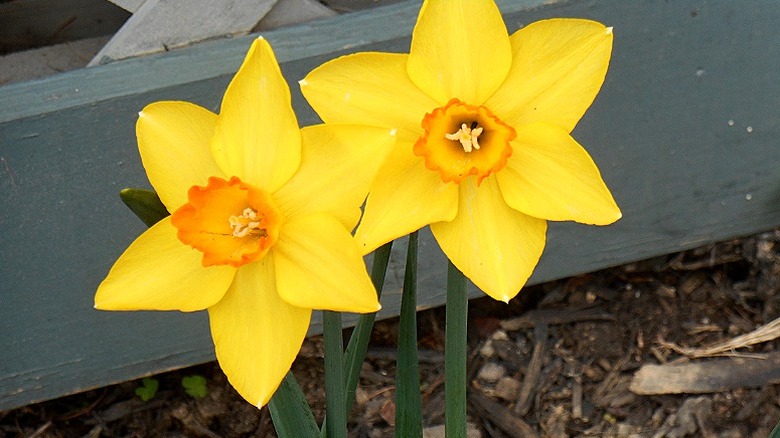
I love these mid-size daffodils that start blooming in early April. The aptly named 'Bright Jewel' has golden yellow petals and a golden cup with a bright orange rim: It has a very delicate-looking form with eye-catching color. This one looks gorgeous with early blue-flowering spring bulbs such as Glory of the Snow and blue Dutch hyacinths like 'Delft Blue' or 'Blue Jacket,' or try them planted near early orange tulips like Orange Emperor or the lovely double 'Orca' tulip.
Apricot Whirl
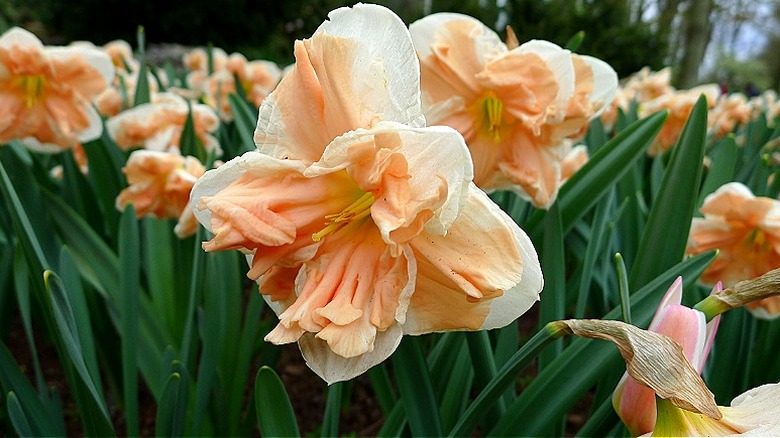
I find it hard to resist the family of pink daffodils, most of which express their "pink" persona with shades of peach, apricot, and coral. This split-cup variety brings luscious pastel apricot color to the April flower bed. The split-cup (aka split-corona) petals of 'Apricot Whirl' allow the stamen to display its green-yellow eye for even more color excitement, almost like having a day lily bloom in mid-spring!
Hawera
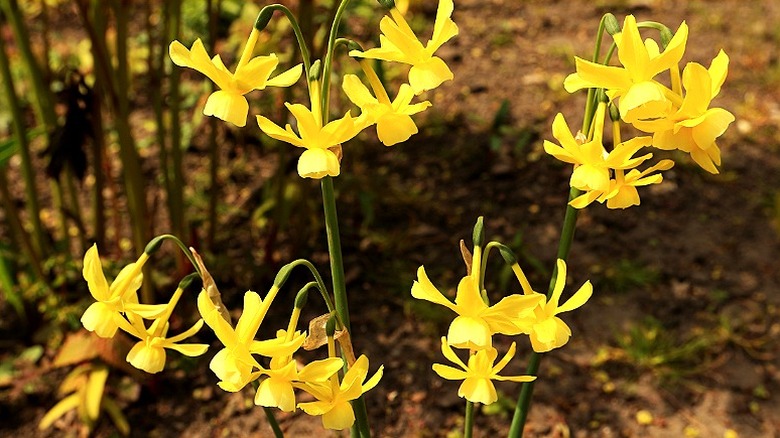
The 'Hawera' daffodil is not very well known but it deserves a space in your spring garden for its unique look. The triandrus narcissi produce blooms on multiple stems, usually three stems but occasionally four. This diminutive heirloom charmer, introduced in the 1920s, grows 6 to 8 inches tall and has a lovely rounded cup of butter yellow with lemon-yellow petals that are slightly reflexive. It's also fragrant, adding to its many fine qualities.
Amadeus
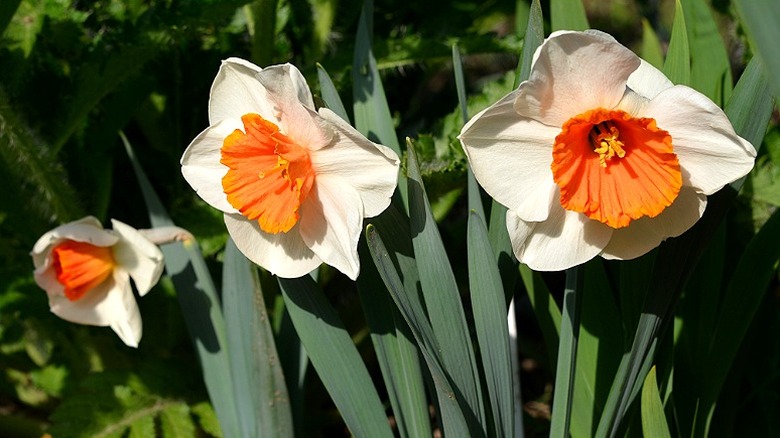
Named for the bold and brilliant composer Wolfgang Amadeus Mozart, 'Amadeus' is a striking daffodil with a bold orange cup setting off snowy white petals. The color of the cup can vary and sometimes produce a deeper reddish-orange color. These are medium height (12 to 16 inches tall) and bloom in mid-spring. Try them planted with bright red-orange tulips that bloom at the same time (like 'Ballerina' or 'Cairo') for striking color magic.
Silver Chimes
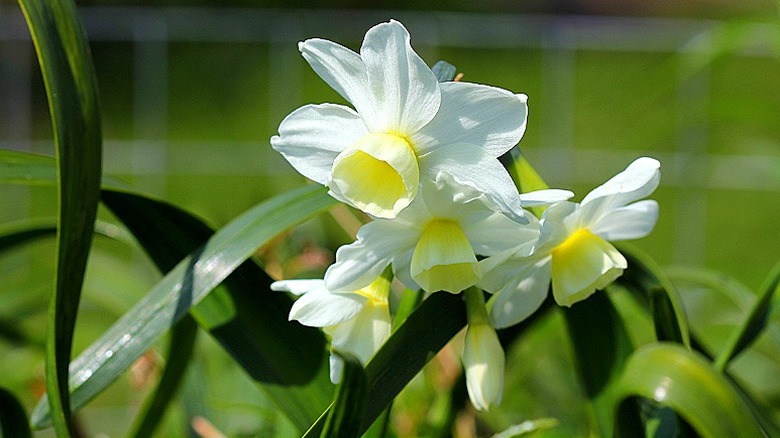
This enchanting tazetta daffodil is a delicate blend of pale yellow cups and silvery white petals. Tazetta daffodils have multi-flowering stems, and 'Silver Chimes' are known to produce up to eight flowers per stem, making them a uniquely beautiful daffodil variety to add to your plantings. This elegant flower blooms in late April and reaches 16 to 18 inches in height. It's slightly less cold hardy than many daffodils, but will thrive in USDA zones 6 to 9, and is best planted in full sun.
Avalon
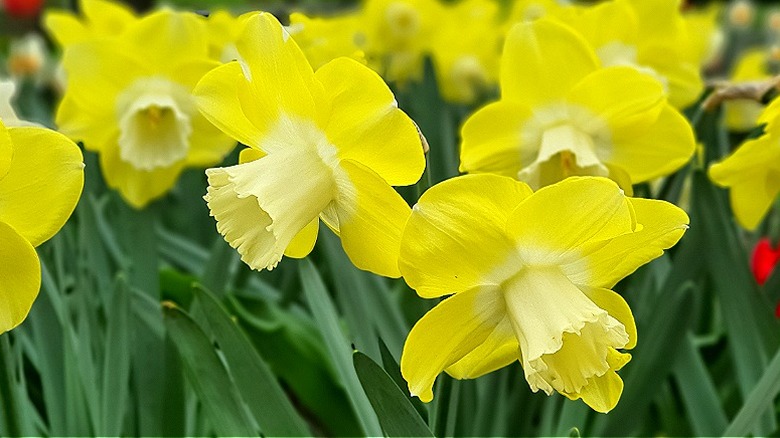
I've always loved the unusual color form of this large-cupped daffodil. 'Avalon' (a cross between another Arthurian favorite, 'Camelot' and 'Daydream') has a very pale yellow cup encircled by a creamy white halo, surrounded with bright lemon-yellow petals. It grows to 16 inches tall and is hardy in USDA zones 3 to 7. Blooming in late April, it's a cheery addition to the daffodil garden, and the sturdy flowers hold up well to rain.
Delnashaugh
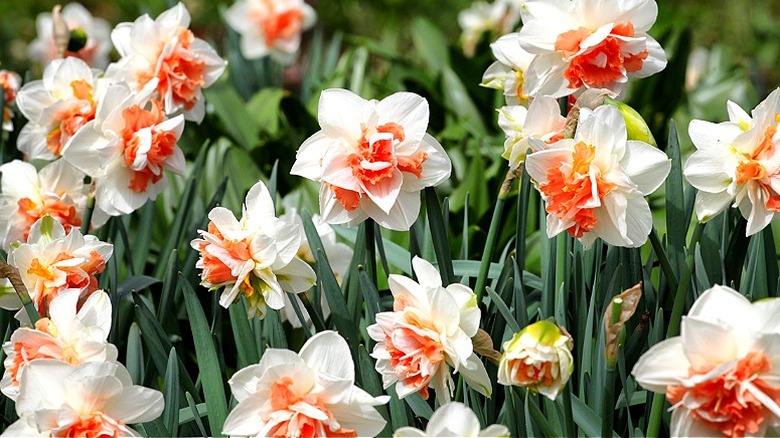
I've grown these vibrant double peach and white daffodils for years, and they're one of my favorite varieties. The flower heads of Delnashaugh are very full with a layered, starry shape, and the petals have both smooth and shaggy textures. They start blooming in mid-April and last through early May. These gorgeous daffodils make excellent cut flowers that last for days in the vase, or leave them in the garden to bring joy to all who see them.
Tete Boucle
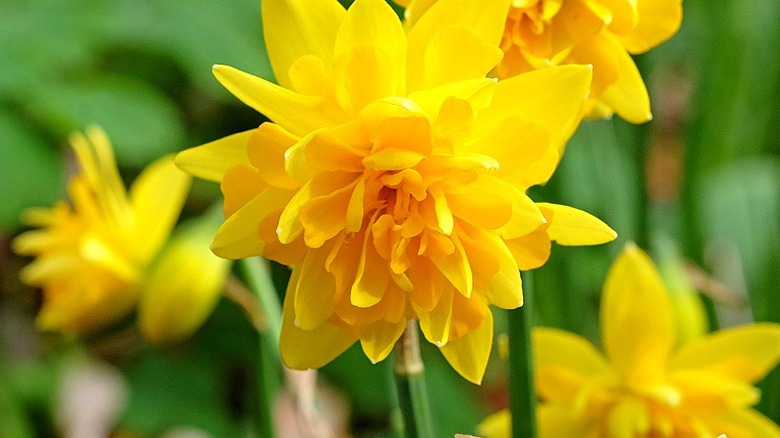
The fullness of this vivid yellow double daffodil adds fun texture and variety to garden beds and vases of cut daffodils. This newer variety is a sport of the well-loved miniature 'Tete a Tete' daffodil (both grow 6 to 8 inches tall), and has the same two-tone combo of bright lemon and golden yellow, but with frilly double petals. 'Tete Boucle' appears early, sometimes popping up through late winter snow to bring happy color to your yard. Plant it in full sun to encourage those early blooms.