

Ditch Landscape Fabric: The All-Natural Alternative That's Better For Your Garden
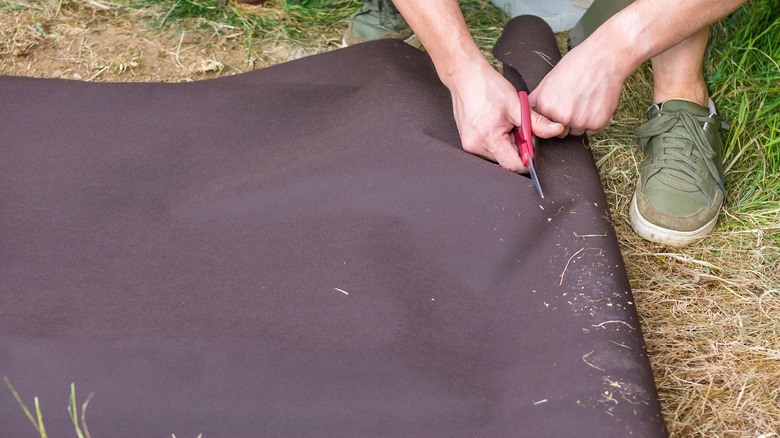
Experienced gardeners know that there are various ways to remove and prevent weeds from growing. Some are more effective than others, and depending on which method you choose, keeping on top of weed growth can be both frustrating and expensive. One popular preventative measure is installing landscape fabric, which works to stifle any seeds in the soil from accessing the sunlight they need to germinate. It can be effective, but one of the downsides to using landscape fabric is that it's rarely made from natural materials. Not only that, but when it eventually breaks down, it creates two key problems. Firstly, it loses its efficacy, allowing weeds to grow through. Secondly, it's a pain to remove from the ground, often coming away in bits and pieces. If left in place, that synthetic fabric is unlikely to do any good whatsoever to the health of your soil.
That's not to say that you shouldn't use a barrier to prevent weeds from growing. It's just that you might be better off installing something more natural like wool. As an example, many gardeners use landscape garden felt made from wool. Others use actual wool pelts, although they may not be readily available where you usually shop for garden gear. You can, however, buy woolen garden felt from online, like the Weed Barrier Mat from Eartheasy. These products are designed to act as a natural mulch layer, effectively blocking weeds from germinating. It's also biodegradable, meaning it'll do no harm to your garden when it eventually breaks down.
Considerations for swapping traditional landscape fabric for wool
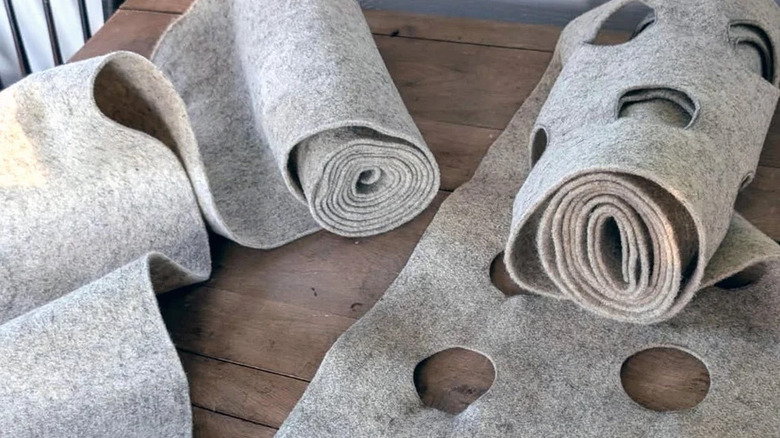
Natural fabric alternatives don't compromise your garden's health, and in the case of wool, it's naturally nitrogen-rich, helping to feed the nutrient back into your soil. It also holds up to 30 times its weight in water. In turn, that makes it a useful means of protecting your soil from saturation during heavy weather — a big tick in its favor compared to synthetic fabric barriers. There is even evidence (albeit anecdotal) that wool may help to keep slugs at bay. Add to all of these traits its ability to block out weeds, and using wool to line your flower beds probably seems like a no-brainer.
Just bear in mind that wool does also have its limitations. For example, being a natural material, it will inevitably decompose. This can take two years, sometimes longer, which seems like a decent amount of time. However, it's considerably shorter than synthetic types, which, depending on the material and thickness, can last for up to 15 years. It should also be noted that, if you want to use wool landscape fabric, it's not as widely available as synthetic types, and that it also tends to cost more. You can pick up a 6-by-300-foot roll of synthetic fabric from Home Depot for $60. For woolen alternatives (which Home Depot doesn't stock), we found prices elsewhere ranging from $36.50 for a 2.5-by-16-foot roll to $45.95 for a 1-by-10-foot roll. In other words, it is an investment for your garden, but one that might be worth making.