

Wealthy People Owned It In 1800's England — Now It's The Whimsical Decor We Want In The Kitchen

We may receive a commission on purchases made from links.
Adding a touch of whimsy to your home can be as easy as adopting a new plant, changing the dishes you eat off, or shaking up the centerpieces on the table. If you're a fan of color, florals, and prints with butterflies and birds, there is an iconic porcelain and dinnerware brand that delivers on these elements with style and class. Herend has been around since 1826, and understands quality and beauty with pieces that even royalty has owned. And perhaps the best way to add a touch of whimsy to your home would be to add one of their Queen Victoria butter dishes to your collection.
The Queen Victoria pattern – which actually caught the eye of the royal herself and is considered one of their more popular designs — is a multi-color design that features colorful butterflies and floral details. The design was first unveiled in 1851 in London, and Queen Victoria herself commissioned a table service for the palace. With this level of notoriety, it makes sense that other people of wealth would want their own Herend Queen Victoria pieces. It's a butter dish that makes a statement on any table, proudly boasting vibrant colors and a molded handle. One handle is even designed to look like a plant stem with roses at each end, while the other looks like a butterfly.
Not only can you still purchase this pattern on multiple styles of butter dish – both round and a classic stick variants — you can also find them on the secondhand market. New Queen Victoria butter dishes can go for anywhere between $480 and $600, depending on the shape.
What to look for when picking up a Herend Queen Victoria butter dish
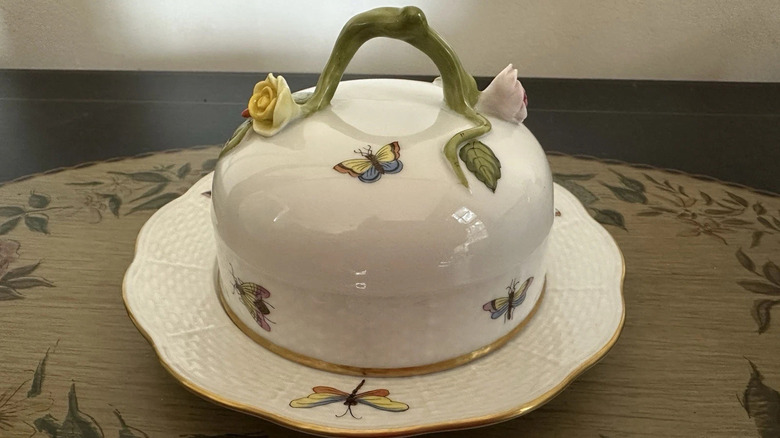
There are a number of places where you can source dishware secondhand, and if you're able to find a Herend Queen Victoria butter dish at a thrift store or an antique mall, you'll likely save a bit of money versus buying it new. That said, it's important to know what to look for, both in terms of the actual markings you should find and condition. Always check and confirm that there are no chips, cracks, and loss of paint on the porcelain, particularly since each piece is hand painted. Also, make sure that there is no damage to the sculptural elements of the dish, such as the handle, which is more likely to need repair work or have missing pieces.
When it comes to the markings on the butter dishes, there will be different backstamps depending on when it was produced. Since this pattern has been around since 1851, you'll want to look for the word "Herend" either painted, printed, or stamped into the porcelain. Some of the pieces might have a coat of arms or blue crest. For modern pieces, you'll see the words "hand painted" or "Hungary" underneath the coat of arms. Another thing to check for is the letters "VBO," which represent the pattern name: In this case, Queen Victoria. All of these details will help you to not only identify the piece you've found, but its potential value. Of course, the real value is in how you can potentially use this butter dish around your house as a whimsical, decorative element.