

Not Pulling Or Herbicides: The Crucial Lawn Care Task To Help Slow Weed Growth
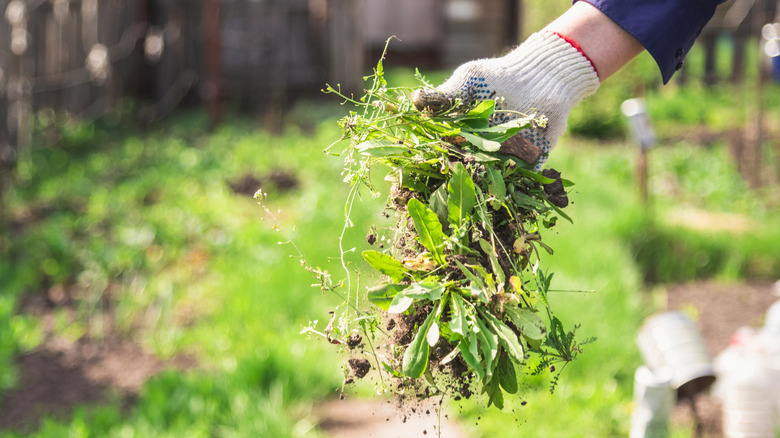
Dealing with weeds can seem like a never-ending chore. When unwanted growth starts spreading across your yard or landscaping, your first instinct might be to grab some herbicide or reach for one of the many tools that can help get rid of weeds in your garden. While those proactive solutions may reduce weed clutter, they can only remove weeds after they've already sprouted. An ounce of prevention is worth a pound of cure, and one important lawn care task can help you fight weed growth before it takes over: aeration.
You may already be aware of the benefits of aerating your lawn. However, a lesser-known reason to aerate is that it can deter weed growth by creating healthier conditions for your grass to "crowd out" unwanted plants. Weeds thrive in soil where grass struggles to grow — some weed species even prefer compacted soil. Aeration fights weed growth by de-compacting the soil and allowing water and nutrients to reach the roots, improving your lawn's overall condition.
How aerating your lawn can help control weed growth
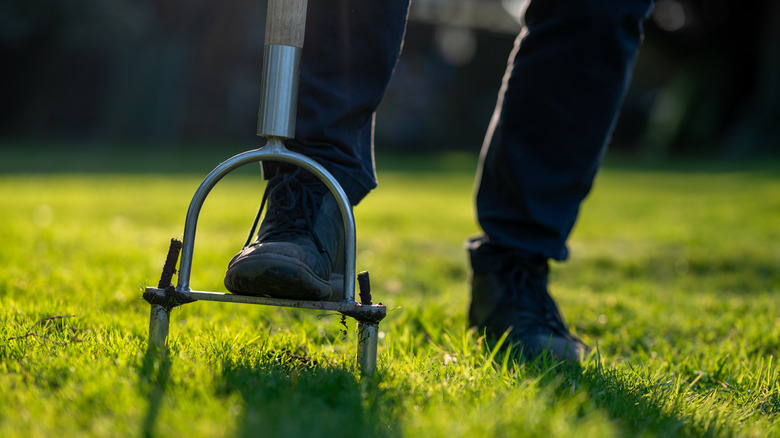
By punching small holes in the top layer of your lawn, aeration loosens compacted soil, lets air, water, and nutrients reach the grass roots more easily, and allows the ground to "breathe," helping you grow healthy, thick grass. Some weed species, especially those with deep roots, grow well in compacted soil, partly because it makes it harder for your grass to grow and allows the weeds to take hold. By loosening this compacted soil layer, aeration also makes it harder for deep-rooted weeds to outcompete healthy grass.
For most lawns, the consensus is that aerating once every year to five years is ideal for healthy growth. But while aeration is great for your yard's long-term health and appearance, it won't kill weeds you already have. If you're already facing invasive growth, you may still need a weed killer spray or weeding tools. Nonetheless, gardeners consider aeration to be essential for keeping your lawn looking its best. Thick, lush grass is the best insurance against weeds.